Home Blog Page 434

Russian Lawmakers Ask Medvedev to Delay Oil Tax Changes

0

Lawmakers have asked Russian Prime Minister Dmitry Medvedev to postpone changes to the country’s oil tax regime which may lead to a spike in gasoline prices, Ivan Grachyov, head of the lower house of parliament’s energy committee, said on Wednesday. “The letter to the prime minister was sent last week. We asked him to postpone the changes in these hard times. If the measures are introduced, the price of gasoline may jump as much as 20 percent,” Grachyov told Reuters.

The changes, known as the “tax manoeuvre”, foresee cuts to oil export duties and an increase in the mineral extraction tax, which could ultimately lead to increases in gasoline prices for consumers. The price of gasoline in Russia has already risen by more than 9 percent in January-October, more than the 7.6 percent increase for the whole of 2013, fuelled by higher inflation and a weaker rouble.

Adoption of the tax changes, which are expected to be enforced after Jan. 1 2015, has met with opposition from crude oil producers, some of which have said they will negatively impact oil production. The Energy Ministry, which sponsored the initiative, has argued the oil tax changes strike a “golden mean” between the industry’s investment needs and budget priorities. Russia’s lower house of parliament, the State Duma, approved the changes to the tax regime last month in a first reading.

The second, main reading is scheduled to be held later this month. The country’s system of oil taxation means that oil companies have been reluctant to invest in gasoline production because of high export duties, which are in place to protect supplies for domestic car users. Grachyov said the cut in oil exports duty will lead to companies “shifting the tax burden to consumers”. Analysts say the companies with the highest exposure to the refining sector, such as Bashneft, Gazprom Neft and Lukoil, will be the biggest losers from the tax changes. 

Source

NEC in World’s First South Atlantic Submarine Cable Link

0

Angola Cables S.A. has signed a contract to build the world’s first submarine cable system across the South Atlantic with NEC Corporation as the system supplier.

The South Atlantic Cable System (SACS) will connect Angola and Brazil, directly linking the African continent to Latin America for the first time, to enable high speed and high capacity international data transmissions, spurring trade and economic growth.

In order to meet growing demand from broadband, mobile, broadcasting and enterprise traffic crossing the South Atlantic, SACS will feature the latest high quality 4-fiber-pair cable and optical transmission technologies with an initial design capacity of 40Tb/s (100Gb/s x 100 wavelengths x 4 fiber-pairs).

The cable system will land at Sangano cable landing station in Angola, near the capital city of Luanda, and in a datacenter in Fortaleza, Brazil, which, will be built for the cable systems that are under construction by Angola Cables. The Operator recently announced the construction of another cable system, COTA (Cable Of The Americas) connecting Santos and Fortaleza in Brazil to Miami in the USA. This way Angola Cables will connect Angola and Africa directly to Brazil and the USA through SACS and COTA, adding to today’s existing connectivity from Africa to Europe through the existing WACS (West Africa Cable System).

The total amount of investment for SACS is estimated to be approximately USD $160 million.

“Angola Cables’ mission is to transform Angola into one of the major telecommunication hubs in Africa. This new submarine cable, together with our other projects, will help to improve connectivity between Angola and Africa to Latin and North America. We will continue to develop our Internet highways to enable our telecoms, ISP and enterprise customers to differentiate themselves in today’s competitive and highly-evolving African marketplace,” said António Nunes, Chief Executive Officer of Angola Cables.

“NEC Corporation is proud to be the system supplier for SACS, a unique cable system that directly links Angola to Brazil and the rest of the world,” said Naoki Yoshida, General Manager at NEC’s Submarine Network Division. “With Africa and South America growing in importance as strategic regions for NEC, being selected as the SACS system supplier gives us a valuable advantage. As one of the world’s top vendors of submarine cable systems, with more than 40 years of experience constructing over 200,000 kilometers of cable systems, NEC is committed to the successful completion of SACS and to building on our relationship with Angola Cables.”

Construction of SACS is expected to begin before the end of the year. The system is targeted to be ready-for-service during the fourth quarter of 2016. The cable will enable Africa to take advantage of close cultural and business ties with Brazil. It will also improve onward connectivity to the financial markets in South and North America.

Source

PTDF boss says committed to local content in petroleum industry

0

THE Petroleum Technology Development Fund (PTDF) remains fully committed to the mainstreaming of technical and vocational training for the oil and gas sector in Nigeria’s drive for local content, industrialisation and sustainable development.

The Executive Secretary of PTDF, Mr Femi Ajayi, made the remark in a speech at the GETENERGY/VTEC CONFERENCE AND EXHIBITION in Houston, USA, made available to the News Agency of Nigeria (NAN) in Abuja on Monday.

He held that the Nigerian technician and artisan must be given quality training in order to be able to participate effectively in oil and gas projects and ultimately enhance Nigerian Content in the industry.

He identified five constraints which usually hamper the development of an effective technical/ vocational training system in-country,

They are: Lack of well qualified instructors to train students and impact knowledge, inadequate modern training facilities for technical and vocational training and training curricula not in congruence with the requirements and needs of the oil and gas industry.

Others are preference of youths with university degrees as against technical/ vocational qualifications and weak systems that cannot sustain quality technical and vocational training.

To address the constraints, Ajayi said that there was need to adopt the development and implementation of a national strategic framework for technical and vocational training and education.

He also called for improvement of the teaching capacity and capability of vocational education instructors on a regular basis through capacity building in relevant areas.

 He recommended that a proper proficiency audit must have been done to ascertain the level of their competence.

Ajayi called for provision of requisite facilities and infrastructure in technical/ vocational institutions to enable them to deliver on their mandate.

“This could be done by providing quality training and ultimately supporting the government in enhancing students’ employability and reducing the level of unemployment in the country.’’

The executive secretary called for revision of the curricula of technical and vocational institutions to meet the 21st century industry demands.

Government, he added, should collaborate and partner with international organisations as well as the private sector to develop technical/vocational training in-country.

Ajayi disclosed that PTDF had developed and executed programmes to entrench technical and vocational training in-country to enhance capacities, capabilities and competencies of Nigerians for the benefit of the industry.

They included the upgrade of the Petroleum Training Institute, Effurun, which provides requisite training in oil and gas technology and produces middle/low level manpower required for oil production for the Nigerian oil and gas industry and the West African region.

The project comprised educational, organisational and infrastructural upgrade.

“The educational and organisational upgrade has been concluded while the infrastructural upgrade is still ongoing and has attained 87 per cent completion.’’

He also commented on the PTDF Post Amnesty Vocational Skill Based Training Programme in which 120 youths were trained between 2012 and 2013.

He said the programme involved various vocational/ hands-on-training such as ICT and Diagnostic/Fault detection on heavy duty equipment/auto-rotary technology.

“There is a plan to train a further 100 youths under the programme this year.’’

“Under the Welders Training and Certification Programme, 500 youths were trained in plate welding and issued with the International Institute of Welding (IIW) certification in the first phase.

“In the second phase, 505 persons were trained on Manual Metal Arc Welding out of which 207 have now progressed to the current plate welding training.

“In the Underwater Welding Training Programme, 11 young Nigerians were trained by PTDF in 2011 at the renowned Underwater Welding Training Institute (INPP), France, to attain the International Institute of Welding certification in underwater welding.

The scribe explained that the Local Welding Programme was emplaced with Nigeria Institute of Welding (NIW) as part of efforts to domesticate the training of artisans and technicians for the oil and gas sector.

“PTDF has been collaborating with NIW to train youths in fillet, plate and pipe-welding.

“So far, 1,750 Nigerians have been trained in welding and other fabrication skills under the PTDF Welders Training and Certification Programme.’’

He stated that the PTDF Technology Enhancement Teaching & Learning Programme was designed to build the competencies of ICT teachers in secondary schools and tertiary institutions in the country.

“PTDF had previously provided ICT centres as part of its institutional upgrade project.

“The programme is aimed at building the ICT proficiencies of the teachers so that the knowledge acquired can subsequently be imparted to their students.

“Three hundred participants (teachers) drawn from over 100 schools attended the programme in-country.’’

He disclosed that Centre for Skills Development and Training was being established in Port Harcourt to provide basic skills required in the oil & gas industry to unemployed youths especially in the oil producing areas.

“Disciplines to be covered include automobile works, basic electrical works, health safety and environment.

“Others are catering, electronics, masonry, seismic survey technology, drilling technology, welding & fabrication etc.

The executive secretary, who said that execution of the project was ongoing, added that PTDF and other stakeholders funded Enhancing the Fabrication Capabilities in Nigeria Project

“It is to address welding/fabrication challenges in-country which is an area that has been identified to have the highest potential for developing local content in the oil and gas industry.

“In the course of the project’s execution, seven fabrication yards at various locations in Nigeria were refurbished to international standards and subsequently commissioned.

“Fabrication Training Centre was also established in-country for capacity building in the area of welding and fabrication.

“The centre is designed to serve as an Authorised Training Body of the International Institute of Welding for the conduct of internationally certified welding and related training programmes,’’ Ajayi added. (NAN)

Source

Dolphin in Revenue Jump

0

Dolphin Geophysical has seen revenues rise in the third quarter to $128.5 million, versus the $70.1 million same period last year due to increased 3D vessel capacity.

Despite the challenging seismic market, the EBIT for the third quarter 2014 was $21.1 million (16,4%), compared to $17.4 million in Q3 2013. EBITDA was $38.2 million (29,7%) for the third quarter 2014 compared to $26.4 million in Q3 2013.

At the end of the third quarter 2014, Dolphin recorded net Income of $12.2 million, compared to $11.6 million in Q3 2013.

The company’s backlog has been strengthened with several contract awards, including the 16 Streamer 3D Seismic Gig in Kara Sea, providing Dolphin with a solid backlog that exceeds USD 340 million as of 1 November 2014.

In addition, Dolphin stated that the company maintains the original guidance to exceed USD 400 million in revenues for 2014. Revenues for the first nine months of the year were $309.7 million, compared to $207.7 million in the same period in 2013.

Atle Jacobsen, Dolphin Group CEO, commented: “I am very pleased to report record revenues and backlog for the second consecutive quarter. Our growing high-end 3D fleet is delivering according to our expectations and our customers are becoming increasingly aware of the Dolphin fleet’s ability to provide them with cost efficient services through our “powerful solutions” offering. In the quarter we continued to see the impact of a softer and more competitive market, particularly in the 2D and low-end 3D segment. This, together with low Multi-Client late sales, reduced our overall operational margins for the third quarter.

“The marine seismic industry will continue to face headwinds for the remaining part of 2014 and into the first part of 2015, however, Dolphin is cautiously optimistic that the increased seasonal demand combined with the effects of reduced supply will pave the way for a more balanced market for the high-end part of the seismic fleet from the second quarter of 2015.”

Source

Maritime law: Protecting commercial divers’ rights

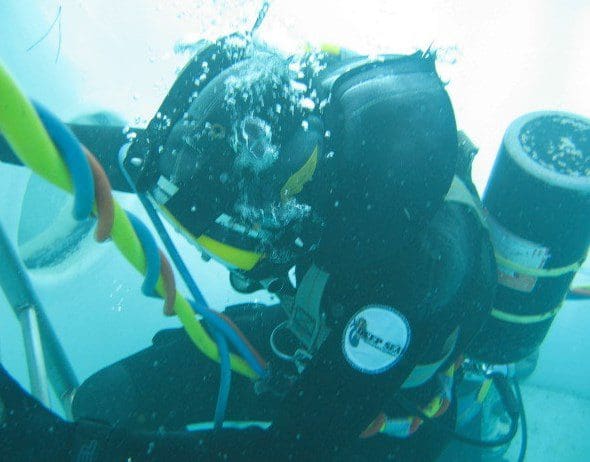
If you are a commercial scuba diver in Texas or Louisiana, then your job is inherently hazardous, but you are nonetheless entitled by law to a reasonably safe work environment. Safe commercial diving requires proper training, planning, cooperation and adherence to established safety procedures, and a mistake on the part of a supervisor, boat captain or other maritime worker can quickly lead to serious injuries.

Commercial divers who have been injured because of employer negligence can seek compensation for damages through a Jones Act claim. Benefits may also be available under the Longshore and Harbor Workers’ Compensation Act. To get the compensation they need and deserve, it is a good idea for injured divers to have an attorney with experience in handling cases in these areas of law.

To learn more about the Jones Act in particular, please see our previous post — “What qualifies as a ‘seaman’ or a ‘vessel’ under the Jones Act?

The Occupational Safety and Health Administration and the U.S. Coast Guard have established safety guidelines and regulations for commercial diving. To protect workers from potentially fatal accidents in underwater teardown operations, pipeline maintenance, seabed well work, offshore construction and pipeline shutdowns, employers and supervisors must meet safety standards, but too often that doesn’t happen.

At The Shelton Law Firm, we represent divers and other maritime workers who have been injured on the job. We also seek wrongful death compensation for families of workers who suffered fatal injuries at sea. Maritime law is complex, and to receive the full amount of compensation you deserve, you’ll need an attorney who is willing to fight to protect your interests at every step of the process.

Source

Chesapeake Energy Quarterly Profit And Output Rise

0

Chesapeake Energy Corp, the second-largest U.S. producer of natural gas, on Wednesday reported a bigger-than-expected 8 percent increase in third-quarter profit on higher output from lower-cost shale wells in Texas, Louisiana and Ohio. Shares of Chesapeake rose 6.3 percent to $22.64 in morning New York Stock Exchange trading.

The results show Chief Executive Officer Doug Lawler’s efforts to attack a bloated cost structure and improve capital efficiency are working so far. Lawler was named CEO in June 2013 after the ouster of Aubrey McClendon. “The company’s focus on expense reduction was evident both quantitatively and qualitatively, with the company announcing sharply lower well costs across all core operating areas,” Sterne Agee analyst Tim Rezvan said in a note to clients.

Profit rose to $169 million, or 26 cents per share, from $156 million, or 24 cents a share, a year earlier. Excluding costs to redeem preferred shares and other one-time items, earnings were 38 cents per share. Analysts on average had expected 33 cents, according to Thomson Reuters I/B/E/S. Oil and gas output, adjusted for asset sales, averaged 726,000 barrels of oil equivalent per day, up 11 percent from a year earlier. Analysts at energy-focused investment bank Tudor Pickering Holt had estimated Chesapeake’s third-quarter production at 704,000 boepd and characterized the results as a “strong beat” in a note to clients.

Even though output was higher, Chesapeake managed to drive down wells costs. For example in the Eagle Ford, they fell to an average of $6 million from $6.9 million. “We are gaining significant momentum in all of our operating areas where we continue to create more value with less capital,” Lawler told investors on a conference call, adding that Chesapeake is now a more profitable and less complex company. The Oklahoma City company said it still expected to spend $5 billion to $5.4 billion this year.

It plans to release the 2015 budget early next year. As of Wednesday, Chesapeake shares are down about 12 percent year to date. That compares with a 15 percent decline in the SIG Oil Exploration and Production Index. 

Source

Emerson’s Automation for Shah Deniz Stage 2 (Azerbaijan)

0

BP has awarded Emerson Process Management, a global business of Emerson, a contract in excess of $40 million to be the Main Automation Contractor for the Shah Deniz Stage 2 development project in the Azerbaijan sector of the Caspian Sea.

Emerson will provide integrated control and safety systems to help ensure safe and efficient control of gas production on two new offshore platforms and at an expanded onshore gas processing plant at the Sangachal terminal.

The contract is part of Emerson’s global agreement with BP to provide services for greenfield automation projects. Selecting Emerson as the Main Automation Contractor helps BP simplify procurement and project execution. In this role, Emerson will provide system engineering, installation, configuration and testing, supported locally by the Emerson Azerbaijan service center in Baku.

“This contract is a testament to Emerson’s experience in deepwater offshore oil and gas applications and to the quality of our work providing similar technology for BP’s nearby Chirag Oil Project,” saidSteve Sonnenberg, president, Emerson Process Management. “This latest large-scale project continues the long-standing and trusting relationship that exists between our companies.”

Emerson is also providing automation technology and services for BP projects west of Shetland in the UK, including two offshore platforms in the Clair Ridge field and a floating production, storage, and offloading (FPSO) vessel for the Quad 204 development.

As part of the integrated front-end engineering and design team for Shah Deniz Stage 2, Emerson worked closely with BP and its engineering contractor to define the digital automation solution. The integrated Emerson solution will use Emerson’s DeltaV distributed control system, DeltaV SIS process safety system, and AMS Suite predictive maintenance software.

The DeltaV system will control and monitor onshore, topside and subsea operations. The DeltaV SIS system will perform process and emergency shutdown functions, if needed, plus control the fire and gas detection systems to enable secure gas production. Electronic Marshalling with intrinsically safe CHARMs technology will help reduce the complexity of connecting the automation systems with thousands of control and measurement devices.

In addition, Emerson’s AMS Suite software will deliver predictive diagnostics from the control and measurement devices to enable timely corrective maintenance. Diagnostic data will be integrated with similar information from BP’s Chirag project to present a clear picture of overall asset health and performance of BPs operations in the Caspian Sea.

Source

TIPRO President: Recent Growth in the Oil, Gas Sector Likely to Continue

0

At a time when the U.S. economy was still recovering slowly from the worst economic recession since the Great Depression, the oil and gas industry grew by 3.4 percent, or more than 35,000 jobs, in just the first six months of 2014, according to a new report by the Texas Independent Producers & Royalty Owners Association (TIPRO).

The job gains resulted in a total oil and gas industry employment figure of 1,066,000 in June 2014.

The brunt of the growth in the industry during the first six months of 2014 came from oil and gas operations support activities, oil and natural gas extraction services, and oil and gas drilling.

When the number of new oil and gas jobs in the first half of 2014 are added to oil and gas job growth through 2013, it represents an increase of 8.6 percent. During the same time period, total job growth in the overall U.S. economy was 5.9 percent.

Rigzone talked to TIPRO’s president, Ed Longanecker, about some issues that had the potential of affecting future employment growth.

Rigzone: Could the drop in crude oil prices have an effect on employment in the upcoming year? Rig counts have slipped lately, so could that be a sign that price weakness, if prolonged, could affect job growth in the field?

Longanecker: The price of crude oil, as well as global supply and demand, could certainly impact the level of exploration and production activity in our state and country, as well as the related job growth. The decline in crude oil pricing is clearly related to a number of factors, which have been taken into consideration by many operators when planning their long term investment strategies. 

Rigzone: The town of Denton, Texas voted for baning fracking within the city limits, what will the effect on fracking in general be? Some say that the most serious threat would be that it might set a precedent, prompting other locales to follow Denton’s lead.

Longanecker: The greatest threat to our industry is the overreaching regulatory oversight by our federal government, but efforts to ban the safe act of hydraulic fracturing in targeted states could certainly have an impact in the short term. Many of these local moratoriums or bans will be settled by the judicial system and the spread of these efforts will eventually stop. Clearly, what’s occurring in Denton is an infringement on property rights and an effort to exploit citizens to advance a flawed anti-oil and gas ideology through fear. Fortunately, both law and science are on the side of industry and will eventually prevail.

Rigzone: The oil and gas industry is entering a period known by many as the “great crew change,” with older voters moving into retirement, and younger voters moving to oil and gas careers in greater numbers. Is that enough to ensure continued strong growth in oil and gas employment, regardless of cyclical downturns in the price of crude oil?

Longanecker: Domestic oil and gas production will continue to increase for decades to come, particularly with the ongoing advancements and technologies being utilized by operators. While we can’t guarantee net positive job growth on a month-to-month basis, the oil and gas industry will always remain a cornerstone of the Texas economy.

Source

New Tidal Joint Venture Business Launched

0

Tidal technology group, OpenHydro, a DCNS company, and its Canadian partner Emera Inc. have formally launched a new joint venture business, called Cape Sharp Tidal.

The announcement was made at the fifth International Conference on Ocean Energy (ICOE), which is taking place 4-6th November in Halifax, Nova Scotia.

The objective of Cape Sharp Tidal is to deploy a fully grid connected 4MW tidal array in the Bay of Fundy in 2015. Cape Sharp Tidal employs a local team of ten people based in Dartmouth, Nova Scotia.

“I’m delighted that OpenHydro is partnering with Emera on the creation of this exciting energy initiative,” said Thierry Kalanquin, Chairman of OpenHydro and Senior Vice President of Energies & Marine Infrastructure at DCNS.  “Cape Sharp Tidal has the potential in 2015 to deliver one of the first, multi MW, multi turbine tidal arrays in the world.”

Chris Huskilson, President and CEO of Emera said, “We learned a lot from our inaugural tidal deployment in the Bay of Fundy back in 2009, and we’re looking forward to taking this next step. The incredible force of the Bay of Fundy gives us the potential to build a tidal industry here in Nova Scotia, and to take Nova Scotia experience and knowledge around the globe.”

The turbines being deployed in the Bay of Fundy are the latest evolution of OpenHydro’s 16m, 2MW Open-Centre Turbines. They will be built locally in Dartmouth, Nova Scotia in partnership with Irving Shipbuilding, “Cape Sharp Tidal is committed to delivering a project in Nova Scotia, with Nova Scotian partners working together to create a tidal industry in the region,” said Jeremy Poste, Country Manager of OpenHydro Technology Canada.

“We’re pleased to be working with Emera and OpenHydro in the highly promising field of tidal energy,” said Kevin McCoy, Irving Shipbuilding President. “We are now in the preparation stage, working closely with OpenHydro to firm up the plans for fabrication and mobilization. We hope to be able to announce these shortly.”

The project will move forward in phases, subject to required approvals, with the ultimate goal of developing up to a 300MW commercial tidal array delivering clean, renewable energy to over 75,000 customers and leveraging that experience to create an industry.

Source

Energy Seen Getting Biggest Boost From Republican Senate

0

While the Republican Party won’t assume its Senate majority until January, U.S. stock investors are already betting the new congressional makeup could lead to faster action on pipelines and trade agreements, sending energy shares higher on Wednesday. Wall Street rose broadly in its first session after midterm elections, but energy and medical device companies – two sectors that could see a more direct impact from legislative measures – had outsized moves.

Part of the broader market’s move came on relief that the Senate majority party was not in doubt; investors had been concerned some close races would be forced into run-offs, an outcome that could have delayed knowing who would control Congress’s upper chamber for weeks.

“It had looked like some of the races would be very close and that we might not know who controlled the Senate, but in the end, the results were pretty decisive,” said John Carey, portfolio manager at Pioneer Investment Management in Boston. “That’s good news for the industries that had been subject to regulatory issues.”

The S&P Energy sector rose 1.5 percent on hopes Republican control of the Senate will lead to reforms in crude and natural gas export laws, as well as motivate the Obama administration to include those energy exports in new, or broader, trade agreements. TransCanada Corp had one of the biggest election-related bounces, jumping 2.4 percent to $49.51 on the New York Stock Exchange. The Canadian company’s Keystone XL pipeline project may find easier approval with a Republican-led Senate.

The jump in energy was partially fueled by its recent weakness. The group is the sole industry group in the S&P 500 with negative year-to-date returns, pressured by a massive drop in the price of crude oil.  

Other issues that may also find traction under Republicans include a potential repeal of the medical-device tax that is part of the Affordable Care Act, which could benefit the healthcare technology sector. Medical device maker Stryker rose 0.3 percent to $87.91, roughly in line with the broader market, while Medtronic Inc added 1.3 percent to $68.87.

On the downside, casino stocks were sharply weaker. MGM Resorts sank 3.8 percent to $21.48, while Las Vegas Sands was off 2.7 percent at $58.07. Some had speculated that Republicans could try to slow adoption of online gaming, which was seen as boosting the group.

Beyond that, with Republicans controlling both houses of Congress and a Democrat in the White House, political analysts expect more of the gridlock that has characterized most of the six years of President Barack Obama’s tenure.

Republicans also strengthened their grip on the U.S. House of Representatives and when the new Congress takes over in January, Republicans will be in charge of both chambers for the first time since elections in 2006.

While the Republicans don’t have a large enough majority in either the House of Senate to override a filibuster or veto, it is possible an emboldened party will attempt to force budget cuts and consider another battle over the debt ceiling in 2015.

Such actions could sap market confidence, as occurred in recent such battles, most notably in 2011, when a budget fight led to the first-ever downgrade of the U.S. credit rating.

“Republicans who want to make a run for control of the executive branch in 2016 will likely strike a tone of compromise,” said Jacobsen, but “those on the fringe will likely look to turn the showdown into a shutdown.”

History shows a bullish bias in stocks after midterm elections. Since 1928, the S&P 500 has posted a median return of 7 percent in the 90 days after a midterm, with returns positive 86 percent of the time, according to Barclays.

Source