Home Blog Page 36

Venezuela Decrees Fridays A Holiday To Ease Energy Crisis

0

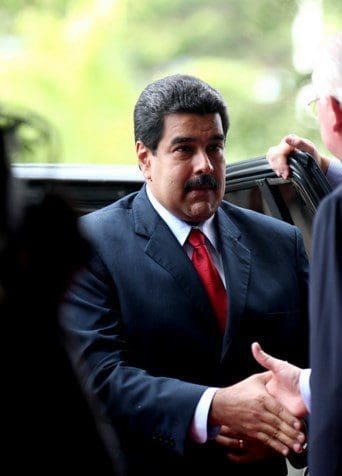
Venezuela’s President Nicolas Maduro has decreed that all Fridays for the next two months will be holidays, in a bid to save energy in the blackout-hit OPEC country.

“We’ll have long weekends,” Maduro said in an hours-long appearance on state television on Wednesday night, announcing the measure as part of a 60-day plan to fight a power crunch.

A severe drought, coupled with what critics say is a lack of investment and maintenance in energy infrastructure, has hit the South American nation, which depends on hydropower for 60 percent of its electricity.

Venezuela’s opposition slammed the new four-day work week as reckless in the face of a bitter recession, shortages of foods and medicines, and triple-digit inflation.

The measure comes on the heels of Maduro decreeing a week-long break over Easter, ordering some shopping malls to generate their own power, and shortening daily working hours.

“For Maduro the best way to resolve this crisis is to reduce the country’s productivity,” said Caracas city councillor Jesus Armas. “Fridays are free bread and circus.”

Some Venezuelans took to social media to express their surprise. “You must be kidding???,” one Twitter user said. Many others wondered how the measure would impact schools, bureaucratic procedures and supermarkets.

It was not immediately clear how the non-working Fridays would affect the public and private sector.

The 60-day plan’s fine print will be announced on Thursday, said Maduro during the television program, which included music, dancing and giant pictures of late leader Hugo Chavez.


Source

Wintershall to Use Island Offshore Vessels on Vega Field

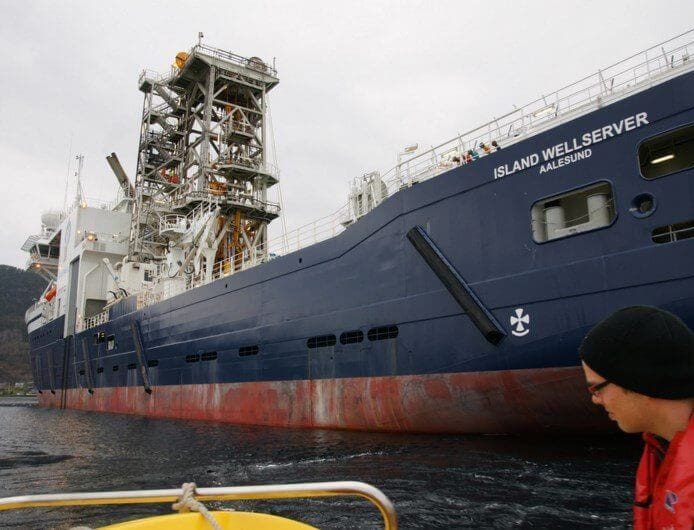
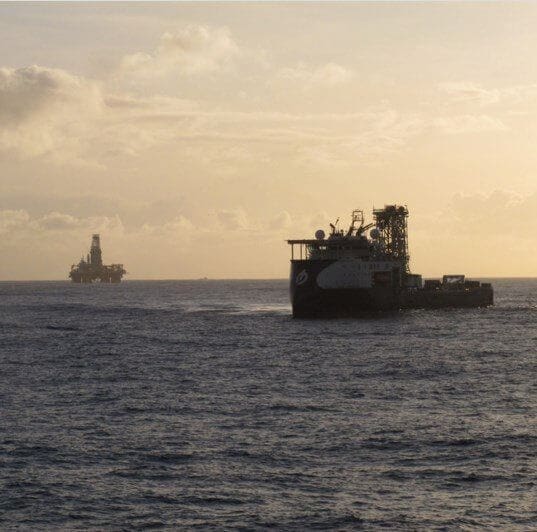
Wintershall Norge AS has received consent to use the mobile drilling facilities Island Frontier and Island Wellserver for intervention work on the Vega field.

The two vessels provide light well intervention services and associated work, construction work, subsea installation work, securing of wells, IMR work, supply duties.

Vega lies due north of the Fram field in the northern part of the North Sea in water depth of 370 meters.

The field has been developed using three subsea templates tied back to the Gjøa field processing facility.


Farstad Names New CFO

0

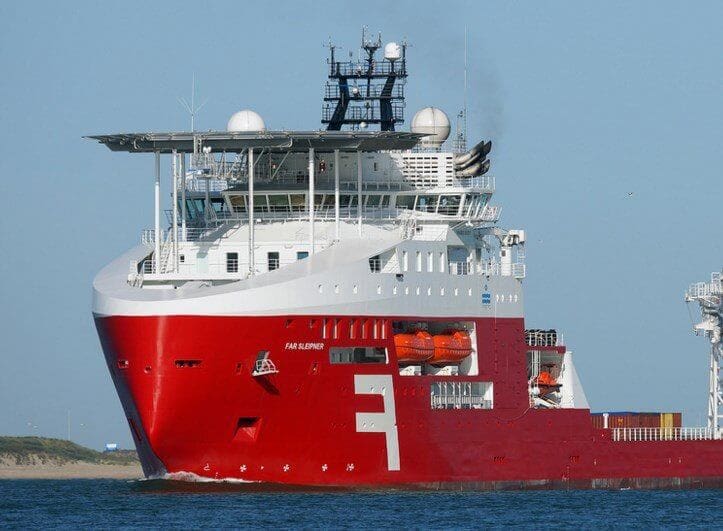
Norwegian shipowner, Farstad Shipping, has appointed Olav Haugland as the company’s new chief financial officer (CFO) after current CFO, Torstein L. Stavseng, has decided to take an early retirement after 28 years of company service.

“Torstein L. Stavseng has been an important and valuable person to the company for 28 years. Farstad Shipping would like to thank him for his long and dedicated service. We will in the future also make use of Torstein’s expertise and experience,” says CEO of Farstad Shipping, Karl-Johan Bakken.

Haugland (50) has previously held the position as CFO at Hansa Property Group and Kistefos.

He will begin on May 1, 2016, while Stavseng will be retiring as from July 1, 2016. Formally, the change of CFO will take place on 1 June 2016.

“I am very pleased that Olav Haugland has accepted the position as CFO. He has broad experience from similar positions in business and industry. We are now preparing Farstad Shipping for the future, and Haugland will be an important contributor to the further development of the company,”says Bakken.


Source

Oceaneering Axes More Jobs in Norway

0

Oil services company, Oceaneering, is reportedly laying off 150 staff from its Norway division.

According to Norwegian Aftenbladet.no the company informed the employees about the downsizing earlier this week, and that specifically ROV division will be most affected by this decision.

Oceaneering’s CEO, Erik Sæstad, was quoted in Norwegian media saying that “the situation is difficult but the company remains keen to create a platform capable to adapt to lower oil prices.”

Reportedly, about 150 jobs will be lost, adding to some 500 in the previous rounds of job cuts caused by the industry slowdown.

Following the latest workforce adjustments, Oceaneering will be left with approximately 1100 employees in Norway.


Source

Getting Paid to Dive – The Commercial Diver

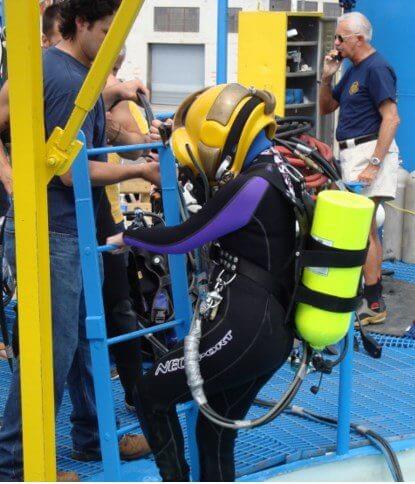
If you are an avid die hard diver like most of us are that indulge ourselves in this passionate escape from our reality on land as often as we can, I would be willing to bet that at some point you considered, “What it would be like to dive for a living?” I mean after all what could be better than getting paid to dive. Not to spoil the fantasy but this implies commercial diving as the likely option, and it is not only far more dangerous than sport diving but also greatly lacking the majority of the time in pleasurable appeal.

Life as a commercial diver can be a very lucrative way to earn a living but will not deliver the majority of the time the pleasure and excitement you get from your love of casual sport diving. Commercial divers more often than not are called to locations or situations offering zero visibility, in freezing cold stormy weather and in muddy rivers and lakes filled with unknown underwater obstacles and predators, any of which can entrap the diver with fatal consequences.

If you are a commercial diver you already know that you are basically on 24 hour standby and can be called to duty below the surface in any weather and water conditions day or night. These demands on commercial divers stem primarily from the fact that in the US alone there are only 5500 to 7500 commercial divers working at any given time. 

Commercial diving has for some time been surrounded in controversy and accused of perpetuating extremely lax and non-existent regulations and inferior training and certification practice and protocol. It also carries the highest death rate statistic which is 40 times greater than that of workers in any other field in the world.

In reviewing reports on commercial diving deaths it becomes evident that one of the single most important and overlooked elements in any dive lies with the “tender”. This of course is the person assigned with the task of monitoring the compressor, feeding the air to the diver and managing the supply and communication lines. There was a popular case in which a commercial diver died as a result of an old oil soaked rag being sucked into the air intake of the compressor during a dive and catching fire. This of course filled the divers helmet with noxious fumes and smoke and he died. All as a result of an inexperienced and incapable tender. Many argue that commercial diving certification is 

not as comprehensive as it should be in training. This may be true, but in this example the divers skills, training and experience were completely irrelevant to the cause of death. With one exception, he took his tenders qualifications for granted.

There are also many “off the record” situations this writer encountered in putting together this story that recount divers who have never been certified showing up to contractors for a commercial diving gig and are hired without producing one shred of documentation or validation of their qualifications and experience as a commercial diver. This is understandable to some degree on the part of the hiring contractor considering there just are not enough commercial divers to fulfill the global demands for their highly specialized skills. This shortage of personnel of course creates an urgency on the part of the hiring contractors to be quick to accept divers at their word so that they may keep ahead of the demands placed on them for commercial divers services.

This article is by no means intended to discourage anyone who may be considering commercial diving as a career or those already working as a commercial diver. It is only intended to instill a strong sense of awareness about not just what’s going on with you as a diver and your equipment under the water, but above the water as well. Know your “tender”.

Anything we do in life that becomes routine is normally susceptible to complacency. The reason and purpose behind this story is to remind us all, commercial and sport divers alike to remain vigilant to procedure and support systems. Never take anything for granted, especially if it involves someone whom you will be entrusting your life to.

Dive smart and dive safe.


Ramboll to Monitor Counter Filling Ops for Submarine Wreck

Ramboll has been commissioned to support the Norwegian Coastal Administration (NCA) in the environmental monitoring of the installation of a supporting counter-fill for the sunken German WWII submarine U-864.

The rediscovery of German WWII submarine U-864 off the Norwegian west coast in 2003 prompted concerns that the vessel’s cargo of mercury could severely pollute surrounding Arctic waters, which led to the decision to cap the wreckage and install a supporting counter-fill.

German submarine U-864 was torpedoed by its British counterpart, HMS Venturer, off the island of Fedje on the Norwegian west coast in February 1945 while on route from Germany to Japan. Historical documents indicate that its cargo included 65-70 tonnes of mercury stored in steel flasks. The wreckage was rediscovered by the Norwegian Navy in 2003, resting on the seabed at a depth of 150 metres.

Geotechnical analyses conducted in 2013 revealed that the seabed in the area around U-864 is unstable leading to the recommendation that counter-filling should begin as soon as possible.

The counter-filling operation, which is scheduled begin in late May 2016, involves laying some 100,000 cubic meters of sand and rock in a controlled and precise manner from a specially designed ship owned by Van Oord in order to stabilise the seabed.

Stringent requirements have been set for environmental monitoring of the work. Tom Øyvind Jahren, Ramboll Head of Department for marine environment, ecology and sediment explains:

“The Norweigan Coastal Administration has commissioned us to perform the third-party control of the monitoring of the counterfill implementation. This will ensure that the project meets all relevant environmental requirements and procedures and will draw on the expertise of Ramboll ecology specialists from Norway and USA.”


Denmark Issues 16 Oil, Gas Licenses

0

Denmark on Wednesday issued 16 oil and gas exploration licenses in the North Sea, just days after A.P. Moller-Maersk threatened to shut down the country’s main gas field. The licenses were awarded to Danish and international players including Dong Energy, Hess Denmark, Wintershall Noordzee, Nordsofonden and Edisson International, Denmark’s Ministry of Energy, Utilities and Climate said.

“With the low oil prices we currently are experiencing it is a great result,” Energy Minister Lars Chr. Lilleholt said in the statement. The oil subsidiary of Maersk, which was not among the winning bidders, said this week it will shut the Tyra gas field in October 2018 if it cannot find a solution by the end of this year to make the ageing site profitable in the long term.

Denmark’s tax proceeds from the North Sea have fallen from 36 billion Danish crowns ($5.5 bln) in 2008. In December the government said it expected tax revenues from oil and gas of just 4 billion crowns this year, but that was based on an oil price of almost $50 per barrel, well above the current $38.60 level for Brent. Other winners in the biding round for the North Sea exploration licences were PA Resources, Ardent Oil, Dana Petroleum, Danoil Exploration, DEA Deutsche Erdoel, Dyas and Hansa Hydrocarbons, the ministry said. 


Source

FMC Technologies Takes Ex-Employees to Court

0

FMC Technologies is taking legal action against its four former Norwegian employees and their company Optime Subsea Services, established in alliance with subsea installation player DeepOcean last year.

Reportedly FMC claims that Optime’s founders have used FMC knowhow and technology for inventions that they have patents pending.

According to one of the founders and CEO of Optime, Jan-Fredrik Carlsen, who previously spent about 12 years with FMC Technologies in Kongsberg, the lawsuit is specific to four patent applications and the rights to these, where all inventions were filed by Optime Subsea Services.

Optime Subsea Services is a relatively new subsea well completion and intervention services company with offices in Houston, USA, and the city of Notodden, which is part of the ‘Subsea Valley’ industry cluster in Norway.

In an interview with Subsea World News last year, the company’s chairman and COO, Thor Arne Løvland, spoke about the company’s patent pending technology: Read More

FMC Background

2015-05-15_1001“In FMC all four of us were able to work together and further develop and understand how to focus on technology and the customer. FMC is a great technological company and working there has been a great experience. We have, however, come up with technology and services that are slightly outside of what FMC, or anyone else in the market, is currently offering” said Løvland to us in May 2015.


CEO statement on FMC Technologies’ claim:

jan-fredrik
Jan-Fredrik Carlsen

“Considering the technical solutions were started and therefore also reached, after the employment with FMC ended, as well as the technical details within the inventions are based upon publicly available information addressing industry known challenges, we can only adhere to the Norwegian judicial system and await addressing these matters as part of the court case.


“Out of respect to our former employer, we consciously avoided any solutions that may be in a potential conflict to FMC proprietary technology or know how, but rather investigated and leveraged inspiration and information from well documented and publicly available information.”


Challenging Start

“We are a small startup company set out to challenge the current cost within the industry by use of more simplified operations and technology. We have limited resources so a lawsuit from a larger company with potential disproportional means is naturally challenging, but the crux of the matter is however with regards to the ownership of the four patent applications and this is something that is well regulated within the law,” said Carlsen.

FMC Technologies remained silent about the case, with a response that the company ‘does not comment on ongoing litigation matters’.


Source

Eni On Track to Complete West, East-Hub Development Projects in Angola

0

In an ongoing effort to complete its West Hub Development Project (WHDP) in Block 15/06 offshore Angola, Italian energy firm Eni S.p.A announced Jan. 11 it had started production from the Mpungi field.

Capable of increasing the WHDP’s output to around 100,000 barrels of oil per day (bopd) within the first quarter of 2016, according to Eni, Mpungi is the third of six fields scheduled to come on-stream as part of the West Hub venture. First oil from the WHDP occurred in November 2014 from the Sangos field, which was producing at a rate of around 45,000 bopd through the N’Goma FPSO soon after coming online. In April of last year, Eni said a second field, Cinguvu, had commenced production as part of the WHDP. Together, Sangos and Cinguvu were producing around 60,000 bopd through N’Goma.

West Hub Development Project
BLOCK 15/06, OFFSHORE ANGOLA
OWNERSHIP:
Eni-36.84% operated interest / Sonangol Pesquisa e Produção-36.84% interest / SSI FIFTEEN Limited-26.32% interest
FIRST OIL:
NOVEMBER 2014
CURRENT PRODUCTION:
100,000 bopd within 1Q 2016
REMAINING FIELDS TO BE BROUGHT ONLINE:
Mpungi North, Ochigufu and Vandumbu
EXPECTED COMPLETION:
Early 2017
Source: Eni

Eni has been present in Angola since 1980, and currently produces a net total of about 105,000 barrels of oil equivalent per day (boepd) from the country. The Rome-headquartered exploration and production company is the operator of Block 15/06 with a 36.84 percent stake, with Sonangol Pesquisa e Produção and SSI Fifteen Limited holding the remaining 36.84 percent and 26.32 percent interests. After winning the international bid round in 2006, Eni drilled 24 exploration and appraisal wells in Block 15/06, discovering over 3 billion barrels of oil in place and 850 million barrels of reserves.

Following the production start-up from Mpungi, Eni aims to add output from the Mpungi North field discovery, which was made in 2013, to the West Hub development, as well as production from the Ochigufu and Vandumbu fields. Oil was discovered in the Ochigufu exploration prospect back in 2014 through the Ochigufu 1 NFW well, with Eni estimating the find to contain 300 million barrels of oil in place. The well encountered a net oil pay of 154 feet and initial data acquired from Ochigufu 1 indicated a production capacity equal to more than 5,000 bopd. In 2013, oil was found at the Vandumbu field through the Vandumbu 1 well and a side-track revealed a net oil pay of 374 feet. Data from Vandumbu 1 ST suggested that the side-track well has a production capacity in excess of 5,000 bopd.

Although six fields are currently expected to come online as part of the WHDP, this figure could increase as Eni is continuing its exploration program in Block 15/06 and has pledged to connect any new discoveries it may find in the area to existing production infrastructure. As things stand, however, Eni anticipates that the West Hub Project will be completed in early 2017, which is the same year that the company plans to start production from the East Hub Development Project (EHDP), also located in Block 15/06.

The EHDP will see the production start-up of the Cabaça North and Cabaça South East discoveries, which were made in 2009 and 2010, respectively. Phase one of the East Hub project foresees the development of Cabaça SE and the drilling of ten subsea wells, as well as the installation of an FPSO vessel with a capacity of 80,000 barrels per day (bpd), according to Eni’s company reports. Peak production is estimated at around 17,000 bpd net to the Italian energy firm.

Drilled to a total depth of 9,284 feet, the Cabaça North-1 well encountered oil pay in sands with “excellent reservoir characteristics,” according to an Eni statement. The well produced oil at rates in excess of 6,500 bopd during production tests, when flow rates were constrained by surface equipment. In July 2010, Eni announced that the Cabaça South East-1 well had proven the existence of oil bearing reservoirs with a total gross thickness of 1,476 feet.

Described as a “major oil discovery” by Eni, the Cabaça South East-1 find was appraised towards the end of 2010 through the Cabaça South East-2 well. During production tests this appraisal well flowed oil at rates of around 7,000 bpd, when flow was constrained by the limited capacity of the surface facilities, and evaluations indicated that the well had increased the initial estimate of oil in place for the discovery by “at least 30 percent,” according to Eni.

Currently, the start-up of the EHDP is expected to raise overall production from Block 15/06 to approximately 200,000 bopd. This figure could change however, should Eni come across any other discoveries in the region that are suitable to be added to the project.

With the WHDP scheduled to reach its conclusion in 2017 and the impending production commencement of the EHDP, both projects look to be progressing well. It’s important to note, however, that Angola has one of “the largest [inventories] of delayed oil projects” in the world, according to Angus Rodger, upstream principal analyst for Wood Mackenzie, who made the statement in a Woodmac report sent to Rigzone in January. As such, both projects are more at risk of deferments and delays than developments in other parts of the globe. Whether or not the WHDP and EHDP will be pushed back remains to be seen, but with Wood Mac predicting that production is set to stagnate in Angola, it’s safe to assume that any delays would be highly unwelcome.


Source
Island Offshore Sending Two Ships on Draugen Job

Island Offshore has secured work for two of its vessels, Island Valiant and Island Constructor, at the Draugen field for Norske Shell.

Island Valiant will start with IMR work (Inspection, Maintenance and Repair) on three wells in April, preparing the wells for the work which Island Constructor will perform later this summer.

The time frame for this task is about two weeks, the company informed.

The Island Constructor is assigned three jobs with different duration, starting in the early summer with Light Well Intervention (LWI) and scale squeeze on two wells at Draugen. In August/September the vessel will return for two more jobs involving LWI and IMR work.

In total the contracts are worth about NOK 100 million (USD 12 million).

“These contracts are very welcome after a challenging winter with our LWI vessels being laid up for the season. It is very gratifying to see our crews and our vessels mobilizing and returning back to work after the winter,” said Managing Director of Island Offshore, Håvard Ulstein.