Home Blog Page 318

Offshore Wind Submarine Cable Spacing Guidance Publicly Available

0

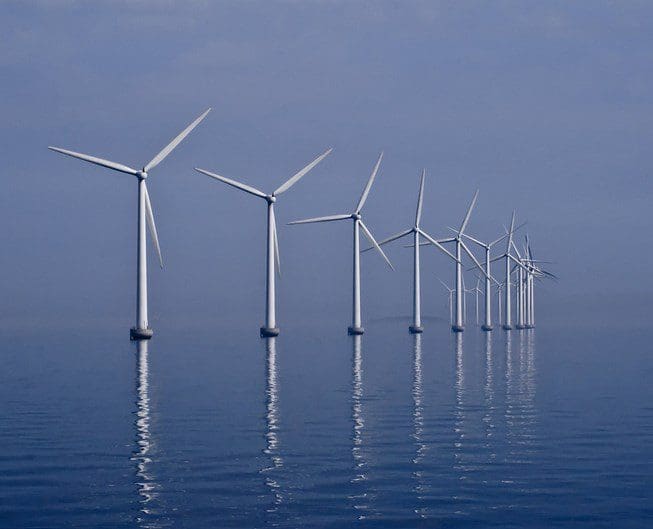
The report of a recently completed study of offshore wind submarine cable spacing, commissioned by BOEM, is now publicly available.

The report, titled “Offshore Wind Submarine Cable Spacing Guidance,” seeks to identify the factors used to determine spacing between submarine power transmission cables. The objective of this report is to provide regulators and developers best practice guidance with respect to cable spacing for the developing offshore wind industry in U.S. waters.

The study was largely based on project experience in the United Kingdom and other European countries with a developed offshore wind industry, BOEM wrote.

The study recommends a risk-based, holistic approach for cable design that takes into account numerous factors and stakeholder interests. Prescriptive standards are not recommended; rather, a case-by-case approach based on site-specific conditions should be used.

The report provides extensive guidelines for addressing all of the factors and stakeholder interests that can be used when reviewing a cable design for on offshore wind project, or any other offshore project involving power transmission cables. It also includes the relevant industry standards and guidelines currently in use.

The report is available here.


Source

Commercial Diving Employment

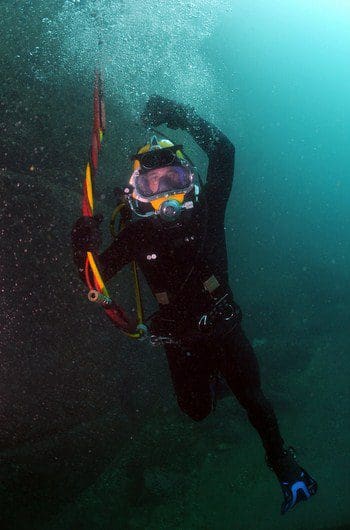
Commercial divers are professional divers that work underwater to fix, repair, inspect, survey, build, or perform any number of activities.

A qualified commercial diver might work at the local police station recovering cars from lakes, do scientific research for NOAA, weld metal structures for underwater construction companies, recover sunken ships for a salvage operation, inspect bridges for structural integrity, explore off shore for the oil industry, harvest seafood in the aquaculture industry, fix problems in water contaminated with sewage or nuclear waste. Commercial divers are always doing something exciting. It’s nothing at all like working a 9 to 5 job.
Consider underwater archaeology jobs for something truly interesting and unique!

To get one of these jobs you must have the proper training. Look at some commercial dive schools. There are plenty to choose from and if you do your research, you’re bound to find one that meets your needs.

After you graduate from dive school, you need to polish your resume so that it will impress potential employers. List your education, job experience, and certifications, but most importantly emphasize your diving skills. If it is your first commercial diving job, be sure to get some quality recommendation letters from your former instructors.

The dive school that you go to should be able to help you find a job. But if not, you need to be the one to start looking. Usually commercial diving jobs are not going to find you. Take a look at job listings on the Internet. Also try phoning up different companies and telling them that you are available to work. Sometimes the most effective thing is to go in person. Let the company know who you are, your training and experience, and that you’re ready to get wet today. Employers appreciate that mentality.

Searching for a job can take some time, especially if the job market is struggling. Be prepared to travel around the country or even around the world if you’re serious about working in the commercial dive industry. Contact employers and be persistent. Often a resume may get tossed in the bin, but by knocking on a door you’re showing an employer that you’re the real deal.

You’ll also need to figure out where to work. Inland? Offshore? Internationally? Most introductory commercial dive jobs are offshore. These jobs are hard work. You’ll work lots of overtime and most likely live offshore too. But this is a great place to hone your skills. Plus it gives you job experience, references, and decent pay.

Divers are often hired for contract work instead of being directly employed by a company. Contract work usually means short-term freelance work without benefits like health insurance. Freelance diving keeps you on the move, which means you are always looking for the next job.

If you’re lucky enough to land a job as an employee, be sure that they offer solid benefits. Either way is a good way to start you career.

The big key with commercial diving employment is to be adaptive. Remember to build a solid resume you have to start at the bottom. You may end up being contracted to work on an oil rig in the middle of the cold North Atlantic before you can land a cushy job working directly for a Seattle company that inspects bridges and getting to call one place home.

Working your way up the ladder is something you have to do in any career. During the process you’ll build long lasting relationships, prove your competence, and hone your skills. Once you’ve worked in the industry and have the experience, you’ll find that there are lots of jobs out there.


Source

Colombia’s Cano Limon Oil Pipeline Halted By Bomb Attack

0

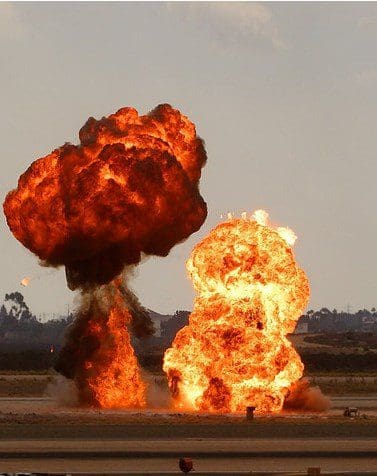
Colombia’s Cano Limon oil pipeline has been shut down following a bomb attack on Sunday evening, state-run oil company Ecopetrol said, adding that it did not expect exports to be disrupted. Attacks on the Andean country’s oil pipeline network by the country’s leftist FARC and ELN guerrilla movements are frequent, with more than 130 in 2014, but Ecopetrol said this was the first targeting the key Cano Limon duct since last November.

Ecopetrol stocks crude at both ends of the 780 km (485 mile) pipeline, which typically carries around 80,000 barrels per day. This could help cover export needs pending repairs, a process that usually takes three to five days. “At the moment pumping is suspended and the armed forces are working to secure the area so that workers can get in to carry out repairs,” said an Ecopetrol press officer of the attack which took place in Boyaca province.

He said repairs were expected to be quick, ruling out any contract defaults or declaration of force majeure. He was unable to specify which group was believed to be behind the attack but said there was no major spillage of oil.

Ecopetrol operates the Cano Limon pipeline through its subsidiary Cenit. It has capacity to pump up to 220,000 barrels of crude per day to Covenas port and also carries oil for other companies including U.S. producer Occidental Petroleum. 


Source

WATCH: Sea Shepherd Rescues Crew as Poaching Vessel ‘Tunder’ Goes Down

0

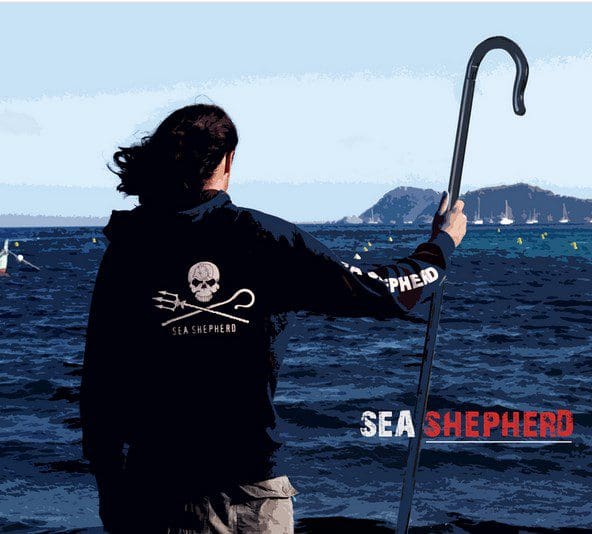
Captain Peter Hammarstedt of the Sea Shepherd anti-poaching ship ‘Bob Barker’ has reported that the unflagged toothfish-poaching vessel ‘Thunder’ has sunk in 4000 metres of water, 19 nautical miles north of the Equator and 115 miles from Sao Tome.

The Sea Shepherd ships ‘Bob Barker’ and ‘Sam Simon’ have rescued the entire crew of 40, including the captain, officers, and deck crew, who were all able to disembark to liferafts from the ‘Thunder’ before it sank.

The evidence is that the Thunder was deliberately scuttled by her captain to destroy the evidence of their illegal fishing operations in the Southern Ocean.

Captain of the Bob Barker, Peter Hammarstedt, said: “When my Chief Engineer boarded the Thunder in the hours leading up to the sinking, he was able to confirm that there were clear signs that the vessel was intentionally scuttled. Usually when a vessel is sinking, the captain will close all hatches so as to maintain buoyancy. However, on the Thunder, the reverse was done – doors and hatches were tied open and the fishhold was opened. It is an incredibly suspicious situation, to say the least.”

The 40 crew of the Thunder are presently onboard the Sam Simon and under observation as Sea Shepherd awaits a response for assistance from Nigeria or Sao Tome.

The pursuit of the Thunder has ended after 110 days with the Thunder sunk and no injuries to the crews on any of the vessels.

Captain of the Sam Simon, Sid Chakravarty, said: “With the safety of my own crew also in mind, we will now take every precaution to ensure that the crew of the Thunder is retrieved from the lifeboats safely.”

The Thunder is described as the most notorious of six vessels, which Sea Shepherd calls the “Bandit 6”, that are know to engage in Illegal, Unregulated, Unreported (IUU) fishing of vulnerable toothfish in the Southern Ocean.

The Bob Barker has been engaged in a four-month, record-breaking pursuit of the vessel, which has gone from the Southern, to the Indian and the Atlantic Oceans.

On December 25 2014, the Sam Simon commenced retrieval operations to remove the illegal fishing gear abandoned by the Thunder when it first fled from the Bob Barker. More than 72 kilometres of illegal gillnet was recovered over a three week period and over 1,400 fish, weighing a total of 45,000 kilograms, were returned to the ocean.

On February 25 2015, the Sam Simon handed over the confiscated fishing gear as evidence of the Thunder’s illegal fishing activity to authorities in Mauritius.

In March, another two of the Bandit 6, the Viking and Kunlun, were detained by authorities in South East Asia. The captains of both vessels were arrested for fisheries related crimes.

The poaching vessels are the target of Sea Shepherd’s first Southern Ocean Defence Campaign to target IUU fishing operators in the waters of Antarctica, Operation Icefish.


Source
US Dept. of Labor: Job Gains for March Weakest in More than a Year

0

Reports released April 3 from the U.S. Bureau of Labor Statistics show that while employment increased in March by 126,000, this was the weakest month for job gains in more than a year.

There were job losses in mining – a decline of 11,000. This continues the trend of the industry with more than 30,000 jobs being lost in 2015 already. In 2014, the industry added 41,000 jobs. This year’s industry losses and last year’s gains were concentrated in support activities for mining, which includes support for oil and gas extraction.

When crude oil prices began dropping the middle of last year, several oil and gas companies had to make capital cuts, including reductions of its workforces. Oil and gas powerhouses Schlumberger Ltd. and Halliburton Co. are just a few of the companies who cut jobs in efforts to deal with the sharp decline in oil prices.

But the jobs report is not all doom and gloom, according to some reports. With the perceived slowing of the economy, many are hoping that the U.S. Federal Reserve will not raise interest rates.  

With the low job gains for March – making for a strong U.S. dollar – as well as other factors, there is little reason for the Fed to raise interest rates, reported Oilprice editor James Stafford in a Huffington Post article. According to Stafford, this would help oil and gas companies by causing the dollar to appreciate at a rate lower than expected and, because oil is priced in dollars, this would create a weaker dollar, causing oil prices to rise – a plus for oil companies.


Source

Scientists Spot Fukushima Radiation Off British Columbia

0

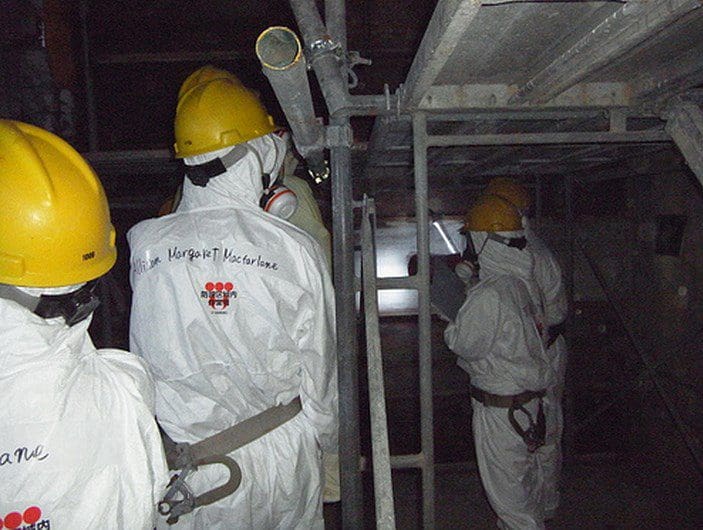
Scientists at the Woods Hole Oceanographic Institution (WHOI) have for the first time detected the presence of small amounts of radioactivity from the 2011 Fukushima Dai-ichi Nuclear Power Plant accident in a seawater sample from the shoreline of North America.

The sample, which was collected on February 19 in Ucluelet, British Columbia, with the assistance of the Ucluelet Aquarium, contained trace amounts of cesium (Cs) -134 and -137, well below internationally established levels of concern to humans and marine life.

The WHOI scientists, with the help of citizen volunteers, have collected samples at more than 60 sites along the U.S. and Canadian West Coast and Hawaii over the past 15 months for traces of radioactive isotopes from Fukushima. Last November, the team reported their first sample containing detectable radioactivity from Fukushima 100 miles (150 km) off shore of Northern California. However, no radiation had yet been found along any of the beaches or shorelines where the public has been sampling since 2013.

“Radioactivity can be dangerous, and we should be carefully monitoring the oceans after what is certainly the largest accidental release of radioactive contaminants to the oceans in history,” said Ken Buesseler, a marine chemist at WHOI who has been measuring levels of radioactivity in seawater samples from across the Pacific since 2011. “However, the levels we detected in Ucluelet are extremely low.”

Scientists at WHOI are analyzing samples for two forms of radioactive cesium that can only come from human sources. Cesium-137, the “legacy” cesium that remains after atmospheric nuclear weapons testing, is found in all the world’s oceans because of its relatively long, 30-year half-life. This means it takes 30 years for one-half of the cesium-137 in a sample to decay. The Fukushima reactors added unprecedented amounts of cesium-137 into the ocean, as well as equal amounts of cesium-134. Because cesium-134 has a two-year half-life, any cesium-134 detected in the ocean today can only have been added recently—and the only recent source of cesium-134 has been Fukushima.

The Ucluelet sample contained 1.4 Becquerels per cubic meter (Bq/m3) (the number of decay events per second per 260 gallons of water) of cesium-134, a telltale sign of having come from Fukushima, and 5.8 Bq/m3 of cesium-137. These levels are comparable to those measured 100 miles off the coast of Northern California last summer. If someone were to swim for 6 hours a day every day of the year in water that contained levels of cesium twice as high as the Ucluelet sample, the radiation dose they would receive would still be more than one thousand times less than that of a single dental x-ray.

Monitoring Effort

Buesseler has had to rely on a crowd-funding and citizen-science initiative known as “Our Radioactive Ocean” to collect samples because no U.S. federal agency is responsible for monitoring radiation in coastal waters. The results are publicly available on the website OurRadioactiveOcean.org.

“We expect more of the sites will show detectable levels of cesium-134 in coming months, but ocean currents and exchange between offshore and coastal waters is quite complex,” said Buesseler,“Predicting the spread of radiation becomes more complex the closer it gets to the coast and we need the public’s help to continue this sampling network.”

Recent partnerships between Buesseler’s group and a Canadian-funded program called InFORM, led by Jay Cullen at the University of Victoria, Canada, has added more than a dozen monitoring stations along the coast of British Columbia. In addition, upcoming cruises with the Scripps Institution of Oceanography in La Jolla, California, will add more than 10 new sampling sites offshore. Also in 2015, a National Science Foundation-sponsored project led by WHOI physical oceanographer Alison Macdonald includes funding to analyze more than 250 seawater samples collected on a research ship travelling this May between Hawaii and the Aleutian Islands, Alaska.

Cairn India Takes Indian Authorities To Court Over $3.3B Tax Demand

0

Cairn India Ltd, India’s largest private-sector oil producer, said on Monday it had moved the Delhi High Court against a $3.3 billion tax demand from Indian authorities related to its listing in 2007.

The company, a unit of London-listed Vedanta Resources Plc, said it had filed a writ petition seeking “quashing/setting aside” of the order passed by the tax authorities.

Cairn India received last month the demand of about 204 billion rupees from Indian tax authorities for an alleged failure to deduct withholding tax on capital gains made by its former parent, Cairn Energy Plc, during a reorganisation ahead of its market listing.

Vedanta said last month it would file a notice of claim against the Indian government under the UK-India bilateral investment treaty.

Cairn Energy, which received a tax demand of more than $1.6 billion related to the same case, has also filed a notice of dispute under the bilateral investment treaty.

Cairn India shares had gained 0.3 percent in morning trade on Tuesday in a broader market that was up about 0.2 percent.


Source

Siem Gets Veja Mate OWF Cable Contract

0

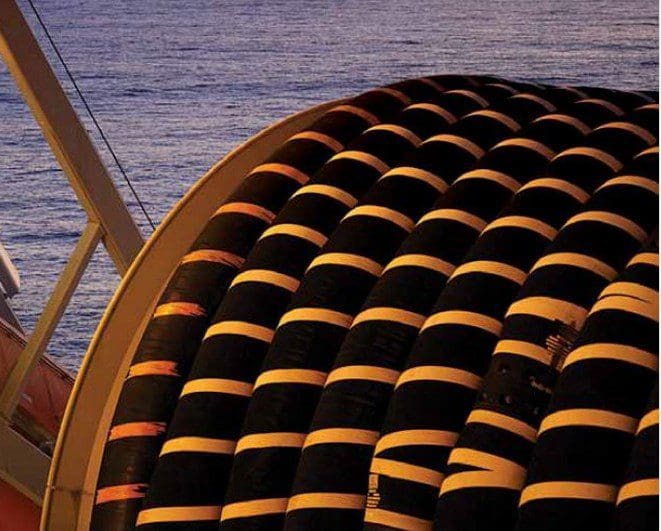
Siem Offshore Contractors GmbH (“SOC”) has been awarded the contract for the turnkey supply and installation package of the inner array grid cable system for the 400 MW Veja Mate Offshore Wind Farm.

The contract, estimated at a value in excess of EUR 100 million (USD 109 million), highlights the continued growth in the Offshore Renewable Energy Market for the Siem Offshore Group.

The project is being developed with the technical advisors of K2 Management, Green Giraffe as the financial advisor and CMS Hasche Sigle as the legal advisor on behalf of the project owner Highland Group Holdings Ltd, SOC informed.

The Veja Mate OWF is located 115km off the German coast, within the German Bight sector of the North Sea. The 67 x 6 MW Siemens supplied Wind Turbine Generators (WTG’s) shall be inter-connected by an inner array grid of 33 kV medium voltage alternating current submarine composite cables with a total length of up to 97 km.

SOC will be utilising vessels and resources within the Siem Offshore Group.

In addition to the submarine cable installation works, SOC will also provide associated materials and services including the supply of the submarine composite cables, cable protection systems and related accessories as well as post-installation termination, trenching and testing services.

The offshore works for the IAG cable system are due to begin in 2016, whereby the project is scheduled to be brought online before the end of 2017.

EMAS in Profit Leap

0

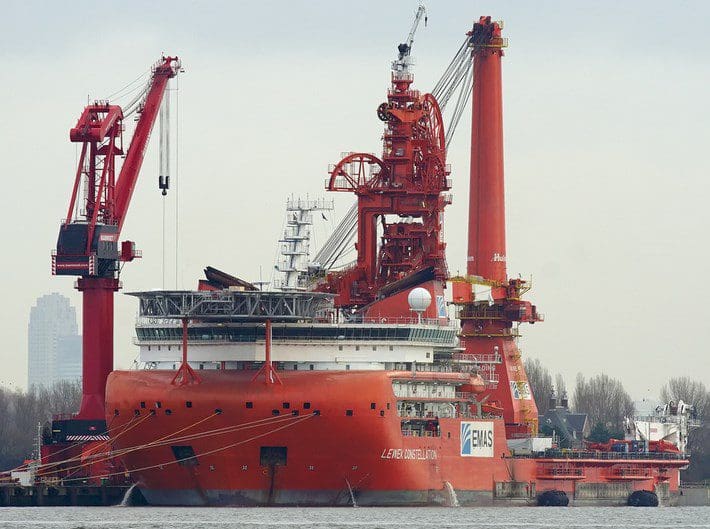
Singapore-based offshore contractor, EMAS Offshore, has reported net profit of US$9.7 million in the second quarter of fiscal year 2015, an increase from the US$4.0 million in the corresponding quarter of the previous fiscal year.

Revenue for the quarter was US$60.9 million, compared to US$67.6 million last year.

For the first half of the fiscal year, reported net profit of US$158.1 million was an increase from the US$14.4 million in the corresponding period, boosted by one-off accounting effects of US$137.5 million from the completion of the business combination of EOC Limited and EMAS Marine. Net profit excluding the one-off accounting effects was also higher at US$20.6 million, a 43 per cent increase, demonstrating the company’s sustained positive operational performance.

The company posted lower revenue of US$133.6 million for the first half, a 9 percent decrease from US$147.6 million, on the absence of contribution from a leased-in vessel returned in the second quarter of fiscal year 2014, as well as slower activity in the offshore support vessel sector.

“The enlarged entity of EMAS Offshore has definitely positioned us to better ride out oil price volatility. While revenues and utilisation rates have declined due to market conditions, we have realised cost benefits and operational efficiencies from the business combination. We are also pleased that the FPSOs, which are largely insulated from the current depressed oil prices,
continue to contribute positively,” said Jon Dunstan, EMAS Offshore’s Chief Executive Officer.

In the Offshore Support and Accommodation Services division, offshore support vessel overall utilisation rate was 79% for the first half of the fiscal year, largely due to the weakness in the shallow water anchor handling, towing and supply vessels (AHTS) and shallow water platform support vessels (PSV) segments. However, the company sees ongoing demand for deep water capable AHTS, where utilisation rate remains above 90%.

In the Offshore Production Services division, the two floating production, storage and offloading (FPSO) vessels, Perisai Kamelia and Lewek EMAS, continue to perform well, maintaining high operational uptime of almost 100%, a testament to the division’s operational excellence.

The company has taken steps to strengthen its balance sheet, and net gearing ratio is improved from 1.28x as at 31 August 2014 to 1.01x.

“Under the current circumstance we are taking a more cautious view for the ensuing quarters. However, we have taken steps to maintain our operational performance, which include exercising and implementing ongoing cost-optimisation initiatives, and focusing on operational excellence. These strategies will serve to protect our bottom line. Moving forward, we will ensure that we continue to improve operational efficiency with an added focus on sustaining vessel utilisation,” said Dunstan.

Gazprom, PetroVietnam to Work on Pechora Sea Shelf’s Upstream Projects

0

Gazprom Neft reported Monday that it has signed several agreements with Vietnam Oil abd Gas Group (PetroVietnam), including a memorandum on joint oil and gas exploration, production and development projects on the Pechora Sea shelf in Russia.

The upstream agreement, covering Pechora Sea shelf projects with a focus on the Dolginskoye field and the Severo-Zapadnyi (North West) licensed block, was signed in Hanoi, Vietnam by Chairman of Gazprom Alexander Dyukov and his PetroVietnam counterpart Nguyen Xuan Son.

“The two parties have agreed to create a dedicated working group of experts from both companies. By the end of October, the parties will form a list of priority oil and gas fields and agree the basic terms of the partnership before further agreements are signed,” Gazprom said in a press release.

Gazprom and PetroVietnam will then execute the Pechora Sea shelf oil and gas projects through joint ventures and stakes in these partnerships will be decided through negotiations.