Home Blog Page 299

Wello Continues Penguin Trials at EMEC

0

Finnish wave energy developer Wello Oy is extending its testing programme at the European Marine Energy Centre (EMEC) in Orkney having signed a one year extension to their original contract.

Their 1MW Penguin wave energy converter has been undergoing testing in Orkney since June 2011, and was first deployed at EMEC’s grid-connected wave test site at Billia Croo on the west coast of Orkney in 2012.

Following the three test periods that have already been completed at EMEC, Wello have confirmed all internal components are still in good working order.

The company is now focusing on demonstrating efficient and reliable device operations and performance to customers, whilst preparing for multi-device deployment in the near future.

Aki Luukkainen, Chief Executive Officer at Wello, commented : “We have established a great working relationship with EMEC who have been instrumental in the deployment and operation of our Penguin wave energy converter. 

“During the next test period one of our targets is to build the business case for multi device deployments.

“The expertise and associated service portfolio that EMEC offers has been of invaluable benefit to us and we’re delighted to be continuing our real-sea trials in Orkney to further the development of our technology, and ready it for array deployment.”

In preparation for the test season, Wello is adjusting device ballasting and will implement incremental improvements to the mooring system to build on learning already achieved through their testing programme. These changes aim to reduce operating costs related to permanent deployment at sea.

Oliver Wragg, Commercial Director at EMEC added: “Wello is a great example of the benefits that extended real-sea testing can provide to technology development. They’ve not only gained experience in installing, operating and maintaining a device in some of the harshest marine conditions, but are building on the learning gained to improve the design of their device and ready it for commercial arrays.

“We’re really excited to have the Penguin testing here again in 2015 and wish Wello Oy all the best with their continued testing.”




Source

US Rep. Mark Sanford Opposes Offshore Testing, Drilling

0

U.S. Rep. Mark Sanford went on record Monday against seismic testing and drilling for oil and natural gas off the South Carolina coast. Sanford, a staunch conservationist, issued a statement saying he opposes testing because the results won’t be shared with the state and local residents to make informed decisions about the benefits and disadvantages of drilling.

Sanford released a letter he wrote to the federal Bureau of Ocean Energy Management asking the agency not to allow offshore testing. Federal officials are considering what topics to study in an environmental impact statement on offshore drilling, and the agency last month wrapped up a public comment period on the question. At the time Sanford told The Associated Press he saw no problem with exploring to at least see how much oil and natural gas might be offshore.

But he said Monday that under the current system, state officials would not have access to the results of seismic tests, which will be conducted for oil companies, before the federal government approves drilling leases. “In my view, it makes little sense to even conduct tests when the states and regions affected will have no say in the process,” Sanford said. “I had initially been intrigued by a new round of seismic testing,” Sanford wrote in his a letter to Geoffrey Wikel of Ocean and Energy Management’s Office of Environmental Programs.

“My feeling was that with these results South Carolina would be able to do a cost-benefit analysis of whether drilling was worthwhile,” he wrote. But without access to the seismic data, he wrote, “South Carolina would be on the outside looking in.” Sanford, one of South Carolina two coastal congressmen, represents the state’s south coast. Tom Rice, whose district on the north coast includes Myrtle Beach, favors oil exploration.

“I don’t know how you can make an intelligent decision about what you’re going to do if you don’t know what’s there,” Rice told the AP last month. But he says states must have a say in where drilling is allowed. A total of 21 communities in the Carolinas, including Charleston, are on record opposing offshore seismic testing or drilling. –


Source

Aker Solutions Takes Profit Hit

0

Aker Solutions’ net income for the quarter fell to NOK 220 million ($28.7 million) from NOK 283 million ($37 million) in the same period last year. Earnings per share (EPS) fell to NOK 0.79 in the quarter from NOK 1.03 a year earlier.

Earnings were impacted by costs of overcapacity in the maintenance, modifications and operations (MMO) workforce, a NOK 52 million provision to cover lease costs for vacated office space and a NOK 26 million write-off on some subsea technology.

The results were also affected by a slow start to the year for subsea services, particularly in the North Sea, and some unfavorable outcomes of late-stage commercial discussions on a few subsea projects.

“The markets continued to be challenging as many of our major clients remain vigilant in how they allocate their capital,” said Luis Araujo, Aker Solutions’ chief executive officer.  “Still, our healthy order backlog puts us in a strong position as we face this uncertain outlook. We made good progress in the quarter on major projects and also benefited from improvement programs across the business.”

The company’s revenue, however, rose 14 percent to NOK 8.5 billion in the first quarter of 2015 from NOK 7.5 billion in the year-earlier period, helped by progress on major projects from Angola to Brazil and Norway.

Aker Solutions’ subsea revenue rose 24 percent in the quarter to NOK 5.1 billion from a year earlier, driven mainly by progress on major projects in Angola, Congo and Brazil. The EBIT margin narrowed to 7 percent in the quarter from 7.2 percent a year earlier.

Sales in Field Design, comprising the engineering and MMO units, rose 2 percent from a year earlier to NOK 3.5 billion in the quarter. The EBIT margin in the same period narrowed to 4.4 percent from 6.8 percent as improved engineering margins were offset by weaker MMO results.

Aker Solutions secured NOK 9 billion in orders in the quarter, including a NOK 4.5 billion five-year contract from Statoil to provide engineering, procurement and management assistance (EPMA) services at the Johan Sverdrup oilfield in the North Sea.

The company also won an order from Statoil for concept studies on future phases of the development. This helped boost the order backlog to NOK 48.3 billion at the end of the quarter from NOK 39.6 billion a year earlier. About two-thirds of the backlog came from projects to be delivered outside Norway.

Subsea’s order intake fell 55 percent to NOK 2 billion in the quarter from a year earlier and consisted of smaller new projects and growth in existing contracts. While tendering activity was high, major projects were postponed. The order backlog rose 27 percent from a year earlier to NOK 30.4 billion at the end of the quarter. The backlog exceeded total subsea revenue in the prior 18 months.

“Underlying factors supporting a positive long-term outlook for offshore and deepwater oil and gas developments remain in place. Short-term uncertainty has increased as oil companies scale back spending amid concern over capital and the drop in oil prices since July last year. The Norwegian MMO market has been especially affected by the slowdown, which the company expects to last one or two more years. Major projects such as the Johan Sverdrup development are seen offsetting some of the decline,” said the company in a statement.

Deep Sea Diving: A Excellent Profession For Folks Who Loves Diving

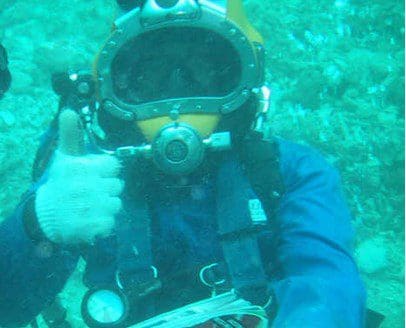
If you love to go scuba diving but you”re tired of  diving in the usual locations, then you may want to go for some thing a lot more adventurous. Deep sea diving. Deep sea diving is considered to be the greatest form of scuba diving there is. Whether you are a recreational diver or you want to begin a career in scuba diving, Deep sea diving can be a challenging branch of exploring the underwater globe. Like scuba diving, you will be employing some of the standard equipments, such as regulators, scuba tanks, lead weights, BCD, wetsuit or dry suit, fins, mask, and other people. Nevertheless, you have to keep in mind that there are rather a lot a lot more equipments and specific abilities that you will need to master in order to grow to be a deep sea diver or what is typically called a technical diver in the recreational diving planet.

In expert diving, deep sea diving is frequently referred to as commercial diving. To read additional info, consider looking at: www.brightsq.com/. If you adore diving so a lot and you want to make a living out of it, one of the finest profession options is by being a commercial diver. But, before you don your scuba diving gears and apply as a commercial diver, you have to take into account that commercial diving is a different type of diving. There are high tech equipments involved and you will also want to use unique tools.

Commercial diving is frequently utilised in underwater construction and underwater salvage operations to name two. Right here, you will have to manage hazardous components
and operate unique tools to get the job accomplished. For instance, there will be instances where you will require to attach high explosives underwater to blow off sunken ships that can be hazardous to other ships, and you will also deal with underwater welding for underwater construction.

Cleaning the hulls of ships is also component of the job as a commercial diver. This surprising http://www.brightsq.com/ URL has diverse lofty lessons for where to engage in it. In oil rigs, you will be essential to repair issues with the oil rig underwater, or you will also be essential to construct or weld pipelines.

Since of the dangers of commercial diving, you will need to go to a special commercial diving school first. Right here, you will be taught how to take care of special equipments employed in commercial diving. Also, you will be taught about underwater pressure, as properly as the diverse gears employed in commercial diving, such as the complete face mask, the helmet, lead boots and others.

Commercial diving is extremely distinct from recreational diving. In the school, deep sea diving is usually the subject. Here, you will also be taught about the various types of air mixes, particularly the trimix, that is employed for breathing underwater. Dig up further on a partner portfolio by visiting http://brightsq.com. Also, you will also tackle diving medicine subjects, such as how to treat decompression sickness and nitrogen narcosis.

Despite the fact that there are dangers in commercial diving, accidents right here are uncommon. This just proves that commercial divers are nicely-trained to get the job accomplished.

In commercial diving, there is generally no space for error.  This is why commercial divers train really hard for their profession. If you want to grow to be a deep sea diver, then becoming a commercial diver is the appropriate career option for you.

Here, you will not only be capable to earn a lot of funds, but you will also have a job that is complete of excitement and adventure.. Visiting www.brightsq.com probably provides warnings you should tell your friend.

Should you loved this post and you would want to receive details concerning health insurance for unemployed please visit our own website.


Source

Groups Want Review Of Shell’s Arctic Regulatory Filings

0

Two groups petitioned the U.S. Securities and Exchange Commission on Monday for an investigation of Royal Dutch Shell PLC and what the groups call misstatements in regulatory filings regarding the risk of a catastrophic oil spill from Arctic offshore drilling.

The petition was filed Monday by Oceana and the Abrams Environmental Law Clinic at the University of Chicago Law School.

Mike LeVine, an attorney for Oceana, argued that Shell hasn’t disclosed to investors that its response measures to a major or catastrophic spill are unlikely to work.

“Shell asserts that it has thorough response capabilities and does not explain that the techniques on which it proposed to rely on are unlikely to be effective in the Arctic, or haven’t been tested in the Arctic Ocean,” he said Monday night.

He said that Shell also hasn’t promptly or fully disclosed to investors the threat of litigation over its proposed Arctic operations. Alaska Native and conservation groups challenged a 2008 lease sale in the Chukchi Sea off Alaska’s northwest coast but Shell didn’t mention the lawsuit to investors for six years, he said. Shell now, however, is using the threat of litigation as one justification for seeking more time from the federal government to explore its leases, he said.

A message seeking comment left with Shell USA late Monday night after the close of business hours wasn’t immediately returned.

The U.S. Geological Survey estimates Arctic offshore reserves at 26 billion barrels of recoverable oil and 130 trillion cubic feet of natural gas. However, drilling in Arctic waters is strongly opposed by conservation groups, which claim oil companies have not demonstrated a capability of cleaning up spills in ice-choked water. They also say the U.S. Arctic lacks basic infrastructure found in other offshore areas such as nearby deep-water ports, major airports and a strong Coast Guard presence.

Shell spent $2.1 billion in the 2008 Chukchi lease sale and its Arctic investment has grown to more than $5 billion.

The company performed exploratory drilling in 2012. Shell drilled top holes at two locations in the Chukchi and the Beaufort seas but experienced significant problems.

The company wasn’t allowed to sink bits into petroleum-bearing rock because it didn’t have required spill containment equipment on hand. A drilling vessel that operated in the Beaufort Sea, the Kulluk, after the drilling season broke loose from its tow line as it was crossing the Gulf of Alaska. The vessel foundered off an island near Kodiak.

A drill ship that operated in the Chukchi, the Noble Discoverer, owned by Sugarland, Texas-based Noble Drilling LLC, was found to be in violation of federal shipping laws. The company in December pleaded guilty to eight felony environmental and maritime crimes and agreed to pay a $12.2 million fine.

Petitions to the SEC have been used before to draw attention to environmental concerns. Groups have used the tactic to make companies acknowledge risks for investors from possible future climate change actions and their effects on company assets, such as fossil fuel reserves.

LeVine said the two groups submitting the petition on Shell followed submission requirements and provided information the SEC should need to justify an investigation.

Oceana, he said, wants a frank discussion about the risks and potential benefits of Arctic drilling that Shell and other companies proposed.

“This is less about stopping an activity and more about a fair disclosure and evaluation of risk,” he said. “Here, environmental and financial concerns overlap. Good information is good for the environment and it’s good for investors. Our petition is an effort to further both of those goals.”


Source


Atlantis Resources Buys Marine Current Turbines

0

Atlantis Resources has reached an agreement to acquire the entire issued share capital of the Bristol-based tidal business, Marine Current Turbines Limited, (“MCT”) from Siemens AG in an all share deal.

The acquisition is conditional upon certain conditions precedent being satisfied.

Siemens will receive 9.99% of the Company’s enlarged issued share capital as sole consideration for the sale.

With the acquisition, Atlantis will get MCT 1.2MW surface piercing tidal SeaGen system (“SeaGen S”). The acquisition will also include MCT’s tidal turbine intellectual property portfolio and the designs for MCT’s turbines, including 1 MW fully submerged SeaGen turbine (“SeaGen U”) and its 1MW SeaGen system designed for floating deployment applications (“SeaGen F”).

The company’s dedicated turbine assembly facility will be located at Global Energy’s Nigg Energy Park in Ross-Shire, Scotland.

Global Energy Group provided a loan package to finance ongoing working capital of MCT. Interest on the loan will accrue at the rate of 4.5% per annum and be rolled up and repayable in May 2018 at the same time as the principal amount.

Tim Cornelius, CEO of Atlantis, commented:

“We are delighted to be acquiring this leading British tidal power company from Siemens which firmly positions Atlantis as a leader in UK tidal power and globally.  Marine Current Turbines has developed a world leading tidal turbine, a world class engineering team, unrivalled expertise in long-term turbine operations and testing through its SeaGen installation at Strangford Lough and an impressive portfolio of projects under development across the UK.

“We welcome Siemens as an Atlantis shareholder. This deal sees two industry leaders, MCT and Atlantis, combining to underpin the UK’s position as one of Europe’s tidal power leaders.”

Achim Woerner, CEO Hydro & Ocean Power at Siemens Wind Power and Renewables Division, commented:

“We are pleased that Atlantis, one of the strongest players in the comparatively new segment of tidal stream, has acquired Marine Current Turbines. This will enable the areas of competence of Marine Current Turbines, in particular its engineering capabilities, to be retained. Siemens will continue to cooperate with respect to component supply with MCT / Atlantis in the future.”

Gordon Ronaldson, Executive Vice President of Global Energy Group’s Process & Equipment business, commented:

“We are delighted to have played a role in assisting in the consolidation of the tidal power market in the United Kingdom.  There is a real opportunity through this acquisition to establish Scotland as the centre of excellence for the sector, in terms of IP ownership, project development and manufacturing. This is an important and exciting milestone in establishing Nigg as Scotland’s main construction and logistics base for offshore renewables. We look forward to welcoming the enlarged Atlantis group to Nigg Energy Park and to supporting their various projects in Scotland and throughout the UK.”

Saudi King Names Al-Falih Aramco Chairman, Replacing Al-Naimi

0

Saudi Arabia’s King Salman named Khalid A. Al-Falih as chairman of Saudi Arabian Oil Co., the world’s biggest crude exporter, replacing Oil Minister Ali Al-Naimi, according to state television.

Al-Falih, born in 1959, was also named health minister in a royal court statement published by the official Saudi Press Agency on Wednesday. He had been president and chief executive officer of Aramco. No replacement for that job was announced.

“Having Al-Falih as a full cabinet remember now does not preclude him from other ministerial positions including petroleum in the future,” Mohammed al-Ramady, professor of economics at King Fahd University of Petroleum and Minerals in Dhahran, Saudi Arabia, said by phone on Wednesday.

Al-Falih said on Jan. 28 that Saudi Arabia won’t “singlehandedly” balance global crude markets even if prices fall. Saudi Arabia has resisted calls from fellow members of the Organization of Petroleum Exporting Countries to trim output. OPEC kept its production target unchanged at a Nov. 27 meeting, seeking to defend market share rather than support prices which fell about 50 percent last year.

Al-Falih took office as president and chief executive officer of the company on January 1, 2009, according to the company’s website. He spent his entire career at Aramco over a period of three decades.

Al-Falih earned a B.S. degree in mechanical engineering from Texas A&M University in 1982. In 1991, he graduated with an MBA from the King Fahd University of Petroleum and Minerals in Dhahran, Saudi Arabia.


Source


Kraken Sonar Nets AquaPix Order

0

Kraken Sonar Systems Inc. has received an order for its AquaPix® Synthetic Aperture Sonar system from international defence contractor.

Over the past 60 days Kraken has received orders exceeding $1.2 million with deliveries expected in the current financial quarter, the company informed.

“AquaPix® is a game changer for seabed mapping,” said Kraken President and Chief Executive Officer Karl Kenny. “Demand for our AquaPix® systems by some of the most influential companies in underwater defence validates the technology, enhance our corporate image and open new opportunities in the other market sectors we serve.”

AquaPix® provides sonar solution for applications that include naval mine countermeasures, hydrographic survey and subsea surveillance of strategic assets.

Kraken Sonar did not disclose the name of the client.

Biz Wave: Divers Gifts & Collectables

Briefly, tell us how Divers Gifts & Collectables started. When did you start to see a demand for these types of products?


I served in the Royal Navy as a Mine Clearance Diver for over 33 years. During my tenure, it was quite evident that there was a need for diving related gifts: at that time, primarily for military and commercial divers.
There were always events taking place that required presentation gifts; whether it was a retirement or a career achievement.

The business began as a hobby but soon evolved with popularity!

Your glass figures are handmade and customized for specific requirements. What’s one of the most difficult aspects of making these glass models?

There is a lot of heating and cooling that takes place during the process of making the glass models. The biggest challenge this presents is cracking. It’s just an unavoidable part of the process when you are dealing with such a high and low range of temperatures. These models are not “blown” – they are made with solid molten lead-free silicon glass – shaped and sculpted by hand.

No molds are used whatsoever.

In your print section, you have a couple versions of a shark and commercial diver painting. How do you feel these paintings stand out from others on the market? 

John Simm is a brilliant artist, and one of the most notable differences is his use of depth of field and detail.  These attributes are very pronounced when these prints are displayed with appropriate lighting.

How do you find antiques, and what are your requirements for categorizing items as such?

A lot of searching and sometimes sheer luck!

You can stumble across great finds in antique or thrift shops, car boot sales and poorly listed items on eBay. Sometimes it’s by word of mouth.

Experience allows me to categorize correctly.

Is most of your target audience current or former professional divers? Or do you believe many work outside of the profession? 

Based upon sales over the years and the daily enquiries we receive, it is a fairly equal mix of all three. We deal with current and former professional commercial and military divers every day.

We also deal with a lot of enthusiasts who may never have worked in the profession but find historical diving intriguing.

Recreational divers always want something different to give as “leaving gifts”, and that is where we come in.

What’s one of your most popular items? Do you have any theories as to why it’s so popular?

It is difficult to say just one item, as there are really two that always stand out:

The MkV Diver and the Kirby Morgan Commercial Diver (both in cold-cast bronze).

Because there is such an equal mix of former and current professional divers as customers, these two figurines are always at the forefront.

It really is a true representation of the old and the new.

What’s one of the major highlights of working in the industry?

The major highlight would have to be being selected as the primary contractor, after stiff competition, for the MkV Monument:

The 11-foot, bronze statue of a historical hard hat diver named “JAKE” was erected in October 2012 at the Naval Diving & Salvage Training Center (NDSTC) in Panama City Beach, Florida.

This project was a labour of love that spanned nearly 6 years…selling 300 limited edition statuettes funded the entire project.

The MkV Monument represents a sentiment of deep appreciation to all the past, present and future military divers all around the world and is the most visited monument in Florida!


Paul Guiver, CEO & Artist of Divers Gifts & Collectables

Serving divers and diver enthusiasts around the world, Divers Gifts & Collectables sells maritime figurines, art, books and antiquities.


Eni Starts Second West Hub Field in Angola

0

Eni started production two weeks ahead of schedule at the Cinguvu oil field, from the West Hub Development Project in Block 15/06 in the Angolan Deep Offshore, approximately 350 kilometres northwest of Luanda and 130 kilometres west of Soyo.

The start-up follows the achievement of West Hub’s first oil through Sangos field start-up, during last November 2014.

The West Hub Development Project encompasses the development of Sangos, Cinguvu, Mpungi, Mpungi North and Vandumbu fields in a water depth ranging from 1,000 to 1,500 meters. The wells are arranged in clusters and connected to the FPSO (Floating Production Storage and Offloading Unit) N’Goma, which has a treatment capacity of 100,000 barrels of oil per day.

The two fields on stream, Sangos and Cinguvu, are currently producing about 60,000 barrels of oil per day (18,000 bopd Eni’s equity) through the N’Goma FPSO. Production is envisaged to ramp up to 100,000 barrels of oil per day in the last quarter of 2015 with the start-up of the third field, Mpungi, which will also be connected to N’Goma FPSO.

“This is indeed another important step within  the innovative hub-building strategy at the base of our success in Block 15-06 in Angola. A second field, Cinguvu, came on stream on time and on budget, after Sangos in November 2014, confirming our excellent track record in terms of efficiency, technology and innovation“, CEO Claudio Descalzi commented.

Eni is operator of Block 15/06 with a 35% stake and Sonangol EP is the Concessionaire. The other partners of the joint venture are Sonangol Pesquisa e Produção (35%), SSI Fifteen Limited (25%) and Falcon Oil Holding Angola SA (5%).