Home Blog Page 286

Saipem Greenlights ShawCor’s South Stream Contract

0

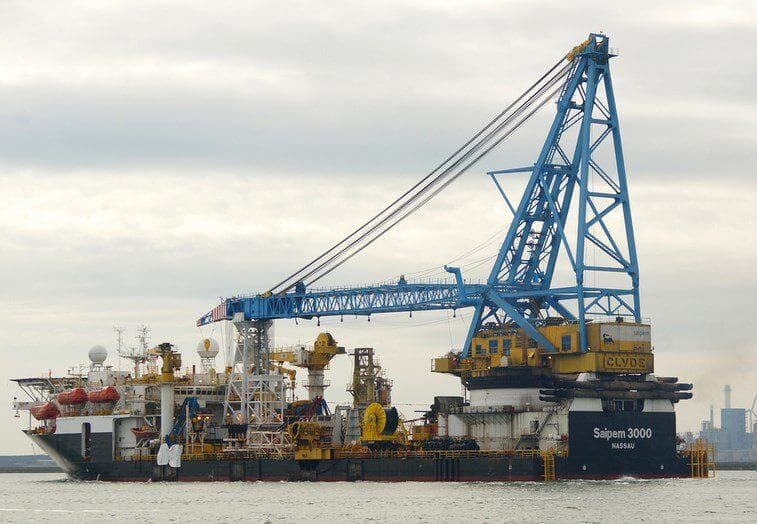
ShawCor informed that its Canusa-CPS division has received notification from Saipem SpA that the suspension of the work on the Saipem contract in relation to South Stream Pipeline has been lifted with immediate effect and that work on this contract is to be resumed.

The notification follows Saipem’s announcement that the company has been cleared by South Stream Transport B.V. to continue pipeline construction operations in the Black Sea.

In July last year, Canusa-CPS, won a $30 million contract from Saipem SpA to provide field joint coating services for Line 1 of the South Stream Offshore Pipeline.

However, in December 2014, ShawCor announced the suspension of the majority of the work on its South Stream Pipeline contracts with Europipe GmbH and Marubeni Sumitomo Consortium (with a combined value of approximately US$100 million) and with Saipem SpA (with a value of approximately C$30 million).


Source

Commercial Diving;And How Deep is Deep?

A reader in New York asked, I am a certified advanced open water scuba diver. Will this help me become a commercial offshore diver? Probably not. An entry level commercial diver needs a great deal of additional training. This primarily includes the use of several kinds of diving gear, many kinds of tools and numerous skills to accomplish specific tasks. Divers are used for inspection and repair services in offshore oil. In addition, diving services are required both inshore and offshore in the installation of power plant intake and outfall pipes, in pipe pulls and in harbor construction. Whether the problem is cathodic protection of a platform, salvage of a vessel or underwater welding, divers need extensive training and experience in keeping underwater facilities on stream.

A commercial diver is defined as one who works underwater for pay. Within that definition there are several categories. Each class is divided according to the purpose of the dive rather than for the type of equipment used. Also, not everyone who works in the diving industry is a commercial diver. Employees who work in a dive shop or who crew boats are not necessarily divers.

All categories of divers need a lot more going for them today than they did a decade or two ago. It has been suggested the principal reason for this is that the science and technology of diving have changed so much that techniques have become more complex and involved. Possibly this is part of the reason. I suspect the real reason may be more complex than that.

Technifacts has been part of Skin Diver Magazine for more than 30 years. A review of questions received, and some solutions to the problems, indicate that not all recreational diving subjects are developed and taught on a need-to-know basis. It seems to me a number of subjects are taught in considerable detail but are not applicable to developing a safe diving profile. Other subjects are completely neglected or barely mentioned yet are important, some even critical, to diving safety.

Diving physics and physiology are fixed elements. They have not changed for the hundreds of years we have been part of the underwater environment. In spite of this, radical and extensive changes have developed in teaching these subjects. Technifacts has prepared a list of subjects in which suggested changes might improve dive training and dive safety. If you would like to receive a copy of the list, send a self-addressed, stamped envelope to E. R. Cross, Technifacts, c/o Skin Diver Magazine, 6420 Wilshire Boulevard, Los Angeles, CA 90046-5515. In the interest of improving dive training and safety, you are invited to indicate the areas you think need to be stressed more. Also, list the subjects you think are given too much significance. In addition, list the skills and subjects now taught that need to be modified to meet current technology or techniques. Comments on your training compared to your later experience as a diver are important. Technifacts would appreciate hearing from you.

HOW DEEP IS DEEP?

To help us recognize and accept our diving limitations, Technifacts periodically poses the question: How deep is deep? The deepest place in all the oceans is the Mindanao Deep in the western Pacific. It is about 10,850 meters (35,588 feet) deep. Pressure at that depth is nearly 16,000 psi. A crew of two in the bathyscaphe Trieste made the only dive to the bottom. They found forms of life living quite well on the bottom in nearly 6,000 fathoms. With our recreational diving limit of 130 feet we are hardly on our way to the deepest ocean bottom. Between the two extremes of how deep we can dive and the maximum depth, there are some interesting answers to the question of how deep is deep. Deep breathhold or scuba dives by individuals for the sake of records produce little if any scientific information that benefits diving.

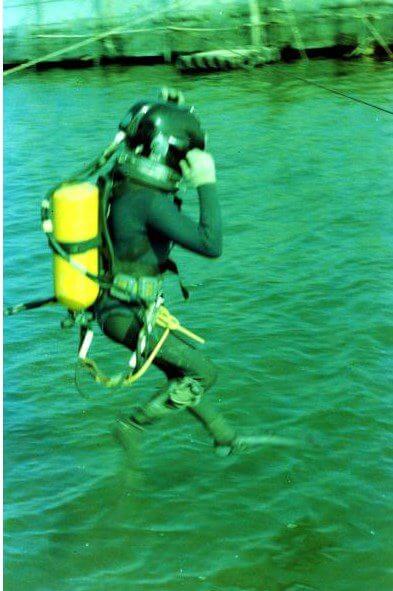
Offshore, inland and coastal commercial divers now work in conventional surface air supplied helmet gear to depths of 180 to 200 feet. Scuba diving is permitted by OSHA regulations to those depths under limited conditions. From 200 to 300 feet, diving rigs using helium and oxygen as a breathing medium are used. To 300 feet, diving is usually performed on a similar mixed gas system, except descents and ascents are done in a bell. The diver(s) exit the bell only long enough to perform what is (usually) a short work time. This type of diving is sometimes referred to as bell-bounce diving.

Full saturation diving has been conducted to depths of nearly 2,000 feet. One classic saturation dive for a crew of eight divers was to 600 feet for 30 days. Several additional days were required for decompression. There is some indication that humans diving to depths greater than 2,000 feet may be subjected to tissue damage, besides the real potential for bends and other physiological problems.

Limited depths for divers is only the beginning in offshore work. From about 300 feet down the offshore industry is now using sophisticated ROVs or AOVs. In depths where divers can work, ROV and AOV systems sometimes support them. In water deeper than can be tolerated by divers, the ROVs perform the work.

Ocean News and Technology, (P. O. Box 2174, Palm City, FL 3499-7174 USA), reported in its November-December issue on some offshore production depths. Petrobras has set a new record, having begun production at the South Marlim 3B well in 5,607 feet of water. This tops Shells Mensa (at 5,499 feet) in the Gulf of Mexico. Then Ocean News asks, Whats next? Petrobras has Roncador at 6,022 feet. Shell has the ultra-deep Baba waiting at 7,626 feet. Exploration in 10,000 feet of water has already began.

Off Gabon (in West-Africas Gulf of Guinea) a tract for ultra deep oil development has been leased. Depth to the ocean bottom is just more than 16,000 feet. ROVs can be designed to handle any reasonable task at this depth.

The various classes of divers have already reached their physical and physiological safe diving limits. For the recreational diver on air, that limit is 130 feet. For the helmet air supplied commercial diver, it is probably 200 feet. For the mixed gas helmet diver, it is probably 300 feet with a bell-bounce diver going to 600 feet for short durations. For the mixed gas saturation diver, perhaps 2,000 feet. I suspect this should be the limit of pressure to which a human should be subjected. Beyond those lies potential pressure and possibly pressure related tissue volume problems.

There is probably no bottom at the deep end as long as the industry has the incentive to work deeper. The technology, in the way of ROV and AOV systems, is available. Specially trained divers, already familiar with ocean conditions, are available for operating the special systems. The total wealth of the oceans resources is unknown at present. As wealth becomes known, regardless of how deep, someone will find a way to get to and harvest it.


Source
VBMS in Gwynt y Môr Cable Repair

0

Balfour Beatty, the international infrastructure group, has contracted VBMS to conduct cable repairs at Gwynt y Môr offshore wind farm.

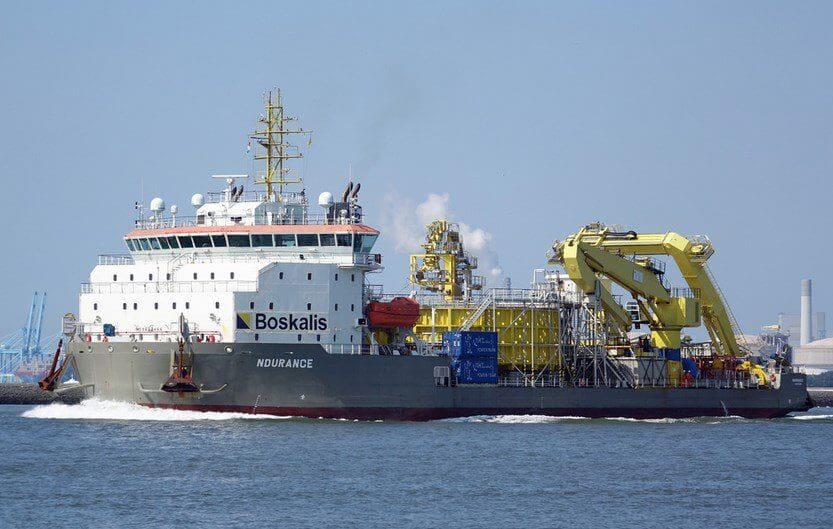
The repairs on the cable are undertaken by multipurpose vessel, NDurance, in  Mostyn area, the company’s spokesperson confirmed.

The work, which started on May 12, 2015, is expected to be completed by the end of May, early June.

During the project the NDurance will be operating on DP and picking up/laying cable, and as such it will be restricted to manoeuvre, the company noted.

To remind, Balfour Beatty reached a financial close and completed the acquisition of the Gwynt y Môroffshore transmission project (OFTO) in the UK in February this year.

The Gwynt y Môr OFTO is the high-voltage electricity transmission system connecting the 576MW offshore wind farm, in North Wales, to the onshore transmission grid.


Source

Commercial diving

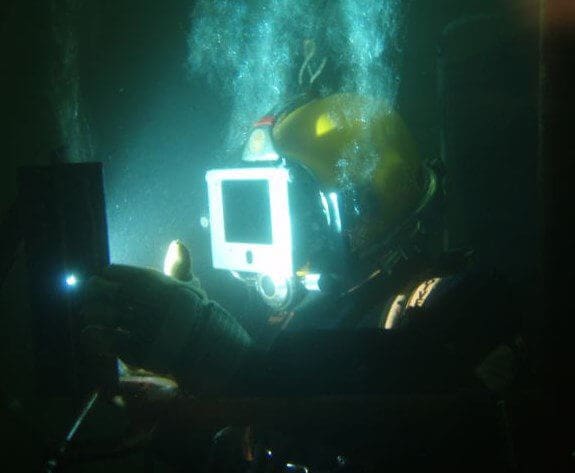
Professional divers and their clients will recognize the image quality to the left as that of an ordinary underwater camera in fairly normal visibility. 

LYYN technology enhances video in real-time, decreasing visual disturbances and increases visibility. It addresses visibility problems caused by predominate water color,  turbidity, fog and low light. LYYN visual enhancement technology uses mathematical algorithms initially developed for medical diagnosis, the technology is packaged in easy-to-use products which will increase subsea productivity, real-time in live operations or in post processing video for analysis, documentation and report.

LYYN video enhancement is especially useful in detecting surface damage such as fatigue cracks, metal corrosion and concrete spalling.

Topside operations

LYYN technology comes as stand-alone products that connect directly into the divers video feed. Just plug LYYN into your topside monitor and the diving supervisor and client will have a better view in real-time.

The image from the diver’s helmet mounted camera is normally only displayed to the topside supervisor. All instructions therefore rely on the supervisor’s skill in directing the diver through an audible communications link. Under certain seawater conditions, where poor visibility exists, it is known that topside personnel have a better image of the diver’s immediate environment than the diver because of the performance of subsea cameras. This is especially true when the video is lyynified in real-time topside by the supervisor, using a LYYN or LYYN partner product.

Challenges of low light

Video cameras and strong illuminating lights on the helmets of commercial divers creates problems in turbid waters. Strong light reflections overexposes parts of the image rendering it useless. With a LYYN unit plugged in there are new ways to optimize the image. By reducing the light, or preferably remount the light source so that it does not point in the same direction that the video camera is, and instead turning up LYYN enhancement, the video image will become clearer with much greater detail.


Source


Canada Oil, Gas Survey Reveals Optimism Regarding Hiring Plans for 2015

0

Results from a recent survey of executives for oil and gas companies in Canada revealed that their hiring plans for 2015 may be more positive than public perception. Despite the current decline in global oil prices, only 27 percent of top 50 respondents (CEOs from companies included in the 2014 list of Top 50 Performing Oil and Gas Companies) agreed with the statement “we plan to reduce headcount in 2015 given current market conditions,” according to the survey by executive search firm Caldwell Partners.

Interestingly, 40 percent of top 50 respondents agreed that they planned to increase headcount in 2015 despite current market conditions. Other promising results from the survey in regard to hiring plans for the year include:

  • 67 percent agree that current market conditions create critical talent acquisition opportunities they will pursue in 2015; 51 percent of other companies (those outside of the top 50) agree
  • 53 percent agree the downturn will free up top quality talent that wouldn’t otherwise be available; 67 percent of other companies agree
  • 57 percent believe competitors will be less likely to recruit talent in current market conditions; 50 percent of other companies agree
  • 49 percent believe senior talent will be less likely to retire given current market conditions; 45 percent of other companies agree
  • 67 percent believe market conditions will improve for Canadian oil and gas companies within the next 12 months; 44 percent of other companies agree
  • 70 percent agree that current market conditions represent an opportunity for the industry to address critical challenges and will make the Canadian oil and gas industry stronger; 78 percent of other companies agree

After analyzing survey results, it appears that CEOs from the top 50 companies have an optimistic outlook for 2015 hiring plans in the midst of the industry’s downturn, which they may view as an opportunity to round up top talent and increase recruiting efforts.


Source

Seatronics Delivers Predator ROVs to Great Eastern Group

0

Seatronics, an Acteon company, announced that  (GEG) has taken delivery of two Predator inspection-class ROV systems integrated with SeeByte’s SeeTrack CoPilot.

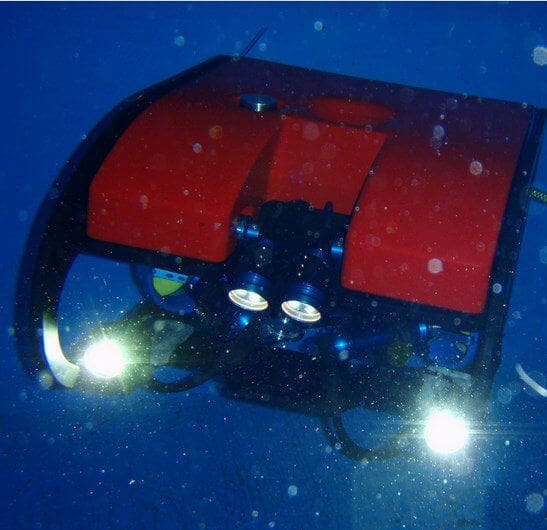
Great Eastern Group will use the Predators to provide enhanced capabilities for their survey and inspection tasks. SeeTrack CoPilot will allow operators to automate inspection tasks using point-and-click software to fly the ROV to any given point. The software allows pilots to click on an area they would like to inspect on the CoPilot interface and the ROV is able to fly autonomously to the location, the company explained.

Bruce Morris, GEG Director of Engineering & Operations, commented: “We are delighted to be able to offer this marine environment functionality to our customers. We are always looking for ways to deliver quicker, better and more accurate results to our customers and the Predator system does exactly that.”

The Predator, a 300m depth-rated inspection class ROV has been developed by Seatronics in a collaboration with SeeByte.

Oil Falls as Refiners Reduce Crude Runs by Most in Four Months

0

Crude oil fell as U.S. refineries reduced their crude use by the most in almost four months.

Plants processed 2 percent less crude in the seven days ended May 8 than the previous week, the Energy Information Administration said in a report on Wednesday. The refinery utilization rate fell by 1.8 percentage points. Analysts surveyed by Bloomberg had expected a gain.

Oil has recovered from a six-year low in March as U.S. companies reduced the number of active rigs to the fewest since September 2010, bolstering speculation that output will slow. Production was little changed last week, the EIA report showed, while crude inventories fell for a second week. Prices gained earlier as the dollar slumped to a four-month low.

“The downtick in the refinery utilization could allow oil inventories to rebuild in the coming weeks,” said John Kilduff, a partner at Again Capital LLC, a New York-based hedge fund that focuses on energy. “That was a bit of a surprise.”

West Texas Intermediate for June delivery fell 25 cents to close at $60.50 a barrel on the New York Mercantile Exchange after earlier climbing as much as 1.8 percent. The volume of all futures traded was about 12 percent above the 100-day average for the time of day. Prices have advanced 14 percent this year.

Brent for June settlement, which expires Thursday, slipped 5 cents to $66.81 a barrel on the London-based ICE Futures Europe exchange. The European benchmark crude traded at a premium of $6.31 to WTI.

Biggest Drop

Refineries used 16.3 million barrels a day of crude last week, down from 16.6 million the previous week, the EIA said. That was the biggest drop since Jan. 16. Plants operated at 91.2 percent of their capacity, down from 93 percent. Analysts surveyed by Bloomberg had expected a gain of 0.5 percentage point.

U.S. crude production was 9.37 million barrels a day last week, up 5,000 from the previous week, according to EIA estimates. Production reached 9.42 million on March 20, the highest level in weekly data going back to 1983.

“Prices came off their highs after the report, which may be due to the production number,” Rob Thummel, a managing director and portfolio manager at Tortoise Capital Advisors LLC in Leawood, Kansas, who helps manage $16.9 billion, said by phone. “Production was flat. There was probably some disappointment because of the rig count we’ve seen. It’s yet to really have an impact.”

Rig Count

The U.S. oil rig count fell to 668 last week, the lowest level since 2010, according to Baker Hughes Inc.

Crude stockpiles decreased by 2.19 million last week to 484.8 million. Analysts surveyed by Bloomberg had forecast a drop of 250,000. Stockpiles at Cushing, Oklahoma, the delivery point for WTI futures, slid by 990,000 to 60.68 million.

The American Petroleum Institute was said to report yesterday that inventories dropped by 2 million barrels and Cushing supplies fell by 827,000, according to ForexLive.

The EIA report “pretty much dovetails with the API numbers,” said Bill O’Grady, chief market strategist at Confluence Investment Management in St. Louis, which oversees $3.4 billion. “It’s already been priced in. We actually saw a decline in refining activity and that’s surprising.”

U.S. shale oil producers seem to have “blinked” in their “supposed standoff” with the Organization of Petroleum Exporting Countries and the “relentless rise in U.S. supply seems to be finally abating,” the International Energy Agency said in a month report Wednesday.

Gulf-based members of the Organization of Petroleum Exporting Countries are boosting supplies as they escalate a battle to preserve sales volumes, the IEA said.

The IEA raised its estimate for non-OPEC supply growth in 2015 by 200,000 barrels a day on “surprisingly strong” output in the first quarter from countries including Russia, China and Colombia. Non-OPEC producers, which account for about 60 percent of global supplies, will expand output this year by 830,000 barrels a day to 57.8 million a day.


Source

Bidding Begins For Peru’s Largest Oil Block In Amazon

0

Peru on Thursday opened bidding for rights to develop the country’s largest oil block after several months of negotiations with indigenous groups over pollution, energy regulator Perupetro said. Argentine energy company Pluspetrol has operated oil block 1-AB, located in Peru’s Amazon forest and also known as 192, since 2001, but its contract ends in August.

Block 1-AB typically produces between 15,000 and 17,000 barrels of oil per day in Peru’s northern Loreto region. Perupetro’s president, Luis Ortigas, said the winning bid would combine the most favourable financial incentives as well as the largest number of planned exploratory and development wells. He said five or six companies had expressed interest. The winning bid would be announced on July 15, Ortigas said. Bidding was delayed by about a month due to complicated negotiations with local communities.

A Peruvian law called “prior consultation” requires the government to discuss new projects with indigenous groups that might be affected. “This is a valuable opportunity to demonstrate that investment and the rights of indigenous people can be reconciled,” Ortigas said.

Indigenous Achuar communities in Peru’s north announced in March that they had reached a settlement for an undisclosed sum with energy firm Occidental Petroleum Corp, which they said had polluted their lands while operating the block from 1971 to 2000. 


Source

Swiber Profit Dips to $70K

0

Singapore-listed EPIC contractor, Swiber, has just barely remained in black for the three months ended March 31, 2015 (1QFY15) as it prepares for a business recovery in the coming months.

In the first quarter 2015, Swiber recorded net profit of US$70,000 compared to US$52.8 million in 1Q2014. The company, however, also reported a $1.3 million net loss, attributable to shareholders, compared to a profit of US$48.0 million in the same period last year.

According to Swiber, the drops were due to depletion of the group’s order book last year, and the absence of a US$95.1 million gain from the disposal of a group of subsidiaries which bolstered the previous comparable numbers.

Furthermore, Swiber’s revenue fell 17.3% to US$164.9 million compared to US$199.5 million in 1Q2014.

Deputy Group Chief Executive Officer, Darren Yeo, commented: “We had a difficult first quarter which was expected given the smaller pipeline of contracts last year. With our pipeline now standing at a record US$1.8 billion, we believe we are well positioned for a strong turnaround especially in the second half.”

Namely, in December 2014, Swiber was awarded a US$710 million EPIC project in West Africa. This is the largest contract win in the Group’s corporate history, and also marked its first entry into a new geographical market. Since the beginning of 2015, it has won three contracts for EPIC services in India of more than US$800 million.

Atkins in Decommissioning Contract with Centrica

0

Atkins has been awarded a multidisciplinary pre-FEED (Front End Engineering Design) decommissioning contract with Centrica Energy.

The agreement applies to any fields Centrica decides to decommission in the UK or Netherlands during the contract period.

Alex Campbell, managing director of Atkins’ oil and gas business, commented: “We are looking forward to building on our existing relationship with Centrica and continuing our partnership providing structural and subsea integrity services for their offshore assets. As more oil and gas infrastructure begins to reach the end of its design life, multi-industry expertise and decommissioning experience from the nuclear sector, as well as the oil and gas industry, has become an important differentiator for Atkins in winning work.

“Combining our established knowledge of these assets and our substantial experience across the lifecycle of oil and gas structures means that Atkins is in a unique position to offer a complete integrated solution. It’s been a cross-business effort, drawing on the skills and expertise of a number of people in our offices across the UK.”

Myrtle Dawes, projects director for Centrica Energy in the UK and the Netherlands, said: “We are determined to maximise the potential of all our assets in the North Sea, but in a mature region like the UK Continental Shelf the industry must also think about how we decommission our offshore platforms, subsea infrastructure and pipelines.

“As we begin our decommissioning work with Atkins, our focus will be on completing the job as safely as possible and in an environmentally responsible way.”