Home Blog Page 240

Wet and Dry Suit, A Fight For Supremacy

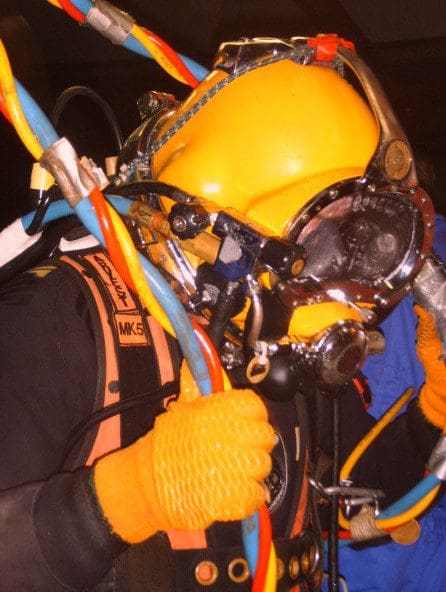
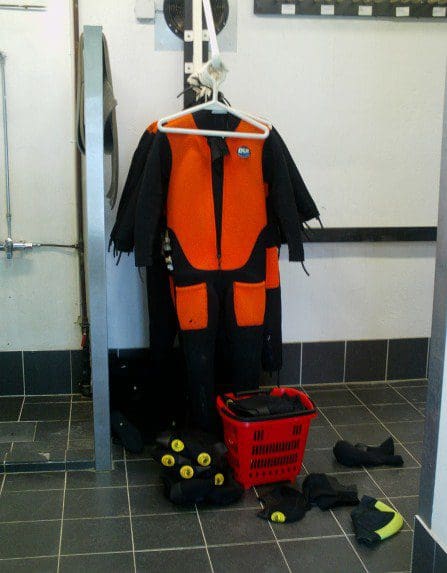
There are lots of gears and equipment used in the diving industry. One vital gear is the diver’s suit which can either be wet suit or dry suit. A seemingly endless debate between the two types is ongoing.  However, the bottom line depends on who will be using the gear.  This article will highlight the differences and advantages of dry suits and wet suits.

The most prominent edge of a wet suit is its affordability. A fair wet suit’s price ranges from approximately 150 USD to 200 USD depending on the thickness of the fabric. Whereas an ordinary dry suit costs at least a thousand dollars.

A wet suit is much lighter to carry and can be easily worn while a dry suit is bulky, heavy and sometimes requires another person’s assistance to put it on and take it off. But once a diver is equipped with a dry suit and submerged underwater, the comfort is incomparable especially in cold waters.

When doing several dives a year, it is much more recommended to invest in a dry suit. In terms of maintenance and repair, dry suits tend to entail the utmost care. On the other hand, an easy DIY fixes will do the job for wet suits.

In the commercial diving industry, both types of suits are applicable and safe to use. Wet suits provide comfort, flexibility, insulation and protection from harmful marine animal attacks (e.g. jellyfish stings) while performing underwater works. Its lightness can help divers in emergency resurface situations when necessary. Only downside is the diver gets wet. It will be absolutely fine provided that the dive is short and infrequent. Otherwise, a dry suit will be much practical to use during extended deep dives.

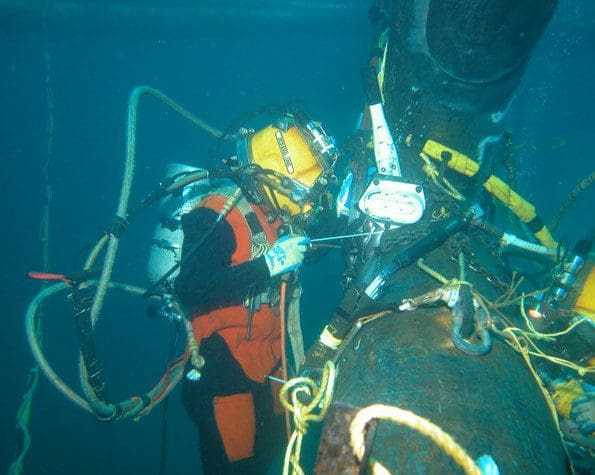
When it comes to underwater welding, dry suits are commonly used because water can conduct electricity and can cause electrocution.

Although the choice of gear relies on the product user, he/she must take one important thing into consideration – safety.

Where are US commercial divers earning the most?

The Department of Labor’s Bureau of Labor Statistics features information on the employment rate for commercial divers in the United States as of last May. According to this information, Louisiana employed the highest amount of individual divers during this time, featuring an employment level estimate of 720 with an average annual mean wage of $48,690.

While the second highest state for diver employment, Florida, featured a similar wage average, the employment level was far lower. The top paying state for divers was New Jersey, which boasted an average annual mean wage of $74,390. The New Orleans-Metairie-Kenner area in Louisiana was also listed as top Metropolitan area for this occupation based on employment.

The source also listed which industries had the highest diver employment levels, with the most going to heavy and civil engineering construction outfits. Architectural, engineering and related services were the highest paying industry for commercial dives, with an annual mean wage of $75,160.

Commercial diving as a profession consists of several specialized careers within the larger industries that employ them. As an example of a position connected to diving that may be in more demand, in recent years, CDA Technical Institute touches on the importance of underwater welding to maintain older infrastructure.

“Consider all the bridges and dams that were built 20, 30, 40, even 100 years ago,” the institute says on its official site. “These structures are in constant need of survey, inspection, and repair. Municipalities across the country are passing bonds to fund the work required on these aging structures at an unprecedented rate.”

Employers that have to contract divers should be sure they have commercial diving insurance that is tailored to fit the scope of their work.


Source

Oil Ministry: Eni Discovers Up To 15B Cubic Meters Of Gas In Egypt

0

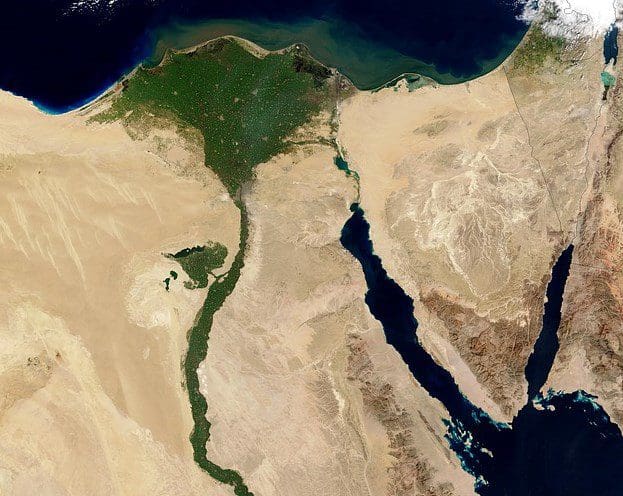
Italy’s Eni has discovered gas reserves of up to 15 billion cubic metres in Egypt’s Nile Delta region, with production set to start in two months, the Egyptian oil ministry said on Monday.

The discovery was made in Western Abu Madi, 120 km northeast of Alexandria, where Eni holds 75 percent of exploration rights through an Egyptian subsidiary, with Britain’s BP holding a 25 percent stake.

Eni made the discovery at a depth of 3,600 metres and initial estimates point towards reserves of up to 15 billion cubic metres of natural gas and natural gas condensate, an Egyptian oil ministry statement quoted the company as saying.

The oil ministry signed a $2 billion energy exploration deal with Eni in June.

Egypt raised the prices it pays Eni and Edison for the natural gas they produce in the country in July.

The agreements marked an attempt by Egyptian authorities to improve terms for foreign oil and gas businesses in the hope that more competitive pricing will encourage investment in the energy-hungry country.

Eni has operated in Egypt for more than 60 years through its Egyptian subsidiary IEOC and is one of the main energy producers in the country, with a daily output of around 180 thousand barrels of oil equivalent.


Source

MPS Welcomes EU Commission’s Innovation Fund Proposal

0

Marine Power Systems (MPS), a Swansea-based company that is developing technology designed to harness wave energy, welcomes the European Commission’s proposal for an Innovation Fund, to strengthen the Emission Trading Scheme and support emerging renewable technologies.

MPS is developing the WaveSub to provide renewable energy source through harnessing wave energy.

Dr. Gareth Stockman said:

“MPS is supportive of the creation of a potential finance up-front and flexible Innovation Fund, which is truly needed to support the industry and developers such as MPS to reach commercialisation.

“We are reaching some exciting milestones in the development of our technology, specifically the deployment of a quarter-scale prototype WaveSub device. Looking ahead, initiatives such as the Innovation Fund can provide further support, when MPS plan to install a full-scale demonstrator in the South Pembrokeshire Demonstration Zone.

“At the upcoming Ocean Energy Europe conference in Dublin, we will embrace the opportunity to present to delegates on how we solve the specific challenges faced when capturing wave energy. In addition, we will update the sector on our plans going forwards.”

The recent draft report by the European Commission for the Environment, Climate Change and Energy of the Committee of the Regions (CoR), has offered an analysis of the ocean energy industry and presents Europe’s global leadership in the sector.

Stockman added:

“This is a crucial report that MPS welcomes. It acknowledges the forward thinking and commendable leadership in the renewable energy sector within Europe’s regions. It is encouraging to see that innovation in technology, such as MPS’sWaveSub Wave Energy Converter, is being recognised and supported for the future of energy in the EU.”


Source

Oklahoma Broadens Oil And Gas Drilling Regulations To Stem Quakes

0

Oklahoma is expanding restrictions on drilling activities to stem a sharp increase in earthquakes that has damaged homes and raised concerns about the future of the energy industry in the state. But the action, announced on Friday, fell short of more drastic measures expected after a further increase in the rate of significant quakes last month prompted the state’s regulator to say the situation was a “game changer.”

Oklahoma and several other states in the central United States have experienced a sharp increase in earthquakes since 2009, which scientists say is linked to underground injection of briny wastewater, a byproduct of booming oil and gas production. Noticeable quakes – above magnitude 3.0 – now strike the state at a rate of two per day or more, compared with two or so per year prior to 2009.

The earthquakes are not related to hydraulic fracturing, or “fracking,” a widely used drilling technique. Instead, researchers say, the quakes stem from the re-injection of saltwater that occurs naturally in oil and gas formations. On Friday, the Oklahoma Corporation Commission, the state’s oil and gas regulator, released a directive that expands “Areas of Interest” – parts of the state that have been worst-hit by the quakes – and adds restrictions for 211 disposal wells.

Operators of wells in the affected areas, which now include 21 of Oklahoma’s 77 counties, must show regulators they are not injecting water below the state’s deepest rock formation, a practice scientists say is particularly likely to cause quakes. Operators of other wells that had previously reduced injection volumes must now also inject at a shallower depth. A previous directive by the commission in March imposed similar restrictions on 347 wells to diminish the number of the tremors.

Overall, Oklahoma has about 3,500 saltwater disposal wells. But that directive has not had the hoped-for impact. Since July 10, ten quakes of magnitude 3.0 or higher have occurred in the state, according to the Oklahoma Geological Survey. “The problem is we’ve kicked the can down the road for years and we’ve just now started to address it,” said Cory Williams, a Democratic member of the Oklahoma House who has called for a moratorium on injection wells in earthquake-prone areas.

The Oklahoma Oil and Gas Association on Friday praised the commission’s new directive and said it would have a positive impact. State officials previously said they would consider a volume cap on wells as a next step to stop the quakes. Kansas, which has also seen a spike in quakes, in March capped injection volumes in earthquake-prone areas at 8,000 barrels per day per well. Michael Teague, Oklahoma’s secretary of energy and environment, said in a statement on Friday that a council made up of state officials, scientists and energy industry officials discussed a possible reduction in injection volumes last week as a potential next step.

The number of wells injecting high volumes of saltwater has increased sharply in the last 15 years, in tandem with rising oil and gas production in the state. Wells injecting more than 100,000 barrels per month quadrupled between 2000 and 2013, according to data compiled by Matthew Weingarten, a doctoral candidate at the University of Colorado. Operators of saltwater disposal wells in Oklahoma, on average, injected about 24,000 barrels per month in 2013.

“Reducing our volume is certainly a huge component of getting our seismic activity under control,” Williams said.


Source

DOF Subsea, SubC to Work on Dumbarton Field

0

SubC Partner has awarded DOF Subsea UK two contracts to support the execution of its project to replace selected buoyancy modules on a live riser for Maersk Oil in the Dumbarton Field.

The first scope focuses on onshore solution optimization, and sees DOF Subsea providing ROV assets, personnel and technical support to SubC Partner during the performance of the project wet tests, which will take place this August in Esbjerg, Denmark, the company wrote.

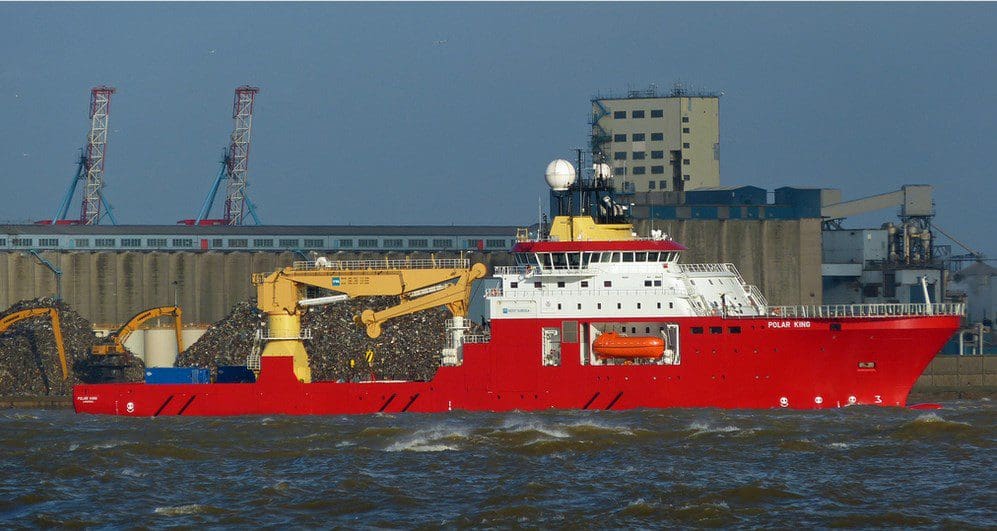
The second covers the chartering of a vessel, for which the Polar King has been nominated, for the execution of the offshore works, along with DOF provision of work class ROVs and project personnel. The vessel comes mobilised with 2 work class ROVs.

Gabriele Rampinelli, UK Managing Director at SubC Partner says: “We are delivering a complex turnkey solution from the engineering phase to the offshore operations. It is essential for us to partner with an experienced and trusted company, who can match the high expectations, set by Maersk and ourselves, both in terms of the offshore performance of assets and personnel; as well as technical support to ensure a perfect integration between the advanced tools we are developing and the ROVs. We have carried out an extensive tendering process, involving some of the leading offshore contractors in the North Sea. DOF Subsea was awarded the contract based on its high degree of technical, commercial and operational compliance and capability. We look forward to working with DOF Subsea and developing this relationship further.”

Eirik Tørressen, Managing Director at DOF Subsea UK says: “DOF Subsea UK is pleased to be part of this project and we look forward to working with SubC Partner on these scopes and in the future.”

Conoco Says Cutting Deepwater Spending, Dividend Up A Penny

0

ConocoPhillips said on Thursday it will reduce future spending on deepwater drilling due to low crude oil prices, and also raise its dividend 1 cent. Conoco, which has already twice cut capital spending for 2015 in response to crude price declines of more than 50 percent, has long maintained that its payouts to shareholders are a top priority. “A compelling dividend is a key aspect of our value proposition to shareholders,” said Ryan Lance, Conoco’s chief executive officer.

“While this increase is more modest than in previous years, we believe it is appropriate given the lower commodity price environment.” Conoco said it raised its quarterly dividend to 74 cents per share from 73 cents per share, payable on Sept 1 to shareholders of record on July 27.

The biggest deepwater spending cuts will come in the Gulf of Mexico, where the Houston-based company said it will terminate a three-year contract for an Ensco drill ship that was due to be delivered late this year. In a separate announcement, London-based Ensco said Conoco is obligated to pay early contract termination fees monthly for two years that equal the vessel’s operating day rate of $550,000.

The companies are discussing details of the contract termination and Conoco said it expects to take a charge related to the fees it owes Ensco. Conoco said it will continue to pursue oil production growth from U.S. shale formations include the Eagle Ford and Permian Basin in Texas and Bakken in North Dakota. 


Source

Fugro Secures Fehmarnbelt Geotechnical Survey

0

Fugro has been awarded the Geotechnical Verification Investigations 2015 programme by Femern, owner of the Fehmarnbelt Fixed Link project.

The planned 18 kilometre-long immersed tunnel will connect Denmark and Germany as part of the Scandinavian-Mediterranean corridor, one of the EU’s nine priority network corridors. Detailed knowledge of the subsurface soil properties is key for the proper design and execution of this challenging tunnel construction.

Fugro will deploy two jack-up rigs in the Fehmarnbelt seaway between the Danish island of Lolland and Fehmarn on Germany’s Baltic coast. In July 2015 Fugro’s geotechnical team will perform down-hole CPT (cone penetration testing), drilling and geotechnical laboratory work in water depths between 3 and 10 metres. The 2015 investigation campaign follows previous geotechnical studies carried out by the company in 2009 and 2010.

“We were happy with the survey provided by Fugro on the investigation programme in 2009-10 and we look forward to working with Fugro again in 2015,” said Villads Engstrøm, Project Manager at Femern A/S. “The independent advice provided to us by Fugro is essential for the design and execution of this important construction project.”

“Fugro’s tailored technical solution and cost-effective execution were significant factors in securing this site characterisation project,” added Dr Michael Neuhaus of Fugro’s Geotechnical Division. “This large infrastructure development project presents considerable opportunities for Fugro to bid for geotechnical and survey work during the construction phase.”

Underwater Welding Schools

Underwater welding, or hyperbaric welding as it is also know, is the art of welding at the high pressures found underwater. As well as being performed underwater, when it is known as wet, this type of welding can also be performed in a dry environment through the creation of a specially constructed enclosure that has a high positive pressure, simulating the high pressure environment of being underwater.

In generally, wet welding is known as underwater welding, while welding at high pressures in a dry environment is known as hyperbaric welding.

You may ask what the purpose of underwater welding is, and the answer is that there are many uses for this type of welding. It can be used to repair metal structures found in water, such as ships, pipelines, submarines and offshore oil rigs. As a result, underwater is commonly used by the US Navy.

The metal most commonly welded in underwater welding is steel, as this is the material most commonly used to build ships and offshore oil platforms. Wet underwater welding takes place using a form of shielded metal arc welding, similar to that used on dry land.

However, a waterproof electrode is used to allow the welding to proceed underwater. In addition, alternative welding processes can be used, such as friction welding or flux-cored arc welding. In order to give power to the welding equipment, power cables are connected to the welding instruments through the use of waterproof hoses.

Just as in welding on dry land, there are some risks involved in underwater welding. The biggest risk is the risk of electric shock to the welder, due to the increased risk of electrical conductance under water. In order to prevent electrocution, welding equipment used in underwater welding should be well insulated and entirely waterproof, with the welding current carefully controlled.

If you would like to become an underwater welder, there are many underwater welding school s that are available. To become qualified as an underwater welder, you need to be a certified welder as well as a commercial diver. Before choosing an underwater welding school, you should ensure that they will provide you with the appropriate certifications that are in accordance with the American Welding Society D3.6M, the Underwater Welding Code for the United States. You will need to study and pass certain qualification test in order to become appropriately certified as an underwater welder.

If you are already a certified commercial diver, then you should contact companies that you may be interested in working for as an underwater welder and train to their requirements, as each company may have slightly different requirements. Many companies allow you to learn on the job, gaining valuable practical experience.

Welder-divers are always in high demand, and due to their specialized skills, earn an excellent salary, anywhere in the region of $100 000 – $200 000 a year, depending on your experience, qualification and specialization. Most underwater welders are paid on a project to project basis rather than on a yearly salary, so income will vary according to work availability.

The American Welding Society (AWS) provides a list of underwater welding schools on their website, but some popular underwater welding schools that are recommended by the AWS and offer AWS approved certifications, include the Commercial Diving Academy in Jacksonville, FL, Divers Academy International in Erial NJ, Divers Institute of Technology in Seattle WA, Hydroweld USA in Weston, FL, and Seneca College in Ontario, Canada.

Underwater welding can be an exciting, stimulating and financially rewarding career path if you are a practical individual with a love of the ocean. If you are interested in becoming an underwater welder, then contact some of the underwater welding schools listed above, in an area near you, and get started on a fascinating new career path today!

 Underwater Welding Schools In Your State

And…
 
 
Source

Prysmian Cables for Normandie 1 Link

0

Prysmian has been awarded a new contract by Jersey Electricity (UK) for the “Normandie 1” project to provide electricity to Jersey in the Channel Islands from the French mainland.

The project involves the turn-key supply and installation of a High Voltage Alternate Current (HVAC) cable connection from France (Surville) to Jersey (Archirondel) comprising of 28 km of 90 kV 3-core cable in a single length as well as related network components and specialist jointing works.

Prysmian will provide design, supply and commissioning of the submarine and land cable connections as part of a larger contract worth almost € 28 million, awarded to the consortium between Prysmian and VBMS. VBMS will perform the marine cable laying operations, including protection and landfall activities.

The submarine cable will replace the existing obsolete Normandie 1 interconnector and its 100 MW capacity will be shared by both Jersey and Guernsey islands under the CIEG (Channel Islands Electricity Grid) partnership agreement, which is the vehicle through which the local utilities procure power from EDF in France.

The submarine cables for the Normandie 1 link will be produced in the Arco Felice plant (Italy), the Group’s centre of technological and manufacturing excellence. Project completion is scheduled in October 2016.

The link will complement the existing interconnectors to provide the Channel Islands with a significant increase in their power import capability from France mainland. The award follows the successful completion of the Normandie 3 link, also provided by Prysmian, in 2014, as part of a significant 10 year investment program by Jersey Electricity in their transmission network infrastructure.