Home Blog Page 21

Wood Group awarded contract across Shell’s North Sea offshore assets

0

Wood Group has been awarded a three year contract extending its support of Shell’s eight UKCS offshore assets. Wood Group PSN (WGPSN) will continue to deliver maintenance and construction services to the Shearwater, Gannet, Nelson, Curlew, Brent Delta, Brent Alpha, Brent Bravo and Brent Charlie installations. In addition WGPSN will provide engineering modifications to the latter three platforms.

Effective immediately, two, one year extension options are included in the contract, which retains more than 500 jobs.

This is the third contract Shell has awarded Wood Group this year. In March Wood Group PSN announced a new three year contract, with the option to be extended up to four years, to deliver industrial services to the St Fergus gas processing plant in Aberdeenshire and the Mossmorran gas processing plant and Braefoot Bay marine terminal in Fife, Scotland.  In January, Wood Group Kenny commenced a three year contract providing specialist consultancy services for flexible riser integrity management prior to and during operation of Shell Australia’s Prelude Floating Liquefied Natural Gas project.

James Crawford, Wood Group PSN’s managing director for the UK and Africa said: “This contract safeguards long-term employment opportunities for our employees on these assets, and builds on Wood Group’s 40 year history working in partnership with Shell in the North Sea.  Extending our long-term service provision across this broad portfolio of UKCS offshore assets reflects Shell’s assurance in our continued high standard of delivery and commitment to working collaboratively.

“We will maintain our relentless, firm focus on optimising safety and productivity, leveraging Wood Group’s breadth of expertise, capabilities and robust knowledge of these assets, as we continue our strong relationship with this key client.”


Source

OTC 2016: Deepwater Projects Delayed as Low Oil Prices Linger

0

Deepwater exploration and production (E&P) activity continues to suffer as operators defer deepwater investment to lower cost, more flexible options such as onshore shale. Struggling to maintain cash flow and balance sheets and facing pressure from investors for lower spending and capital discipline, operators are delaying final investment decisions, especially for costly, long-cycle greenfield projects. So far, 29 of these projects have been delayed. As a result, Wood Mackenzie estimates total reserves of 16 billion barrels of oil equivalent (boe), including 16 billion boe of deepwater reserves and 6 billion boe of shallow water reserves, will be left undeveloped by 2025. The impact on near-term capital expenditure is enormous, with $150 billion in spending affected. Julie Wilson, research director for global exploration at Wood Mackenzie, told attendees at the Offshore Technology Conference (OTC) that countries in the oil prone Golden Triangle and major suppliers of liquefied natural gas, are being affected the most. In Angola, $76 billion in spending will be deferred; in Australia, $43 billion; in Mozambique, $37 billion; in Nigeria, $29 billion; in the U.S. Gulf of Mexico, $17 billion; Indonesia, $10 billion; in the UK, $8 billion; and $12 billion in other regions. The oil and gas industry will spend less than $20 billion on deepwater E&P in 2016, Wilson said. Last year, industry spent less than $30 billion on deepwater; contractual obligations helped prop up spending last year, but those obligations are ending. Wood Mackenzie estimates that deepwater spending will recover slowly, with the recovery in number of wells drilled taking even more time. A Wood Mackenzie analysis concludes that deepwater oil and gas will be increasingly important for volume growth. However, the industry has increasingly faced challenges in deepwater despite spending increases. These challenges include rising water depths and greater geological complexity of untapped deepwater opportunities. For example, Gulf of Mexico operators are now chasing stratigraphic traps, basin floor fans, and rifts now that Tertiary resources have been tapped. Other factors such as frontier exploration without materiality, more natural gas discoveries, higher development costs, and now low oil prices, have contributed to value destruction in deepwater. While deepwater CAPEX spending hit an all-time high in 2014, full cycle returns from deepwater entered negative territory from 2013 onwards. Discoveries were still be made, but the value of these discoveries has been less than the spending they entailed, Wilson said.  The lack of infrastructure in some regions, combined with higher exploration costs not justified by volumes found, meant that the business case couldn’t be made for moving discovered resources to reserves. With increased spending generating lower volumes, E&P companies have retrenched exploration to mature basins after a five-year burst of exploration in deepwater frontier areas, Wilson said. Tight oil plays such as the Permian Basin, which have lower project breakeven prices versus deepwater, also are attracting investment today in place of deepwater.  For example, Chevron Corp. is opting to focus on its Permian acreage, which as a $40/bbl breakeven price, versus projects like Buckskin/Moccasin in the U.S. Gulf, which have a breakeven price in the low $60/bbl, Wilson said. But Wilson notes that some incremental brownfield deepwater investment is occurring. Companies such as Anadarko Petroleum Corp. and Tullow Oil Plc are pursuing plays with infill well opportunities such as Lucius in the U.S. Gulf and the Greater Jubilee development offshore Ghana. Wilson also notes that companies will keep sanctioning projects that are competitive, but will continue to use tough screening criteria during 2016. In some cases, companies are going back to the drawing board to redesign projects that can be competitive in today’s market, reducing project scope such as number of wells, and focusing on the sweet spots of a play.  By reducing costs to boost economics, Royal Dutch Shell Plc was able to reduce overall CAPEX from $10 billion to $8 billion. But some deepwater costs such as facilities are stickier; companies are coping by focusing on waste elimination. “Hammering the oil service sector will not make projects viable again,” Wilson said. In the end, Wilson believes that the oil and gas industry will come out stronger from this period. Companies currently are high-grading their inventory, and incremental and high impact exploration will increase the chances of deepwater success. Companies with healthy balance sheets should use this time to lock in lower contract prices for long-term deepwater developments. Going forward, operators will need to ensure that their objectives are aligned internally as well as with contractors and suppliers. While standardization could potentially reduce project costs by 10 to 20 percent and sounds great in theory, putting it into practice is hard. Wilson also recommends that operators share best practices to learn from their mistakes. However, this does not always happen due to competition.


Source

Minesto orders bottom joint system for Deep Green

0

Minesto has entered into a supplier agreement with Subsea Riser Products (SRP), within which Minesto has ordered a modified version of SRP’s product Rocksteady for Minesto’s tidal energy power plant Deep Green. Delivery is scheduled for the first quarter of 2017.

SRP is an established player in the offshore industry with long experience of producing high-strength products for use in harsh environments. Minesto has now entered into a supplier agreement with SRP. Within the agreement Minesto has ordered a version of SRPs product Rocksteady, a bottom joint system dimensioned for Minesto’s needs. Delivery is scheduled for the first quarter of 2017.

The bottom joint functions as a locking mechanism between Deep Green’s tether and the seabed foundation. Rocksteady has two features that makes it well suited as a bottom joint for Deep Green. First, it is relatively easily to connect and disconnect Rocksteady under water. The device is in two parts, where one part is integrated in the seabed foundation and the other to the tether. The two parts are joined together with an automatic locking device. This integration solution reduces the cost of installation, service and maintenance compared to other available solutions.

The ordered device will also contain an important subsea bearing which Deep Green requires. The bearing has full mobility while it will also cope with the high loads that occur when the subsea tidal kite moves in its eight-shaped track.

“With Rocksteady, we get a product that is fully offshore certified, built for a service life of at least 25 years, while the design of the system allows for cost-effective operation and maintenance. An important argument for why we chose Rocksteady is quality assurance. It has a proven performance and is verified in actual use”, said Dr Martin Edlund, CEO of Minesto and continued:

“We have recently recruited expertise from the offshore sector that gives us valuable knowledge and experience in the further development of Deep Green. With our new supplier agreement with SRP, we have access to the same kind of skills also in the supply chain, which of course is positive.”


Source

Oil Turns Lower After Bigger-than-forecast US Crude Build

0

A bigger-than-expected build in U.S. crude inventories to fresh record highs pushed oil markets lower on Wednesday after an early rally over concerns about production cuts in Canada’s oil sands region due to a wildfire. U.S. crude stocks, which have been setting record highs since January, grew 2.8 million barrels last week, government data showed, about a million barrels more than analysts’ expectations. Gasoline stocks also posted a surprise increase. The data overshadowed concerns over evacuations in the Canadian province of Alberta, where a wildfire raged unchecked through the Canadian city of Fort McMurray in the heart of the country’s oil sands region, prompting some companies, including Suncor Energy and Royal Dutch Shell, to cut back production. “It’s hard to see how it (the wildfire) wouldn’t have a broader impact temporarily on pipeline exports,” said John Kilduff, a partner at Again Capital Management in New York. “I think it was a legitimate scare that will prove transitory.” U.S. crude futures settled at $43.78 a barrel, up 13 cents or 0.30 percent, while Brent crude settled down 35 cents or 0.78 percent at $44.62 a barrel. Gasoline futures fell 1.17 percent to $1.4925 a gallon, after the EIA data showed a surprise increase of the fuel in storage. The gasoline crack spread, a key figure in determining refiner margins, fell by 7.5 percent to $18.28 a barrel in afternoon trading. Brent crude has fallen more than 5 percent from Friday’s high in response to rising output from the Organization of the Petroleum Exporting Countries, signs of economic slowdown in the United States and Asia, and a stronger dollar. “It would not come as any surprise if speculative financial investors were to take profits against this news backdrop,” said Carsten Fritsch, analyst at Commerzbank. While total OPEC output rose in April, outages around the world have been supporting prices. The Canada disruption adds to supply losses in Nigeria and Iraq, concern about renewed losses in Libya and fears that Venezuela’s cash crunch could hit the OPEC member’s output. Some believe the rally has further to go in 2016 as the supply glut eases. “Investor optimism for oil has markedly improved,” said Nitesh Shah of ETF Securities. “We believe the gains in price are sustainable and not just driven by speculative gains.”


Source

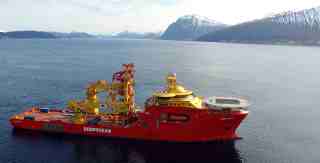
Island Constructor Wraps Up LWI Work on Oyo Well

0

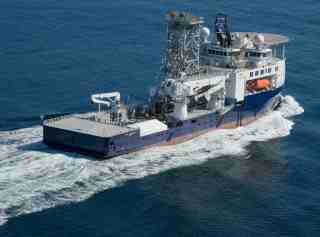
Erin Energy informed that the Island Constructor light well intervention (LWI) vessel has completed work on the Oyo-8 well and the company has resumed production from the well.

Erin Energy will now begin a ramp up of production from the well over the next few days to pre-shut in levels of approximately 7,000 barrels of oil per day, the company said.

The vessel performed LWI service on the Oyo-8 well off Nigeria, to open the sub-surface controlled sub-surface safety valve (SCSSV), which failed to re-open following a planned production curtailment in the Oyo field.

“We are pleased to have Oyo-8 back on production with the work completed on time and within budget,” said Segun Omidele, CEO. “I thank the team and our service partners for their quick and efficient work.”


Source

Repsol Gets Nod for Varg Decommissioning

0

The Petroleum Safety Authority Norway (PSA) has granted Repsol a consent for the removal of Petrojarl Varg and subsea structures on the Varg field.

Varg is an oil field in the North Sea, around 220 kilometres south-west of Utsira in Rogaland county.

The field was developed using the Varg A wellhead facility, subsea structures and the Petrojarl Varg mobile production facility (FPSO). Production from the field began in 1998.

Repsol Norge AS (Repsol) is the operator of the Varg field, following its 2015 buy-out of Talisman, which had been the operator since 2005. The Teekay shipping company has been responsible for running the two facilities on the field on behalf of the operator.

pokit_9ec3cff2fc5008ded145994ef2b906d7Repsol plans to cease production from the field in June 2016, and has applied for consent to remove Petrojarl Varg and the subsea structures on the field.
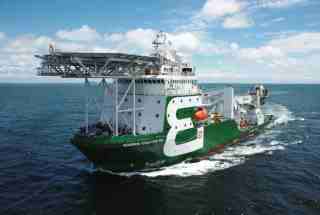
Petrojarl Varg will leave the field in August 2016, while removal of the subsea structures will start later in the third quarter. The Varg A wellhead facility will remain in place while plugging and removal of the wells takes place.


Source

Bourbon Revenues Slip

0

Bourbon has posted lower adjusted revenues for the quarter ended March 31, 2016 caused by the continuing market slump which led to drop of utilisation and daily rates.

The French vessel owner and offshore services provider generated a total of €314.5 million in first-quarter adjusted revenues, down 18% from a year-ago quarter (€383.6 million) and 5.9% sequentially.

As for the subsea section, adjusted revenues for the quarter fell 25.5% year-over-year, and 6.2% against the Q4 2015. Subsea division generated €50 million in Q1 2016 compared to €67.1 million in the corresponding period in 2015.

Bourbon reported 47 supply vessels stacked as of March 31, 2016.

The biggest impact on the company’s business, caused by capex cuts in the oil & gas industry, has been felt in Asia and the Europe/Mediterranean/Middle East regions.

In the first quarter 2016, Bourbon saw its average utilization rate (excluding crew boats) at 71.7%, mainly due to increased stacking of vessels, while its average daily rate (excluding crew boats) also dropped some 3%

Source

Briggs Gets Oil Spill Lead Contract for BP’s Forties Pipeline

0

Briggs Environmental Services has received a five-year contract from BP to act as its oil spill lead across the Forties Pipeline System (FPS) and to provide oil spill response services in the north of Scotland.

Under the contract, Briggs will provide specialist advice to BP in the event of an oil spill incident and support BP’s incident commander by assisting with the coordination of the response effort.

Briggs will also coordinate preparedness activities such as maintenance, training and exercises, the company explained.

As part of the contract, Briggs will also store BP-owned oil spill response equipment and materials, attend emergency call-outs in the event of an incident and participate in training sessions and exercises in the region.

The contract was awarded through a tender process and started on April 01, 2016, with the possibility of a five-year extension.

Pat Diamond, director of Briggs Environmental Services, said: “Environmental safety is of paramount importance to the Briggs Group and we are delighted that we have managed to successfully demonstrate our technical capability in providing oil spill response services to win this BP tender.


Source

SeaBird Stays in Black

0

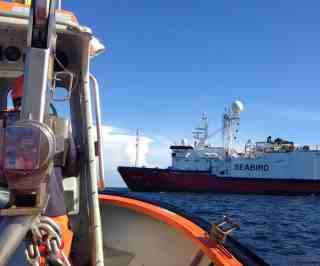
Oslo-listed SeaBird remained in profit at the end of the first quarter 2016, despite weak seismic demand, but still seen a major quarterly profit dive when compared to prior-year quarter.

The seismic data provider for oil and gas companies posted profit of $1.8 million or $0.59 per diluted share for the first quarter of 2016, compared to profit of $63.3 million or $60.05 per diluted share in the corresponding period in 2015.

In the first quarter of 2016, SeaBird recorded a 7% increase in turnover which amounted to $26 million, compared to $28.1 million in Q4 2014 and a 4% decrease in quarter-over-quarter revenue of $23.2 million.

Contract revenues for the period were $26 million, while the multi-client sales were nil, down from $1.2 million same time last year.

SeaBird’s fleet, with 90% utilization, has mostly been employed on TGS Gigante survey in Mexico during the first quarter 2016, and most of its current backlog predominantly relates to this project. Backlog reported as of March 31 was $42 million. Utilization is expected to reduce in Q2 due to repositioning of two vessels for surveys in North West Europe.

Source

Shah Deniz Partners award subsea installation contract

0

The Shah Deniz consortium today announced the award of a $1.5 billion contract for the transport and installation of the deeper water subsea production systems for Shah Deniz Stage 2 to the BOS Shelf LLC, Saipem Contracting Netherlands B.V. and Star Gulf FZCO consortium.

The scope of work of the contract is for the management and operation of the new-build Subsea Construction Vessel (SCV) Khankendi for the transport and installation of the deeper water subsea production systems and subsea structures at all five flanks of the project.

Frank Wilson, BP’s Vice President for the Shah Deniz Stage 2 Marine and Subsea programme commented: “We are pleased to continue cooperation with our strategic offshore installation contractor and its major local consortium partners to progress the execute phase of the giant Shah Deniz Stage 2 project. The new flagship vessel Khankendi, which is currently under construction by Baku Shipyard, will provide essential support for the installation of the Stage 2 subsea structures – the biggest subsea production system ever built in the Caspian.  The construction of the Khankendi is making excellent progress with the hull strips and bow block already integrated. This major contract award for the installation of subsea production systems underpins our commitment to deploy new advanced subsea production technology for the first time to the Caspian as part of the Shah Deniz Stage 2 development”.

The contract scope is planned to be completed by the middle of 2022, with a five-year option to extend the contract to cover the installation of remaining trees, flying leads and jumpers at the East-South, East-North and West-South subsea flanks between 2022 and 2027.  The scope also includes the reactivation of the Pipe-lay Barge Israfil Huseinov and the second pipe-lay installation campaign of the deeper water flow-lines in 2019.

Work on Shah Deniz Stage 2 and South Caucasus Pipeline  expansion (SCPX) projects continue to move forward with more than 70% of all  first gas work across Azerbaijan and Georgia already complete in terms of engineering, procurement and construction. The project remains on schedule for the first gas in 2018.


Source