Home Blog Page 182

Bibby Offshore Provides Lifeline to O&G Industry

This story illustrates exactly how a responsible diving contractor acts when they have an incident. By sharing lessons learned and exactly what happened, every incident becomes a teaching tool, and the industry become a little safer as a result. Well done, Bibby!!

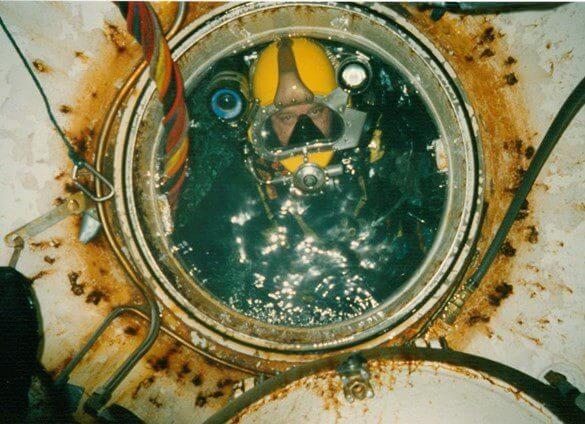
On an evening in September 2012, a rare sequence of events left one of Bibby Offshore’s saturation divers stranded in complete darkness, 90 meters below the surface of the North Sea, without any gas to breathe.

The diver was rescued and recovered fully, but Bibby Offshore wanted to share its experience and the lessons learnt in the most effective way, so in collaboration with floating Harbour Productions, created a documentary style film, Lifeline, using real time footage and reconstruction of the event to recount the remarkable events that took place that evening.

Lifeline demonstrates an example of human reaction to changing and challenging circumstances, and how leadership training, and the right behaviours, procedures and emergency response actions can tip the balance in a life and death scenario.

Due to the combined effects of unique faults in the dynamic positioning system, Diving Support Vessel (DSV) Bibby Topaz was left 190 metres off position. At the time, diver Chris Lemons and his colleague were deployed subsea working in a drilling template. Although both divers got out of the template safely, Chris’s umbilical, which provided him with breathing gas, hot water for his suit and communications, became trapped and subsequently parted, leaving him alone and in complete darkness on the seabed.

After 40 minutes in incredibly harsh and life-threatening conditions, the professional and astute actions of the Bibby Topaz team resulted in Chris being rescued and returned to the bell, unconscious, but alive. He made a full recovery, and the incident provided the unique opportunity to improve and enhance diver safety across the entire industry which Bibby Offshore was absolutely determined to grasp.

Lead QHSE Advisor at Bibby Offshore Chris Cleghorn, who was on-board the vessel on the night of the incident, said: “Whilst technical safety films are hugely valuable tools, Lifeline does not set out to address safety issues from this point of view, rather it focuses on the human response and personal impact.

“In addition to the many lessons to be learned from the incident, its aim is to make us consider the consequences of things going wrong, and Lifeline is a vivid reminder of the preciousness of a human life.”

Bibby Offshore has used Lifeline extensively to engage with the industry, through regular communication with operators, subsea contractors and industry bodies. The lessons learnt from the incident and the initiatives identified, are also continually addressed through the company’s Diving Safety Workgroup (DSW).

Directly after the incident, Sir Michael Bibby and Bibby Offshore’s Chief Executive Howard Woodcock took the decision to form the DSW to take every step possible to identify how the safety of diving operations can be further enhanced and the risk reduced to as low as possible.

The DSW is an output from the incident, and the means by which Bibby Offshore has continued to engage with the industry since the incident. Its scope covers safety in diving operations, technological development in diving equipment, gaining feedback from offshore teams and assisting with the implementation of identified enhancements while monitoring the effectiveness of them.

The workgroup, which includes representation from the Diving and QHSE departments, was set up to identify opportunities for improvement in diving operational practices, equipment, and procedures for use not only by Bibby Offshore, but across the wider oil and gas subsea sector.

The DSW has been instrumental in identifying improvement and enhancement opportunities to ultimately make diving operations safer, and Lifeline has been an invaluable tool in educating and driving engagement as part of the process.

The whole Bibby Offshore team knows the 2012 incident could have ended in tragedy. However now the goal is to learn from the event, enhance technology and systems, and encourage the entire global diving industry to do the same, ultimately positioning Bibby Offshore as leaders in diving safety.




Source

Iran’s Cabinet Approves New Draft Oil And Gas Contracts

0

Iran’s cabinet has approved a draft of international oil and gas contracts meant to attract foreign investors and oil buyers once sanctions are lifted, the Oil Ministry’s Shana news agency reported on Wednesday.

The agency gave no details of the contracts, which it said should increase oil and gas production capacity in jointly held fields, but said they would be revealed in Tehran in coming weeks.

Under a deal reached with six major powers in July, Tehran agreed to curb its nuclear program in exchange for an end to economic sanctions that have hit Iran’s oil production.

The OPEC member’s output is down a million barrels per day (bpd) since the start of 2012 at 2.7 million bpd, which deprives it of billions of dollars in oil revenue.

The global oil industry has been eagerly watching Tehran’s plans to unveil new contracts as Iran has one of the world’s largest oil and gas reserves.

Iran has said the new contracts would be a major improvement not only on the old buy-backs but also on the contracts that its rival and neighbour Iraq offered to oil majors during the 2000s.

The details of the new contracts will be unveiled in Tehran by October or November, with another conference in London in February 2016.

Iran says it needs foreign know-how and technology to help develop new oil fields and improve pipeline and refinery infrastructure.

Oil majors have said they would go back to Iran if it made a major improvement to the so-called buy-back contracts of the 1990s, which companies like France’s Total or Italy’s Eni said made them no money or even incurred losses.


Source

DNB Bank Takes 7% Stake in Ezra

0

Norway’s largest bank, DNB Bank ASA, has acquired a 7.04 per cent stake at offshore oil and gas contractor Ezra Holdings for S$24.84 million ($17.3 million), from Frontica Global Employment Limited, ultimately a subsidiary of Oslo-listed Akastor.

According to Ezra’s Singapore Stock Exchange filing, Frontica, prior to this transaction, owned approximately 218.6 million shares with 7.44 per cent interest, making it a substantial shareholder and one of Ezra’s largest stakeholders.

In a deal, struck on Friday, September 25, DNB Bank ASA, having no previous interest in Ezra, snapped up 207 million shares, in an off-market transaction, and turned into Ezra’s substantial shareholder, leaving Akastor’s subsidiary with some 11.6 million shares which has resulted in their ceasing to be substantial shareholders.

The details of the transaction, unknown until today, were announced following the statement on the progress of the deal Ezra made with Japan’s Chiyoda to sell half of its subsea business in a transaction which implies an aggregate deal value for EMAS CHIYODA Subsea of approximately USD 1.25 billion.


Source

India Draws Attention from Drilling Firms; Focuses on ONGC Tender

0

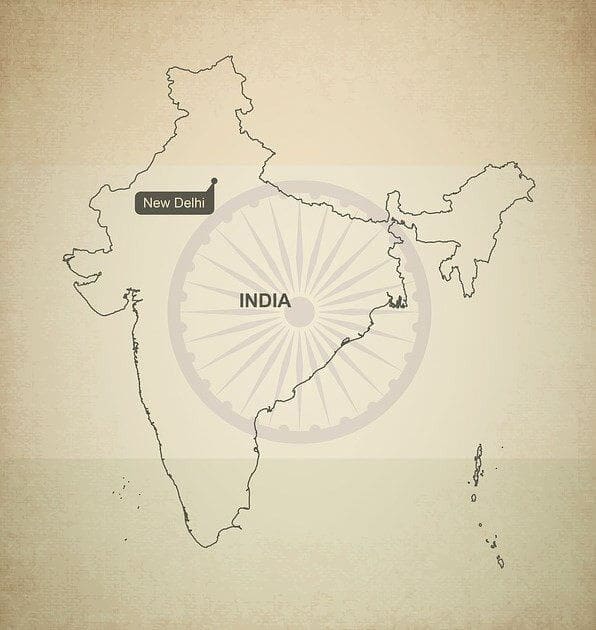
Rig contractors, hit hard by the cutbacks in capital spending by major international and national oil companies worldwide due to the prolonged downturn in global oil prices, have expressed keen interest in the drilling market in India, according to a local media report.

The year-long decline in rig demand currently showed little signs of reversing as the global rig utilization rate fell to 63.1 percent Sept. 24, down from 65.1 percent a month earlier and 76.1 percent a year ago, according to Rigzone’s RigLogix database. 

Given the depressed drilling market, around 18 companies were understood to have offered up to 30 deepwater drillships and semisubmersible rigs into a tender for five deepwater rigs issued by India’s state-owned Oil and Natural Gas Corp. (ONGC) Ltd. for its drilling campaign at the KG-DWN-98/2 or KG-D5 block in the Krishna-Godavari Basin off the country’s east coast, The Economic Times, quoting India’s Press Trust of India, reported Sunday.

“The response we have received is unprecedented. Never have been witnessed such intense competition which we hope will translate into rig rates coming down,” a senior ONGC official said in the report.

Rigzone has earlier reported that India’s upstream oil and gas companies have retained their focus on domestic exploration and development projects despite low oil prices.

ONGC Chairman DK Sarraf has said that up to $7 billion might be spent to develop the deepwater KG-D5 block to bring it into production in 2018, Reuters reported Aug. 13. The block is targeted to reach peak production of 77,000 barrels of oil per day (bopd) and 600.28 million cubic feet per day (MMcf/d) of natural gas.

“The last deep sea rig that we hired was Platinum Explorer (UDW drillship) from Vantage [Drilling Co.] for $585,000 per day. We anticipate charter rates will come down to less than $300,000 a day in our tender,” he said.

The ONGC official is hoping for aggressive bids by drilling contractors in the tender as the Indian upstream player plans to drill 45 development wells from next year.

Lower day rates for drillships have enabled ONGC’s local competitor Reliance Industries Ltd. to extend the lease for Dhirubhai Deepwater KG2 (UDW drillship) from Transocean Ltd. for three months at $295,000 a day, or $100,000 below the previous contract.

Like Reliance, ONGC also capitalized on the lower drilling rates when it extended its contract in May for Transocean’s GSF Rig 140 (mid-water semisub) to continue working off India for another 120 days for $156,000 daily, compared to $260,000 in the prior deal, information from RigLogix database revealed.


Source

Ecosse Nets Wikinger OWF Trenching Job from Prysmian

0

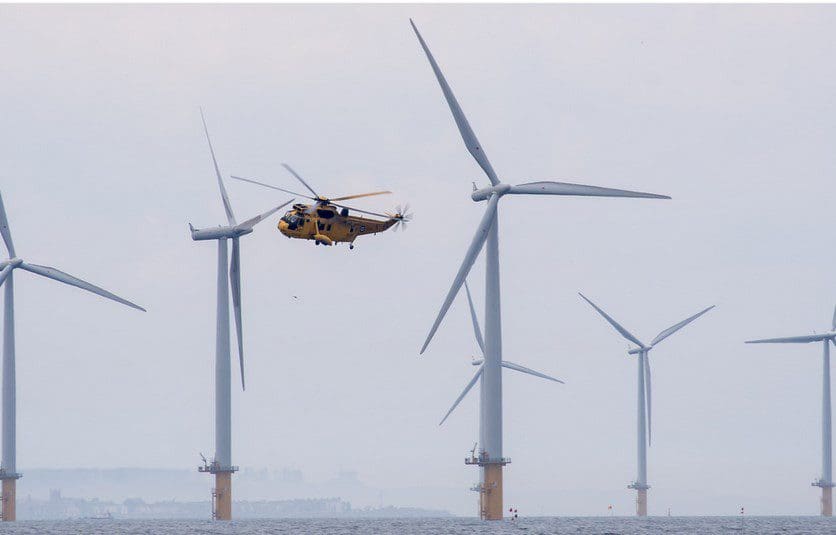
Ecosse Subsea Systems (ESS) has been appointed by Prysmian Group to carry out pre-cut seabed trenching prior to Prysmian’s cable laying on the Wikinger offshore wind farm.

The 350 MW Wikinger project is Iberdrola’s first offshore project in Germany. Located in the north east of the island of Reugen, the windfarm will have 70 turbines and an offshore substation, generating enough energy to power more than 350,000 German homes.

Using its SCAR Seabed System, ESS will perform first pass and multi-pass trenching in preparation for Prysmian’s installation and burial of 81 km of submarine cables which will connect the 70 turbines to the offshore substation, the company informed.

Keith McDermott, ESS commercial director, said: “Our previous experience of boulder clearance and trenching on the Baltic 2 windfarm has proven the versatility of the SCAR system and in particular its suitability for the soils in this region.

“Whilst our SCAR technology was originally designed for oil and gas sector projects, we have steadily built up a reputation in the renewables industry for being able to provide a robust, cost effective option for major cable-laying workscopes, helping reduce the levelised cost of energy production.”

Ecosse expect to mobilise from Aberdeen in mid-2016 and have already started pre-engineering work at its Banchory headquarters near Aberdeen.

McDermott added: “With the downturn in the hydrocarbon sector and well publicised project cancellations or delays, Ecosse have quickly responded to the changing market and our focus on renewables and interconnectors is paying off.

“We have tendered for more than £280 million worth of projects and are confident that SCAR will prove an attractive option for other developers and installation contractors on a number of those projects in the coming years.”

TransCanada Submits to Nebraska Review to Speed Keystone XL

0

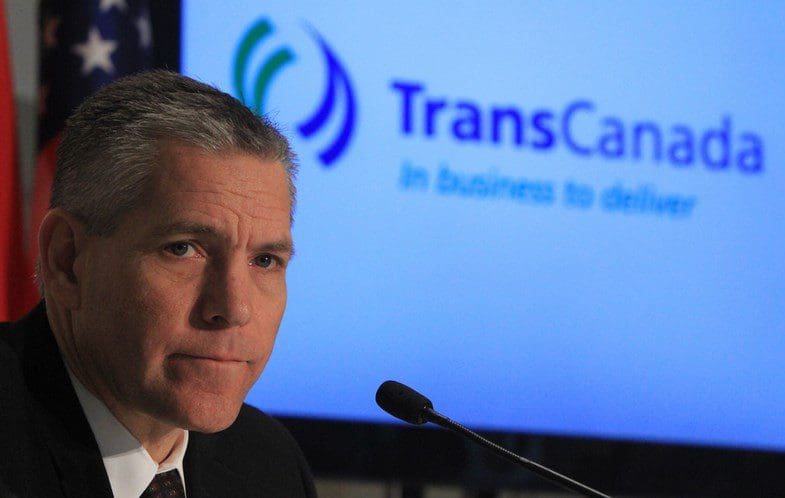
TransCanada Corp. is surrendering to an additional review of the Keystone XL oil pipeline and backing off from conflicts with Nebraska landowners as it struggles to win approval for the project.

Instead of waging court battles to cross privately owned land and trying to avoid a review by Nebraska’s Public Service Commission, TransCanada will withdraw lawsuits and seek approval from the regulator, the Calgary-based company said Tuesday. While that’s a development Keystone XL opponents had sought all along, the move promises to bring certainty to its route through the state, according to TransCanada.

The oil industry has waited seven years for a U.S. decision on the line, which has faced criticism from President Barack Obama and from Hillary Clinton, a Democratic candidate in the 2016 presidential election who opposes the project. Producers are turning to costlier trains and expanding existing pipelines to ship western Canadian crude to refineries on the U.S. Gulf Coast as Keystone XL’s construction has been delayed and its cost ballooned to $8 billion.

Ending court battles with landowners and seeking regulatory approval may be the easiest way for TransCanada to gain public acceptance for the project in Nebraska after already changing the route once, said Kevin Book, Washington-based managing director at Clearview Energy Partners LLC, an energy policy advisory firm.

“TransCanada tried to go through the front door and they got blocked in Nebraska and they tried to change their path and they got blocked again,” Book said. “Eminent domain is a tough way to pursue a controversial project.”

LEGAL UNCERTAINTY

Mark Cooper, a spokesman for TransCanada, said that despite the company having won approval for the route from now-former Nebraska Governor Dave Heineman, “there has been uncertainty in the courts” about the legality of that process.

TransCanada made the decision while facing an Oct. 19 trial date in a lawsuit brought by landowners.

Environmental and landowner groups that oppose the pipeline, including Bold Nebraska, characterized the company’s move as a win that will add delays and expressed confidence that Obama will ultimately reject the project.

“This is a major victory for Nebraska landowners who refused to back down in the face of bullying by a foreign oil company,” Jane Kleeb, director of Bold Nebraska, said in an e- mail.

Obama has questioned Keystone XL’s benefits to the U.S. and vetoed a Republican-backed bill that would have bypassed a State Department review and cleared the way for construction.

Republican Senator John Hoeven, a North Dakota Republican who supports the line, citing its potential to create jobs, has said multiple times since July that he expects Obama to deny TransCanada a permit for Keystone XL, a prediction the White House has declined to comment on.

COULDN’T WIN

“The company realized it could not win a Nebraska legal challenge and faced additional delay if it continued along those lines,” David Domina, an attorney representing Nebraska landowners, said Tuesday.

TransCanada may submit its application to the regulator by Friday for a process the company expects could last seven months to a year, Cooper said. Shares were up 1.3 percent to C$41.90 at 7:42 a.m. before the start or regular trading in Toronto.

The move in Nebraska could give the U.S. administration a reason to delay its review further, Book said.

“The president and the State Department have not been pushing ahead as long as there has been some kind of state-level event that was unresolved,” Book said. “Today’s news would suggest that the White House would indeed keep waiting.”


Source

Lankhorst, W. Giertsen Services Ink Sales Agreement

0

Lankhorst Ropes has appointed lifting company W. Giertsen Services AS as sales agent in Norway.

Under the agreement, Giertsen Services will offer Lankhorst synthetic fibre tethers for mooring flexible risers, umbilicals, cables and mid water arches (MWA) systems.

Lankhorst tethers are made from high modulus polyethylene (HMPE) rope using a Gama98 or LankoForce construction to provide the strength and mechanical performance. Each tether is customised for the subsea application and includes a protective jacket and polyurethane coating, together with ROV handling points for ease of installation and maximum service life, the company wrote.

The fibre tethers are manufactured at the deepwater rope production facility at Lankhorst Euronete Portugal SA.

“W. Giertsen Services has the experience, and technical expertise, in offshore applications that we were looking for. With this agreement we look forward to working with Giertsen Services to develop the market for fibre tethers offshore Norway,” said Sergio Leite, sales director heavy lift, Lankhorst Ropes Offshore Division.

“Lankhorst fibre tethers is an important addition to our growing range of custom handling systems,” commented Øystein Larsen, VP sales & technical support, W. Giertsen Services AS. “Lankhorst has an excellent reputation for fibre rope deployments in demanding offshore applications and is a good fit with our own in-house expertise in handling systems.”

EMGS Adjusts Again

0

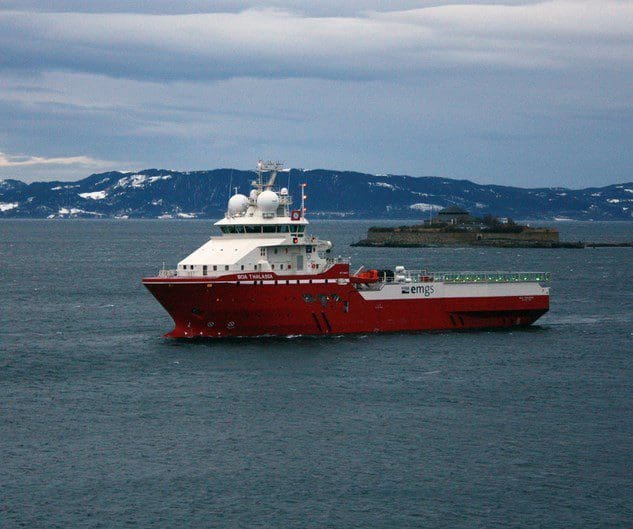
Norway’s Electromagnetic Geoservices (EMGS) said it will implement additional cost reduction measures reflecting the challenging market conditions in the oil service industry.

The company has now implemented cost reductions on terms and conditions for sub-contractors and in staff levels.

The key elements of the program are a reduction of the vessel capacity by one vessel, from three to two vessels, and a corresponding reduction in the global employee expenses.

EMGS initiated cost reduction measures in the beginning of the first quarter this year and further measures were announced in June. Based on the development in revenues so far in 2015, as well as the outlook for the rest of 2015 and 2016, the company has decided to implement further cost reductions.

The company expects that the additional cost reductions will reduce the annual operational cost level by approximately USD 35 million. Hence, the results from the total reductions implemented in 2015 are expected to amount to USD 70 million, reducing the annual operational cost level to below USD 100 million. The company will have restructuring charges of approximately USD 2.8 million, whereas USD 1.5 million will be booked in the third quarter and USD 1.3 million will be booked in the fourth quarter 2015.

In addition, a provision related to loss on charter agreements of USD 4.4 million will be booked in the third quarter 2015. The initiatives will be implemented immediately and yield effects gradually.

“Although the market conditions currently are challenging, EMGS believes that the company’s technology and flexible business model leaves the company well positioned for an upturn in the market,” said the press release.

Fixing dam spillway problems with coordinated divers

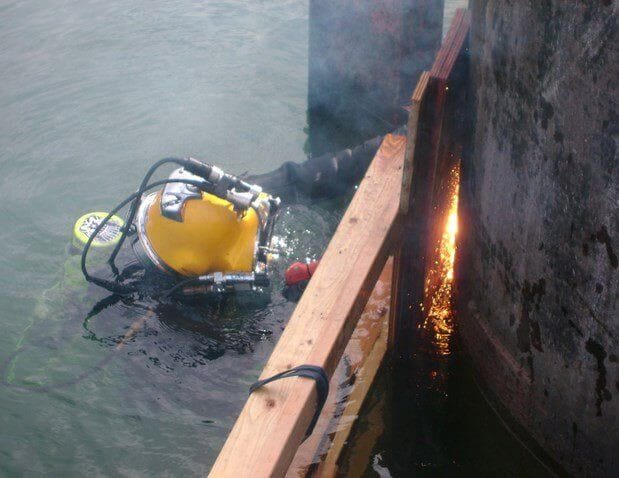
While some major underwater facility operations can take months to complete, last fall saw a Midwestern dam spillway repaired in less than two weeks. Studying the process reveals the different phases that accompany such work, as well as the different elements that need to be accounted for to meet established goals. This case in particular involved multiple materials, including grout, carbon steel and sheet pile.

Hydro World recently re-examined this project as part of a look at multiple underwater work case studies. As this source describes, the divers were deployed after an inspection discovered “a bulged area of sheet pile.” Addressing this issue forced the crew to contend with punishing low temperatures and poor visibility, among other challenges.

Nevertheless, the divers cut the pile, installed anchor rods and added grout to the hole left behind. The procedure also involved the use of a “geotextile membrane” in the spillway toe, along with custom grout bags, before the final inspection was conducted.

The company in charge of this work, Underwater Construction Corporation, describes the operation in more detail on its own website.

“The bags were filled with a flowable grout mix with 5,000 pounds per square inch (psi) design strength,” it reads. “The grout mix was placed by pump truck using a 3-inch tremie pipe. Once the bags cured overnight, divers pumped approximately 26 cubic yards of the same 5,000 psi grout into the repair area.”

Work this intense may require insurance that fits the duration of work and all associated risks. Firms that specialize in insurance for commercial divers will be ready to provide the right coverage for divers placing themselves into dangerous situations.


Source

Sanctions, Oil Slump Delay Russian Offshore Drilling 2-3 Years

0

Russia’s state-run energy giants Rosneft OJSC and Gazprom PJSC are delaying some offshore drilling by two to three years because of sanctions and weaker oil prices, according to the country’s Ministry of Natural Resources.

The nation will drill two offshore wells in 2017, down from an original plan for 14, Denis Khramov, deputy minister, said Tuesday at a conference in Russia’s Far East. The delay means 28 wells will be drilled in 2019 instead of 19, he said U.S. and European Union sanctions prompted by Russia’s role in the Ukraine crisis have cut access to offshore-drilling technology and equipment, Khramov said. Russia’s efforts to tap its offshore resources, which are estimated at 14 billion to 15 billion metric tons of oil equivalent, are lagging other countries, Khramov said.

Russia drilled 11 subsea wells last year, compared with 57 in Norway, he said. The ministry this year approved drilling delays in eight offshore licenses held by Rosneft and five by Gazprom, according to Khramov. Brent crude, the benchmark for more than half the world’s oil, has fallen more than 50 percent in the last 12 months and hit a six-year low in August. 


Source