Home Blog Page 180

The Best Way to Find a Commercial Diving Job: Networking

Face it, you’re in an industry as turbulent as the ocean in a storm. Work may come steady for four, five or six months and then completely drop off. Even with impressive certification, jobs aren’t always there as an underwater welder.

“It’s not what you know, it’s who you know.”

Ever heard this one? You may have ignored it because either:

  1. You don’t want to play politics.
  2. You rely on your superior skill and knowledge.
 

These are honorable motivations, but they won’t put you at the forefront of an employer’s head when they begin their hiring process. You need other people more than you need your own talents. Luckily, professional divers are a close-knit group. Here’s practical tips – many of which were taken from real commercial divers with experience.

Networking in the Real World

You’ve Already Woven Part of Your Networking Web

Networking doesn’t start in the communications room on your first offshore gig. No, it began years ago, before you ever stepped into a wetsuit. You’ve practiced building close friendships with people around you for a long time. As an underwater welder, you’re simply doing the same thing in a different environment.

Purposeful Socialization

Be intentional. Whether you’ve just started underwater welding school or you’re on your thirtieth diving contract with a new company, take a look around. Open yourself up to other divers, and show interest in their work. Ask questions and find out some of their background, first professional, then personal. If they ask about your background, start with your elevator pitch (practice it well beforehand so it doesn’t sound stiff). Then move into the pleasantries.

Stop what you’re doing and think for a moment.

Who are the top 10-20 people you know that could help you succeed in your underwater welding career?

Instructors, distant relatives, hot-shot diver friends? Focus a larger percentage of your time and resources on these people. It’s not manipulation if done in an open, honest manner. Focusing your efforts allows you to stop spinning your “professional wheels” and relax. These contacts can take you to greener pastures where you can find a better future for yourself and your family.

Don’t just Break the Ice, Crush It

After the formal introductions and a light chat, it’s easy to think you’ve walked away and made a contact. But wait: Did you remember their name? One interesting thing about them? Make sure you do, and address them by name next time you’re in conversation.

Demonstrate Good Character

Obvious, I know. But the single biggest turn-off for experienced divers are rookies with a cocky, self-absorbed attitude who think they know better than their superiors. It’s a common fault across the industry, and it eventually catches up to you no matter how many times you job-hop. Here’s character traits that divers said they value most in each other:

  • Reliable
  • Passionate
  • Strong work ethic
  • Confident
  • Respectful
  • Trustworthy
  • Loyal

Watch for Backstabbers

Loyalty is a particularly desirable trait, as some commercial divers enter the industry for the wrong reasons (money, cheap thrills). Professional backstabbing, though rare, does happen. Throw caution to the wind when divulging parts of your life to another diver. Don’t “force” trust by peeling off too many layers of yourself; allow them reciprocate by opening up to you as well.

Dish out…Favors

Say your boss walks up to you and says he has some overtime available. What if you gave that overtime to your coworker without asking anything in return? Favors like these help people out in a pinch, and people don’t forget it. Give what you have to offer, even if it’s just a small trick you learned from an instructor 10 years ago.

Remain Distinct from the Crowd

In a sea of divers, it may be difficult to differentiate yourself from others. As you continue building your skills, try to focus on a particular “niche” that sparks your interest in the industry and meets a need. Train with others who have that skill, and gain additional certification to prove to employers that you can do it too.

Equip for the Job

Showing your professionalism also comes with the certificates and experience you can show. These materials need continual updating throughout your career, especially if your employed mainly through short-term contracts.

CV and Resume: Potential employers and links to employers are everywhere. Keep a digital copy of your CV and resume on your phone so that you can quickly pull them up for these people. If it’s written well, these documents will do the talking for you.

Business cards: Though not as common as they once were, giving your colleague a business card will help you stay in touch with those around you. If nothing else, at least having business cards will let others know you’re serious about your career, and you want to connect with as many others in your field as possible.

Portfolio: A picture speaks volumes, right? So will videos and a website. Employers want to see your work, and an online portfolio is an easy way to provide it for them. For a small amount of money, you can create a professional site, buy a custom domain and display all of your work. Employers will see you went the extra mile, and you’ll thank yourself for it in the end.

Networking in the Online World

The internet provides enormous potential for divers to network and share ideas with each other. You need a presence online to glean some of this information. A word of warning, though: Don’t substitute time you spend online for professional, interpersonal interactions. Quality time with one person is better than quantity with many.

Social Networks

Find involvement in all of the popular social networks. Many of these have internal groups that are dedicated to helping you find jobs, and you can join groups that match your interests with other divers.

  • LinkedIn
  • Facebook
  • Twitter
  • Google Plus
  • Instagram

Forums

You can also find quite a few forums for professional divers. These are usually in more of a “Q & A” format, but there’s value many of the threads. Offer your two-cents first, and when you have a question, others will listen.
 

Chevron Hires 2H Offshore for 20Ksi Subsea System Project

0

2H Offshore, an Acteon company, has been awarded a contract by Chevron to manage a production riser weld qualification testing programme.

The aim of the development of 20,000 psi technology is to qualify the equipment required to develop future offshore fields with design pressures above 15,000 psi and temperatures above 250 degrees Fahrenheit.

These design pressure and temperature requirements result in line pipe wall thickness requirements as much as 1.9 inch for 8 to 10 inch diameter risers. This is beyond what the industry has already qualified and installed to date for fatigue sensitive deepwater risers.

The scope of the programme will incorporate test pipe specifications, procurement, and qualification of new welding and AUT procedures and comprehensive fatigue testing that will include the effects of sour service conditions. In addition, the project scope includes the development of feasible riser system configurations for a number of different host vessels.

Nuri Saglar, 2H project manager, said: “We will be pushing the boundaries of current pipe manufacturing and fabrication processes in the programme, and we look forward to supporting Chevron in developing a fit-for-purpose welded riser joint for the next generation of high pressure, high temperature (HPHT) field developments.”

Ricky Thethi, 2H vice president, added: “We continue to be focused on the HPHT arena. Securing the Chevron production riser 20,000 psi qualification programme, further strengthens our HPHT project experience, which already includes drilling and completion/ workover riser systems.”


Source

Police divers need specific equipment insured

Police divers require sufficient insurance, and companies that specialize in this can save them time during their work, thereby making them more efficient. Wherever they operate, divers need to be covered for the kinds of environmental dangers and equipment failures that could leave them wounded, affecting the mission as well. 

News source Muskokaregion.com recently profiled the divers of the Ontario Provincial Police Underwater Search and Recovery Unit, examining the hazards they face as well as the different ways they can adapt to environments in Canada. Some missions call for the divers to work through ice, and their field of operation includes rivers and the Great Lakes.

As the article describes, the police dive teams can either use a scuba air supply on their backs or surface supply, which is useful for negotiating tricky, submerged structures. This occupation can also take divers to large lakes in isolated areas, where the amount of time it takes to set up and search can slow down the procedure.

Depending on the individual diver’s role, certain certifications may also be necessary. The Diver Certification Board of Canada lists these different specialized documents on its website, including Surface-Supplied Mixed-Gas Diver, Unrestricted Surface-Supplied Diver and Scuba certifications. All of these can apply to police work as well as other industries, such as engineering and emergency services.

Insurance providers that understand police diving standards will be easier to work with, and will already have all of the specific knowledge that other more general insurance companies don’t. Police divers are just one subset of the workers that will benefit from diverse, tailored coverage.


Source

Senate Panel Passes Bill To Lift US Oil Export Ban, Future Uncertain

0

A bill to lift the 40-year-old ban on U.S. oil exports passed the Senate Banking Committee on Thursday, but the future of the measure is uncertain in the full chamber, after a controversial amendment was added to it.

The bill, sponsored by Senator Heidi Heitkamp a Democrat from oil-producing North Dakota, passed 13 to 9. Heitkamp was the only Democrat to vote for the measure.

Senator Pat Toomey, a Republican of Pennsylvania, added an amendment to the bill that would make Iran compensate U.S. victims of Iranian backed terrorism, language that senators said would doom the bill’s future.

“The bill is dead,” because of the addition of the Toomey amendment that the White House likely opposes, said Senator Jon Tester, a Democrat of Montana.

The White House has said it does not support the Senate’s efforts to lift the ban. In addition, the White House said earlier this week it would veto any bill that would prevent the president from providing sanctions relief to Iran until $40 billion dollars in restitution has been paid to American victims of Iranian-backed terrorism.

Toomey said that relaxing the trade restriction could offer his state, which also produces oil, some benefits, but that it would have to be done in a way that does not put jobs at oil refineries and in shipbuilding in danger.

A similar bill to lift the ban passed earlier in the year in the Senate Energy Committee. This bill too was only supported by one Democrat, Senator Lisa Murkowski of oil-producing Alaska, the head of the panel. Backers of the bill need six Democrats to pass the bill if all 54 Republicans vote for it.


Source

Alcatel-Lucent to Develop Sonangol Offshore Optical Cable

0

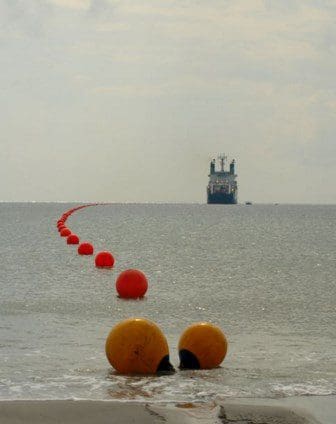
Alcatel-Lucent Submarine Networks has been awarded the development of the Sonangol Offshore Optical Cable (SOOC), a project aimed at reducing the cost-per-bit associated with the delivery of data traffic to Angola, including its offshore oil and gas production facilities.

Spanning 1,900 km, the SOOC undersea network will connect to landing points at four locations along the Angolan coast and will allow the country’s oil and gas industry to benefit from a large  offshore data bandwidth with high availability, high reliability and low latency, Alcatel-Lucent wrote.

SOOC will enable better operational efficiency and optimize operational costs and will also bring significant benefits to the Angolan economy, as a high-speed connection will be established between the Luanda area and Cabinda to fulfill national telecom needs. The development phase is under way and construction work is scheduled to start in second half of 2016.

Yohann Bénard, Oil & Gas General Manager of Alcatel-Lucent Submarine Networks, said: “After connecting Angola to the global network through several undersea cables, ASN is pleased to further contribute to the development of the Angolan fiber optical infrastructure. This award is a prime illustration that submarine fiber-optic technology is becoming the standard telecommunication medium for offshore assets. It further demonstrates our leadership in the platform connectivity market, which is one of the priorities of ASN’s industrial plan to diversify into the oil and gas sector.”


Source

Harkand Names Africa General Manager

0

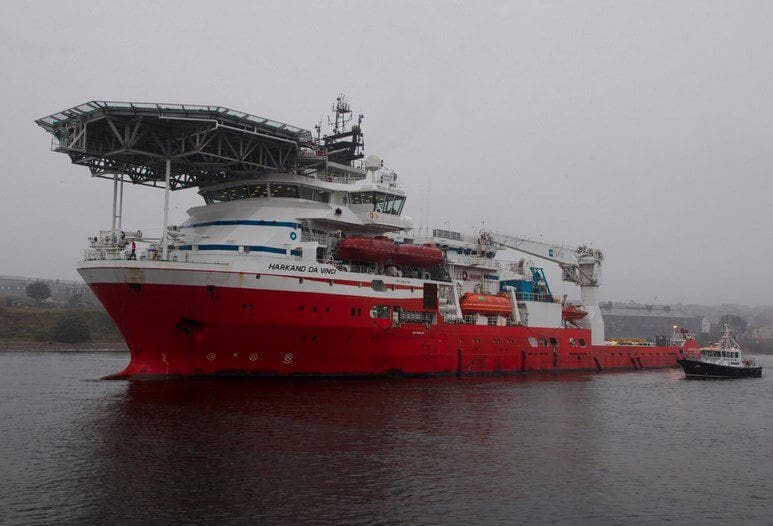
Global inspection, repair, maintenance (IRM) and light construction company, Harkand, has appointed Doug Fieldgate as Africa General Manager.

Doug has 23 years of experience in the African Oil and Gas market primarily focused on West Africa – he will be based in the North America and Africa operations headquarters in Houston and will lead the company’s expansion into the region.

The assignment of a general manager for Africa follows Harkand’s successes in the region including the recent contract award by Technip in Ghana providing survey services, and the one year contract for an oil and gas operator to deliver ROV, project management, engineering and technical support services in Nigeria, Harkand wrote.

Doug will draw on his considerable in-region experience to create a cohesive offering for operators throughout the African oil and gas sector, the company added.

Chief executive officer John Reed said: “Our strategic expansion into Africa will strengthen our ability to respond to the needs of our clients. Doug’s in-depth knowledge of the region and our successful collaboration with our local partners will ensure we achieve this goal in the various countries with a coordinated resilience.”

Mathieu Guillemin, non-executive director of Harkand and managing director at Oaktree Capital Management, added: “The expansion into Africa is another success in our overall strategy and we look forward to the continued progress. Financial strength is key for continuing to pursue the strategy and Oaktree stays committed to Harkand during the downturn in this cyclical market.”

Energy Companies In New York Prepare For Hurricane Joaquin

0

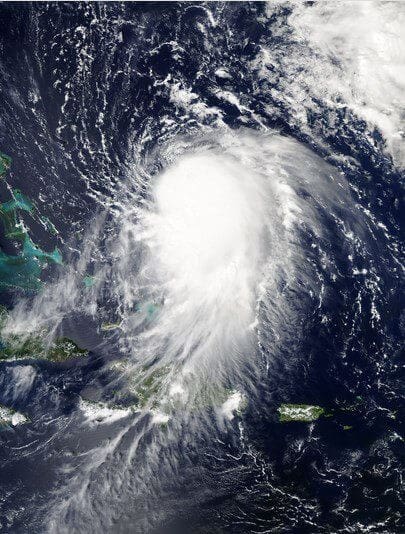
U.S. energy companies prepared for the arrival of Hurricane Joaquin in the New York area Tuesday, as forecasts suggested the storm would head up the U.S. East Coast, following a course similar to Hurricane Sandy in 2012. With the storm currently battering the Bahamas and days away from the United States, New York-area energy firms were putting personnel and key emergency equipment in place to counter possible heavy winds and flooding similar to those that hit the region three years ago.

None of the companies was shutting oil, gas or power facilities yet, but they said they were better prepared than before Sandy, after using the last three years to strengthen infrastructure to better withstand another storm. Although the ultimate trajectory of Joaquin was shifting and uncertain, the U.S. National Hurricane Center’s latest forecast indicated the storm would likely land about 100 miles (161 kilometers) east of New York City in eastern Long Island as a tropical storm. Earlier NHC forecasts suggested the storm would hit the New Jersey coast and New York harbor as a tropical storm.

The New York harbor is home to several oil refineries, pipelines and other energy infrastructure. Other weather models, however, project Joaquin could hit anywhere along the East Coast from the Carolinas north, or remain out at sea without making landfall in the United States. The U.S. East Coast has nine refineries with an operable capacity of about 1.3 million barrels per day, according to government data.

With the potential for the storm to hit the New York harbor, energy traders earlier on Thursday bid up the price of U.S. gasoline and crude oil futures by over 3 percent on news Joaquin had strengthened and was expected to intensify further over the next few days. But with the latest NHC forecast showing the storm could miss the New York Harbor, gasoline futures turned negative and crude futures were flat.

Joaquin is packing maximum sustained winds of 125 miles per hour (205 kilometers per hour) as it batters the Bahamas, the NHC said in its latest update. It is expected to strengthen into a Category 4 storm with winds reaching 140 mph on Friday as it turns north toward the U.S. East Coast. The NHC expects Joaquin to weaken over the weekend before making landfall in eastern Long Island as a tropical storm with maximum winds of 65 mph on Tuesday. 


Source

Hydrex Repairs Drillship in GoM

0

Hydrex mobilized a team of diver/technicians to perform repairs on a 225-meter drillship after its transit flap came loose and caused damage in the aft bulkhead and a leak in the ballast tank situated behind the moonpool hull.

The vessel was located in Trinidad but was about to start a contract in Grand Isles, Gulf of Mexico.

After inspecting the damage, Hydrex team disconnected the transit flap. It was then lowered to the ocean bottom and towed away. In addition, the divers took all the measurements needed to design a repair plan for the second phase.

The drillship then sailed to the Gulf of Mexico due to the limited time frame which did not allow for a permanent repair to be carried out at that point.

The final stage of the repair was wrapped up with the installation of five doubler plates over the damaged areas in the aft bulkhead after Hydrex met up with the drillship in Gulf of Mexico.


Source

Industry Needs Better Understanding of Cost-Cutting Consequences

0

Cost cuts are necessary as the oil and gas industry weathers its current downturn, but industry needs to measure and better understand the long-term consequences of these costs.

The results of these cuts come at a price that isn’t seen right away: the reliability of equipment performance, said Shauna Noonan, completions technology manager with ConocoPhillips in Houston, during a panel discussion Sept. 29 at the Society of Petroleum Engineers’ 2015 Annual Technical Conference and Exhibition. The discussion by a panel of industry experts focused on how to manage the future impact that the current round of cost-cutting will have on the global oil and gas industry.

“We as management and engineers, don’t know what the ultimate price is when we cut costs,” said Noonan. “Historically, we haven’t documented what we have done; we just publicize the upfront cost savings.”

When cost cuts are made, management doesn’t adjust expectations on equipment performance and reliability as a result of actions taken. Little to no accountability exists either on equipment failures resulting from cost cutting due to the lag time between both, something that Noonan would like to change.

At the first sign of a downturn, calls for cuts typically are made across oil and gas organizations. First, contract management and supply chain departments go into battle to negotiate prices with suppliers and providers and consolidate offerings. While these result in savings, no mention is made of the damaged relations between operator and provider. And in many cases, companies get what they pay for in terms of quality. When production declines because of equipment failures one to two years later, management gets upset with the production engineer and the equipment provider. In the worst case scenario, management gets upset with the technology itself and wants to replace it, said Noonan.

Factors that can impact downhole equipment reliability and are subject to cost-cutting include data quality. The people, money and resources needed for data collection, interpretation and qualification programs sometimes are the first to get cut. Quality of completion can also suffer, as companies usually seek quick savings by running smaller casing. But this forces production engineer to run smaller production tools and artificial lift systems that may be less reliable, said Noonan.

Equipment that is fit-for-purpose for a well’s environment is ideal, but in times of cutbacks, operators tend to use whatever’s in stock or less-than-optimal equipment due to price. Operators also tend to try and refurbish existing equipment rather than replacing it altogether, or switch to cheaper materials to achieve cost reductions. The level of checks and auditing on quality of manufacturing – and equipment qualification and testing – also tends to decline during a downturn. Equipment qualification and testing also doesn’t get done as much during a downturn. Inspection failure and analysis of why equipment fails is critical, but the time and money devoted to this area also tends to be one of the first things cut during a downturn, Noonan said.

Citing a 2002 study conducted for the U.S. federal government by NACE International – which estimated the elimination of corrosion prevention programs would cost the oil and gas exploration and production sector approximately $1.4 billion – Noonan said that the industry is collectively responsible for making cost-cutting decisions. To address the issue, the industry needs to document and communicate both how cost cuts could impact operations, and what the actual impact of those cuts are. Equipment reliability issues that resulted due to cost cuts need to be specifically documented, so that management can be aware of possible failures when budgeting and scheduling more rigs. The actual impact also should be recorded so the company can learn from mistakes and celebrate success stories. Management should take the initiative on this documentation – and roll up their sleeves and help mitigate the effects of these cuts – and employees in the company as a whole should contribute to this effort.

Quoting Red Adair, Noonan noted that, “If you think hiring a professional is expensive, just wait until you hire an amateur.”

WELL COST EFFICIENCY, NEW METRICS NEEDED FOR DRILLING, COMPLETIONS

In terms of drilling and completions, industry should focus on increasing well cost efficiency, not just the cost of constructing a well. It also should reconsider what metrics it’s using to measure wells, said David Curry, Baker Hughes technology fellow and SPE technical director for drilling and completion. Instead of cost per square foot of well drilled, perhaps industry should look at cost per cubic feet of reservoir that is accessed or ideally, evaluate wells by cost per barrel of hydrocarbon produced.

Wells are drilled to meet either or both of two objectives: accessing the reservoir and gathering subsurface data. While data collection programs may be easily viewed as a cost-cutting target, companies should consider the cost of the data they don’t collect, said Curry. This cost could be poorer subsurface models, slowing the drilling learning curve and resulting in less than optimally located wells and inefficient production.

Good pore pressure determination and good geomechanic models enable better well performance. Whatever the solution, “when we look at cost efficiency, we shouldn’t compromise subsurface models we create with insufficient data collection either pre-drill or while we drill,” said Curry.

Technologies are available that can reduce cost while maintain efficiency include solutions for cost-effective well revitalization. These include the deployment of electric submersible pumps on coiled tubing into live wells to increase productivity. The deploy redrill well completions can be delivered through tubing without pulling tubing. Reentry drilling through coiled tubing or tubing rotary drilling can allow companies to exploit both existing surface and downhole infrastructure to access stranded reserves. Measurement-while-drilling and logging-while-drilling tools also can de-risk re-entry of a well.

The industry also can “future proof” wells by designing wells with the flexibility to adapt to changing conditions and demands of wells throughout their lifetime. Intelligent production systems, autonomous inflow control devices, and self-healing cement – which industry hasn’t exploited as much as it could – are solutions, but companies also should be thinking about lateral friendly completions and easy exit ports to facilitate plugging and abandonment at the end of a well’s life.

“Don’t make it a major challenge for the next generation to abandon a well,” said Curry.

Factory drilling doesn’t have mean drilling the same well each time, said Curry, citing as a possible model for oil and gas a Mini-Cooper production facility in the UK. At the facility in Oxford, UK, variances of the Mini are custom-built on an assembly line. With so many options on configurations, Mini said they expect never making the same car twice. Curry believes that this thinking – standardization of well types and modular completion components – can be used to drive down well construction costs. These will allow us to customize completion to conditions we encounter in well. Using this approach means that operators will need to be able to make fast decisions. One solution is pre-built decision trees around standard well types. Curry said this approach is being used by a UK Continental Shelf operator in North Sea to drive down development costs of a particular reservoir.

Automation is another possible route industry can take for driving down well construction costs. Automated systems don’t have to remove the drivers from cars or workers from rigs, but makes it easier for the driver and worker by not requiring them to focus on driving and drilling and operating all aspects of the car or rig. Automated smart limits, which can keep wellbore pressure within allowable limits so wellbore integrity isn’t threatened, as well as automated standard practices, and automated problem detection and mitigation, can let the driller focus on well construction. Most of the automation technology is in the pre-commercial stage. While it may be tempting to cut research spending in this area, the industry will pay a price later for such cuts.

Insufficient engineering guarantees that we make inefficient wells, said Curry.

“The new reality is that, however long it lasts, we are making fewer wells. Let’s not throw away all our people this time around. Instead, let’s use them to put more engineering time into wells to make them more efficient.”

By keeping people and building their capabilities, the industry will be ready when drilling picks up again, and can drive down future costs by using the time now to get it right.

Curry noted that contract structures in the industry need to align the interest of everyone involved in well construction “so we’re all trying to achieve the same low cost high efficiency wells.” Cost approaches such as day rates, charge per circulating hour, and book price minus 25 percent, do nothing to encourage collaboration among all parties.

Finally, Industry also has to be careful about how it publicly presents cost-cutting initiatives. Too often, a public antagonistic towards industry interprets cost-cutting as a pursuit of profit at the expense of safety.

“We have to make sure any cost-cutting we do isn’t misrepresented.”


Technip Umbilicals for Eni’s East Hub Off Angola

0

Technip’s wholly-owned subsidiaries Technip Umbilicals and Angoflex have been awarded a contract by ENI to supply umbilicals to the Block 15/06 East Hub Development offshore Angola.

The field is located approximately 350 kilometers north of Luanda, at water depths of 450-600 meters. The contract covers project management and manufacture of about 15 kilometers of dynamic and static steel tube umbilicals.

Technip Umbilicals facility in Lobito, Angola, with support from Technip Umbilicals in Newcastle, UK, will manufacture the umbilicals that are scheduled to be completed in the second half of 2016.

Sarah Cridland, Managing Director of Technip Umbilicals, said: “This award of Block 15/06 East Hub Development is a recognition of the quality and performance of the umbilicals provided by Technip. We are proud to be awarded this contract and will utilize our expertise across multiple Technip Umbilicals sites whilst strengthening our relationship with ENI.”

This new contract with ENI follows another project awarded to Technip last year for the fabrication and installation of flexible and rigid pipelines at Block 15/06.