Home Blog Page 169

Cinia Lays New Subsea Cable to Link Finland and Germany

0

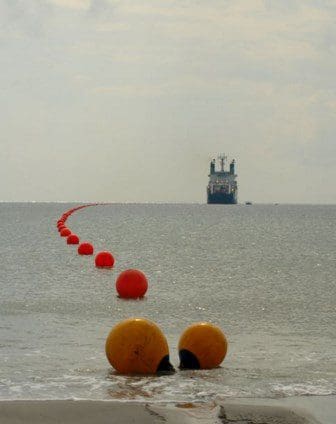
Cinia Group began laying the new submarine Sea Lion data cable in Helsinki, Finland.

The new fiber optic subsea cable will provide a direct, low latency and cyber secure Internet backbone connection between Finland and Germany.

“The sea cable initiative builds the future of Finland based on our existing strengths,” said Eero Heliövaara, Director General at the Prime Minister’s Office. “A direct data connection between Finland and Central Europe is an important enabler of both domestic economic growth and international investments. Data traffic is expected to grow manifold within the next years, and the sea cable initiative opens up an opportunity for Finland to claim its position among the leading countries in the area of Industrial Internet.”

Cinia Group leads the Sea Lion initiative as the developer and builder of the submarine cable, and later as an open access network operator. The Finnish Government is an enabler and investor of the initiative together with institutional investors OP-Pohjola and Ilmarinen. Investments with equity and debt financing will total at approximately 100 million Euros. The sea cable initiative is designed to meet the commercial terms and moderate profitability as long term infrastructure investment, bringing also significant direct and indirect economic benefits such as decisions by international data center operators and data intensive organizations to locate their operations in Finland, the company explained.

“We expect the sea cable to help in bringing 2 to 3 billion Euros worth of private data center investments in Finland within the next 10 years,” said Ari-Jussi Knaapila, CEO at Cinia Group. “Even more important for the Finnish national economy is the opportunity to boost our own strong digital ecosystems.”

“With the sea cable, Cinia contributes to the Digital Single Market for Europe,” continued Knaapila.“We challenge all Finnish companies and new ventures in the planning stage to generate new wealth through global digitalization, based on this new world class data network connection.”

The Sea Lion submarine data network cable consisting of eight paired fiber optic cables was manufactured by Alcatel-Lucent in Calais, France.

Totaling 1,170 kilometers in length and 3,355 tons in weight, the cable was shipped in Finland in the cargo hold of cable laying ship Ile de Brehat. The vessel will make its way from Helsinki, Finland to Rostock, Germany by the end of 2015.

The new data connection is planned to be in operation during the spring 2016.


Source

Iran is Even More Tempting for Big Oil After the Price Slump

0

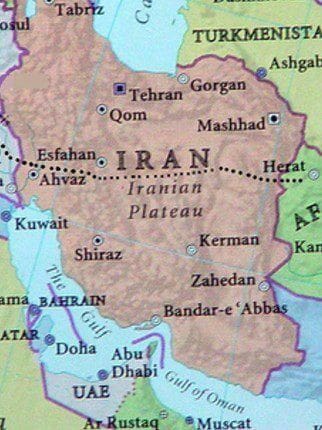
The world is awash in crude, but big oil companies are lining up to develop new fields in Iran even as they slash spending and abandon exploration elsewhere. One thing explains this paradox: cost.

The Middle Eastern country is one of the cheapest places in the world to tap new oil fields and pump from existing wells. The slump in crude prices makes Iran even more attractive to investors, assuming its nuclear deal with world powers leads to an easing of international sanctions, said the International Energy Agency.

“Costs are low because they have giant fields which produce economies of scale, the terrain is mostly straightforward and reservoirs are highly prolific,” Robin Mills, a Dubai-based analyst at Manaar Energy Consulting, said by e-mail. If prices stay low, production costs could drop even further in Iran and its neighbor Iraq, he said.

Cheaper barrels are a significant lure to companies as they eliminate jobs and defer expensive projects following a 40 percent plunge in oil prices in the past year. Royal Dutch Shell Plc abandoned its exploration campaign in the Arctic last month citing high costs, while Total SA reduced production targets after a fresh round of investment cutbacks. Both companies have dispatched executives to Tehran in recent months for talks with the National Iranian Oil Co.

While the cost of developing an oil field in Canada or the U.S. can range between $59 and $114 a barrel, the expense in Iran doesn’t exceed $31, the IEA said in an Oct. 13 report. The Persian Gulf nation has also worked up a “vastly improved version” of its oil contracts to attract international oil companies, according to the Paris-based adviser to 29 nations.

Iran will offer about 50 energy projects to investors and to boost output by about 2 million barrels a day, NIOC Managing Director Roknoddin Javadi said in Berlin Oct. 1. The country pumped 2.8 million barrels a day last month, according to data compiled by Bloomberg.

IRAQ’S REVIVAL

Iran’s neighbor Iraq offers a good illustration of the rewards, but also the hazards, of chasing low-cost barrels in the Persian Gulf.

After decades of neglect due to war and sanctions, international oil companies started to redevelop aging oil fields and explore for new resources after the U.S.-led invasion in 2003. Output has doubled in the past decade to a record 4.3 million barrels a day in September, turning the nation into the second-biggest oil producer in the Organization of Petroleum Exporting Countries, IEA data show.

Genel Energy Plc, which operates in Iraq’s semi-autonomous Kurdish region, says it can pump oil for as little as $1.50 a barrel. “Our operations are therefore profitable even during a time of sustained fall in the oil price,” Andrew Benbow, a spokesman for London-based Genel, said by e-mail.

The company’s gross oil production from its two main fields in Kurdistan surged by about two thirds to 194,000 barrels a day between 2013 and 2014. Yet its shares fell about a third over the period as a dispute between the Kurdistan Regional Government in Erbil and the federal government in Baghdad meant international companies didn’t receive any payment for crude exports from December to August. The Kurdish government re- started payments last month.

“The ongoing dispute between Baghdad and Erbil has created quite a bit of political risk,” James Davis, head of oil supply at FGE in London said by e-mail. “Undefined payment terms, broken agreements, concerns over whether contracts are valid or not” remain problems, he said.

SNAP-BACK

Companies looking at re-entering Iran also need to weigh the political risk, said Manaar’s Mills.

Even after sanctions are lifted, investors will still face the danger restrictions will “snap-back” if Iran is perceived as breaking its side of the deal. This provision could be a “major problem,” for lenders financing projects there, according to Francisco Blanch, global head of commodities research at Bank of America Corp.

Nevertheless, the vast opportunities in Iran will tempt oil companies, said Aneek Haq, an analyst at Exane BNP Paribas.

“In a world where oil majors have restricted areas where they can find large reserve bases to replace production in the future, Iran obviously cannot be overlooked,” he said.


Source

Technip, 3D at Depth to Expand LiDAR Technology in GoM

0

3D at Depth, a provider of subsea LiDAR systems and solutions, and Technip USA have signed a joint development agreement (JDA) to expand and commercialize the LiDAR technology for subsea metrology, field survey and IRM applications.

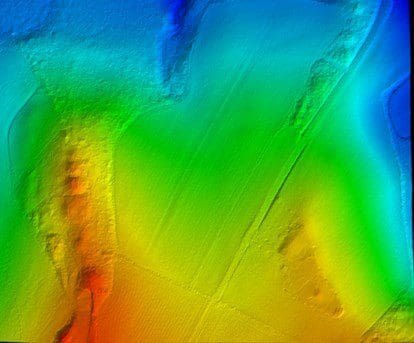
Commonly referred to as laser scanning, LiDAR (Light Detection and Ranging) is a technology for collecting precise 3D models of subsea structures and seabed topography. It addresses the challenges of subsea data collection and imaging in deep waters for metrology survey programs and as-built field configurations, the company explained.

“After several years of continued joint successes using subsea LiDAR, we are excited to announce a formal partnership with Technip USA through a joint development agreement,” said Brett Nickerson, Co-Founder and Director of Software Engineering. “Such an agreement will focus on new subsea LiDAR applications including the marriage of LiDAR and moving platforms. We believe this joint effort will provide solutions for many existing and future subsea applications. 3D at Depth is pleased to be a technology & solutions provider to Technip and looks forward to expanding the partnership with Technip moving forward.”

Raymond Semple, COO Subsea of Technip USA added: “We are very pleased to cement our relationship with 3D at Depth and take their Subsea LiDAR technology further. This technology alliance also illustrates our continuous focus to develop technology and cost efficient solutions to optimize deep water Subsea projects.”


Source

Energinet.dk to Start Anholt Cable Replacement

0

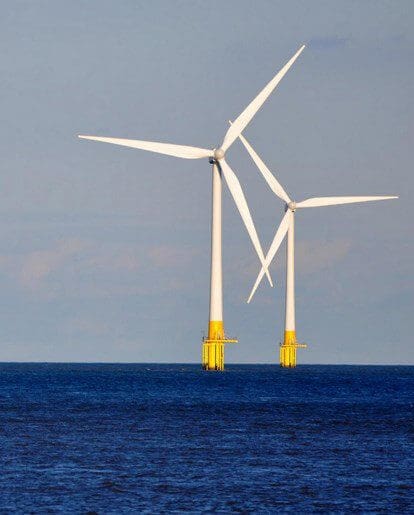
Energinet.dk plans to start the replacement of two sections of the cable that connects the Anholt offshore wind farm to the grid in the period between October 26 and November 23, depending on weather conditions.

In February, the company discovered an error in the submarine cable that connects the Anholt offshore wind farm to the grid on land.

Energinet.dk with the supplier, NKT Cables, and the help of an external test laboratory analyzed the error on the cable, and decided to replace parts of the submarine cable which analyzes indicated a risk that there may be errors.

The results indicated that there is a risk of error in the first 400 meters of the submarine cable from Grenå and the last 4 km before the substation.

While the repair is underway, the island of Anholt will be powered from the its own diesel generators.


Source

Goldman Sachs: Chance Of Oil Falling Below $20 Is Under 50%

0

Goldman Sachs head of commodities research and commodities bear Jeff Currie said on Thursday that he does not see the price of oil breaking above $50 a barrel in the next year, but the chances of it dropping to $20 are below 50 percent.

Persistent oversupply, along with slowing demand from China and other emerging-markets as well as a stronger dollar, will create enough of a headwind to keep the price of oil below $50 a barrel through the coming 12 months.

Goldman is forecasting growth in oil demand of 1.62 million barrels a day this year and 1.28 million bpd next year, creating a surplus of some 400,000 bpd that will have to clear before the price can recover much beyond current levels.

“A substantially oversupplied market makes it that much more difficult in terms of trying to complete the adjustment process going forward, but also reinforces our view that of a chance that we trade down to $20, that’s where we reach storage capacity constraints,” Currie said at a news briefing.

That said, not all the world’s spare capacity is readily available to come back online at the first sign of a significant pickup in the price, he said.

“I put the likelihood (of a drop to $20) at below 50 percent,” he said.

“We estimate there are 370 million barrels still available (in storage globally).”

Brent crude oil futures, which have halved in value over the last year, were around $49 per barrel on Thursday, having risen as high as $115 per barrel last year.

Oil hit a record high of $147 a barrel in 2008, just before the global financial crisis unfolded and plunged the world into recession.

At the time, the dollar hit a record low on a trade-weighted basis of around 71.00 and other commodity prices, such as copper or iron ore, were at, or close to record highs.

Currie did not rule out oil returning above $100 a barrel, but that would depend on far more factors that the balance between supply and demand.

“The world was a different place when we ran those triple-digit numbers. So, you would not only need oil to go back you’d need all those variables to go back. You created a perfect set of conditions that allowed you to get up to those levels,” he said.

“I’m bullish on oil, two to three years out. But I don’t know if I’m bullish from $20 to $50 a barrel, or from $40 to $70 a barrel, or from $50 to $100 a barrel … Until you have an equilibrium in all those other macro variables, you can’t talk about a stable equilibrium in oil,” he said.

Goldman Sachs expects the Federal Reserve to raise U.S. interest rates for the first time in nearly a decade by the end of this year, thereby boosting the dollar and undermining commodities, which tend to suffer when the U.S. currency rises.


Source

Subsurface Warming Could Cause Methane Gas to Bubble Up, Study Shows

0

New research conducted by the University of Washington suggests that subsurface warming could be causing more methane gas to bubble up off the Washington and Oregon coast.

The study shows that of 168 bubble plumes observed within the past decade a disproportionate number were seen at a critical depth for the stability of methane hydrates.

“We see an unusually high number of bubble plumes at the depth where methane hydrate would decompose if seawater has warmed,” said lead author H. Paul Johnson, a UW professor of oceanography. “So it is not likely to be just emitted from the sediments; this appears to be coming from the decomposition of methane that has been frozen for thousands of years.”

Methane has contributed to sudden swings in Earth’s climate in the past. It is unknown what role it might contribute to contemporary climate change, although recent studies have reported warming-related methane emissions in Arctic permafrost and off the Atlantic coast, UW wrote.

Of the 168 methane plumes in the new study, some 14 were located at the transition depth – more plumes per unit area than on surrounding parts of the Washington and Oregon seafloor.

If methane bubbles rise all the way to the surface, they enter the atmosphere and act as a powerful greenhouse gas. But most of the deep-sea methane seems to get consumed during the journey up. Marine microbes convert the methane into carbon dioxide, producing lower-oxygen, more-acidic conditions in the deeper offshore water, which eventually wells up along the coast and surges into coastal waterways, UW explained.

“Current environmental changes in Washington and Oregon are already impacting local biology and fisheries, and these changes would be amplified by the further release of methane,” Johnson said.

Another potential consequence, he said, is the destabilization of seafloor slopes where frozen methane acts as the glue that holds the steep sediment slopes in place.

Methane deposits are abundant on the continental margin of the Pacific Northwest coast. A 2014 study from the UW documented that the ocean in the region is warming at a depth of 500 meters (0.3 miles), by water that formed decades ago in a global warming hotspot off Siberia and then traveled with ocean currents east across the Pacific Ocean. That previous paper calculated that warming at this depth would theoretically destabilize methane deposits on the Cascadia subduction zone, which runs from northern California to Vancouver Island.

At the cold temperatures and high pressures present on the continental margin, methane gas in seafloor sediments forms a crystal lattice structure with water. The resulting icelike solid, called methane hydrate, is unstable and sensitive to changes in temperature. When the ocean warms, the hydrate crystals dissociate and methane gas leaks into the sediment. Some of that gas escapes from the sediment pores as a gas.

The 2014 study calculated that with present ocean warming, such hydrate decomposition could release roughly 0.1 million metric tons of methane per year into the sediments off the Washington coast, about the same amount of methane from the 2010 Deepwater Horizon blowout.

The new study looks for evidence of bubble plumes off the coast, including observations by UW research cruises, earlier scientific studies and local fishermen’s reports. The authors included bubble plumes that rose at least 150 meters (490 feet) tall that clearly originate from the seafloor. The dataset included 45 plumes originally detected by fishing boats, whose modern sonars can detect the bubbles while looking for schools of fish, with their observations later confirmed during UW research cruises.

Results show that methane gas is slowly released at almost all depths along the Washington and Oregon coastal margin. But the plumes are significantly more common at the critical depth of 500 meters, where hydrate would decompose due to seawater warming, UW told.

“What we’re seeing is possible confirmation of what we predicted from the water temperatures: Methane hydrate appears to be decomposing and releasing a lot of gas,” Johnson said. “If you look systematically, the location on the margin where you’re getting the largest number of methane plumes per square meter, it is right at that critical depth of 500 meters.”

Still unknown, however, is whether these plumes are really from the dissociation of frozen methane deposits.

“The results are consistent with the hypothesis that modern bottom-water warming is causing the limit of methane hydrate stability to move downslope, but it’s not proof that the hydrate is dissociating,” said co-author Evan Solomon, a UW associate professor of oceanography.

Solomon is now analyzing the chemical composition of samples from bubble plumes emitted by sediments along the Washington coast at about 500 meters deep. Results will confirm whether the gas originates from methane hydrates rather than from some other source, such as the passive migration of methane from deeper reservoirs to the seafloor, which causes most of the other bubble plumes on the continental margin.

The research was funded by the National Science Foundation and the U.S. Department of Energy. Other co-authors are Marie Salmi, a UW doctoral student in oceanography with Johnson, and Una Miller, a former UW undergraduate who is now a research assistant in Johnson’s group.

Operating in a World of $50 Oil

0

While hopes for a reversal in oil prices may have faded just after mid-August when U.S. crude oil futures slipped to a six-and-a half year low, the battered petroleum industry continues to plod along in its search for ways to steer through these difficult times.

Last month, some industry players met in Singapore for the 14th Annual Marine Money Singapore Ship Finance Forum, where there was a discussion on dealing with the impact of oil at $50 a barrel. Rigzone takes a look at the key issues under scrutiny at the forum, including the future direction of oil prices, the impact on the offshore support vessels market and oil consumption in China – the primary driver for global demand growth in recent years.

To recap, global oil prices have lost around half of its value from a year ago due mainly to a supply glut, a development exacerbated by the decision of the Organization of Petroleum Exporting Countries (OPEC) in November 2014 not to reduce production so as to protect their market share. The prolonged supply glut weighed on global oil prices, culminating in U.S. crude futures falling to $40.46 a barrel Aug. 19 – the lowest since March 2009.

MIXED VIEWS ON OIL PRICES

Panelists at the Singapore forum held different opinions on the future direction of global oil prices. They singled out various factors for the current malaise in the oil markets, including weak demand caused by low global economic growth and the surge in U.S. shale production. But the panelists agreed that the industry downtrend stemmed mainly from OPEC’s stance on keeping unchanged the cartel’s oil production level.

“If you look at what’s happening today, it’s a plan, it’s a strategy, it’s a plot and you can call it what you want. OPEC has a strategy here. It’s just not the force of market pressure. This is a strategy to drive the price of oil down, drive out the producers/competitors that have more expensive recovery, like the Russians, North Sea and U.S. shale production. So that’s what I think the difference is and it’s working,” Kenny Rogers, head of Chemical Transport Logistics at Aurora Tankers/IMC Industrial Group, said.

Panelists were uncertain when global oil prices would recover given the unpredictable nature of the markets.

“At the very peak in 2008, Goldman Sachs [Group, Inc.] said oil would go to $200 [a barrel] and of course it crashed to $37. Only last week they say it will go to $20. I don’t really know. It’s anybody’s guess I believe,” Geir Sjurseth, Managing Director and Head of Offshore Finance at Germany’s DVB Bank SE, said.

He was referring to the last major financial crisis, when global benchmark Brent oil futures peaked at around $145 a barrel in July 2008. At the moment, industry players are unsure whether the oil prices have bottomed.

“No one has ever suggested an alphabet to describe this crisis. The last time [the 2007-2008 crisis] it was all about a V-shaped recovery, a W-shaped recovery or a U-shaped recovery. But there’s no alphabet to describe what we are going through right now,” Fazel A. Fazelbhoy, CEO of Dubai-based Synergy Offshore FZ LLE, a consulting firm focused on the offshore energy and marine sector.

LOWER NON-OPEC SUPPLY KEY TO MARKET RECOVERY

With OPEC sticking to its current production quotas, prospects for a recovery in global oil prices will hinge on a reduction in supplies from major non-OPEC producers like those in Russia and the North Sea as well as U.S. shale producers. 

“In the short term, it’s going be a cut in supply which is required to help stabilize the oil price. Recent reports … have been proclaiming that OPEC won the oil price war as the non-OPEC producers have started to cut supplies, notably U.S. shale production, most of which makes a sizeable loss while the oil price is languishing in the $40-50 a barrel price range,” Simon Spells, a Singapore-based senior associate at international law firm Berwin Leighton Paisner LLP, told forum participants.

“OPEC itself was likely to respond by cutting back its own production, having achieved the objective of protecting its market share. And this in turn will allow supplies to fall further … which in the short to medium term will assist in leading to an increase and stability in the oil price,” Spells added.

These sentiments were reflected in the “Short-Term Energy and Winter Fuels Outlook” released by the U.S. Energy Information Administration (EIA) Oct. 6. In it, the EIA forecast non-OPEC production, which expanded 2.3 million barrels of oil per day (MMbopd) in 2014, would grow by 1.3 MMbopd in 2015 – with the increase attributed to investments made when oil prices were higher. It estimated output would remain flat in 2016.

“Non-OPEC growth dries up to almost nothing; the Saudi strategy is working … It is has never been about a couple of months or a couple of quarters, but a couple of years, and that is how it is playing out,” according to Michael Wittner, a New York-based analyst at Societe Generale, as quoted by Reuters Oct. 6.

In fact, a panelist commented that the current low oil prices could be a precursor to another rally in the market in the not too distant future.

“I don’t understand how no one has talked in the last three to six months what the decline rate of existing oil production [which could be] anywhere between 8 and 20 percent,” Fazelbhoy said, noting that capital spending has been cut by petroleum companies worldwide amid the industry downturn.

“If no new oil is being discovered and we have an absolute limit of new oil coming from 2014 through 2017, someone is going to wake up one day and say hey we need more oil. The reaction is going to be: you have lost over $100,000, capability has been decimated in the oil industry, in the oil services sector, including oil companies,” he explained.

“You have no infrastructure in place, no major oil fields discovered during this period … You have a declined rate of up to 20 percent and more in some cases, oil inventory goes down, then what? You are going to have this haywire Goldman Sachs prediction probably come true … The point is no one knows. I think $200 is perfectly logical [under such circumstances].”

OFFSHORE SECTOR FACES HEADWINDS

The offshore sector, including the offshore support vessel (OSV) segment, serving the oil and gas industry is facing continued headwinds as its revenues are still under pressure from sharp cutbacks in capital spending by petroleum firms, causing delays and cancellations of several exploration and production (E&P) projects.

“$50 oil has decimated the offshore industry altogether. E&P has been growing at a rate of 12 to 14 percent per annum from 2008 onwards and it crashed down to 2 percent growth in 2014. Growth will fall 15 to 20 percent … in 2015 and by up to 25 percent in 2016,” Fazelbhoy said.

Meantime, he revealed that OSV utilization rates fell from 90 to 60 percent while day rates have fallen by around 30 to 60 percent. More downside pressure is expected for OSVs as 400 new vessels are poised to join the global fleet, a number that excludes the estimated 200 newbuilds in China.

While OSV utilization in the Middle East stays high at over 90 percent, largely a result of the OPEC-led strategy to keep oil production up, it has not shielded regional vessel operators from feeling the effects of a worldwide decline in day rates. Vessel day rates for OSV players dipped by more than 30 percent, according to the Synergy Offshore CEO.

Agreeing with the observation, Berwin Leighton Paisner’s Simon Spells noted that the offshore sector is now “coming to a stage where there is going to be some distress in that market and some restructuring required.”

He explained that banks are concerned about the financing arrangements with vessel owners, especially if the existing charter contracts are not being renewed, or renewed as expected, as these are often built into the requirements for existing financing facilities.

CHINESE CONCERNS EASES, SLIGHTLY

Economists who spoke at the forum said they expected the economy in China to avoid a “hard landing”, easing concerns of a sharp curtailment in oil consumption in Asia’s largest, and the world’s number two economy after the United States, data from the International Monetary Fund indicated.

China’s currency devaluation in August and a sharp decline in its equity markets dented confidence in its economy, which – the EIA noted in its May report – accounted for about 43 percent of global oil demand growth in 2014 and an estimated 25 percent for 2015.

“The Chinese authorities have the tools necessary to keep the slowdown in economic growth gradual,” ABN AMBRO’s Head of Macro and Financial Markets Research Nick Kounis told the forum, adding that China’s economy is expected to grow by 7 percent in 2015 and 6.5 percent  in 2016, compared to 7.3 percent in 2014.

Another economist held similar views on the Chinese economy, highlighting the country’s importance despite the slowdown.

“China’s economy is slowing but not crashing,” according to Edward Lee Wee Kok, head of ASEAN Economic Research at Standard Chartered Bank. He added that “despite the concerns … about China in the near term … it’s hard to look away from this economy.”


Source
DONG Energy Removes WWII UXO from Race Bank OWF Site

0

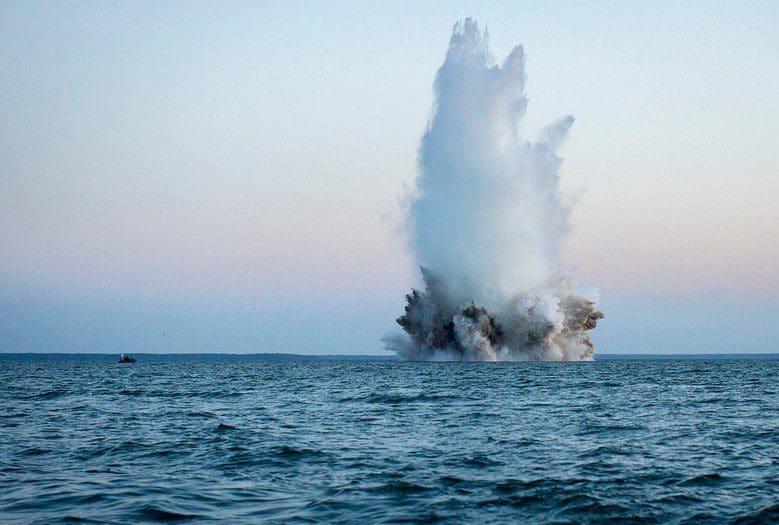
Over 40 items of unexploded ordnance (UXO) from World War II have been safely detonated or removed from the Norfolk coast, having been discovered on the export cable route for DONG Energy’s Race Bank offshore wind farm.

During a large scale offshore inspection campaign on the Race Bank site, 41 UXO items were discovered, ranging from small rockets to larger 1,000lb high explosive bombs. The most notable item discovered was a German Luftmine B ground mine containing a net explosive quantity (NEQ) of 698kg of hexanite.

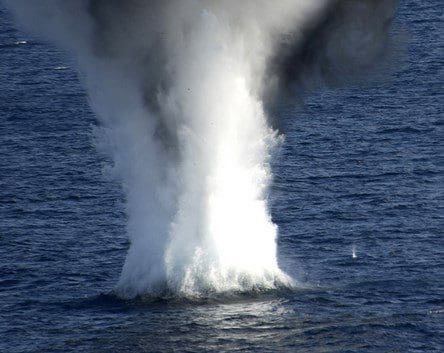
36 live, high explosive-filled items were destroyed in their current locations at sea using highly skilled specialist contractors, while five items certified as free from explosives (FFE) were recovered to shore, where they were safely scrapped in approved facilities, the company informed.

Eleftheria Melekou, Site Investigations Project Manager at DONG Energy, said:

“As a routine part of the preparatory work before construction of an offshore wind farm, seabed surveys are carried out to ensure the seabed is clear of obstacles including unexploded ordnance. This is standard procedure, although the number of items discovered was a surprise and the most we have seen on a DONG Energy project to date.

“We used the help of specialist and highly-skilled companies to ensure all of the 41 items of unexploded ordnance discovered at Race Bank were safely detonated or removed without risk to the local community.”

A marine mammal observation protocol was followed during the operation, with a dedicated marine mitigation vessel accompanying the vessel performing the works to monitor for the presence of marine mammals around the detonation positions. A post detonation search was also performed to observe any evidence of injury of marine life, including fish. The marine mammal observation team reported very low fish kill from the disposal operations, while no cetaceans or other marine mammals were observed, DONG wrote.

Klaus Skoust Møller, Programme Director for Race Bank at DONG Energy, said:

“We have closely cooperated with the Marine Management Organisation and Natural England to ensure the least possible impact on the environment during this work.

“This has been a big and important task due to the number of UXOs involved, and we are very happy that the authorities have supported us in progressing the project.”

To assist in managing the UXO risk, vessel operations were performed by UK-based companies, MMT, Ramora and Dynasafe Bactec, and were supported and supervised closely by site investigations team at DONG Energy. Ordtek, a Suffolk-based company which provides third party UXO consultancy services, was able to certify that the risk at the site was reduced to levels as low as reasonably practicable, DONG noted.

Lee Gooderham, Project Manager at Ordtek, said:

“It has been a pleasure to work with DONG Energy on Race Bank. Not only is it a large and important renewable project, the environmental conditions and military history make it very complex from a UXO risk management perspective.

“The way in which DONG Energy has adapted to address those challenges is very impressive. The right level of effort has been implemented at the correct time, ensuring that UXO risks are reduced to as low as reasonably practicable, as required by UK legislation, and the project remains on schedule.”


Source

VOS Sympathy Supports Oil Recovery Ops of MV Flinterstar

0

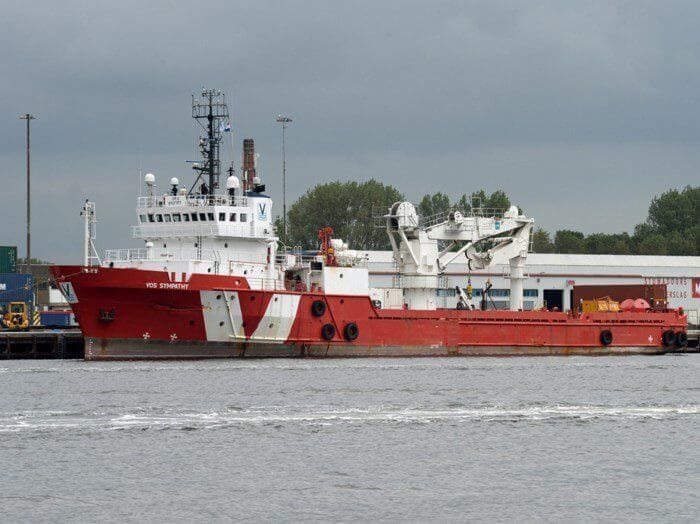
Vroon Offshore Services have contracted their VOS Sympathy, DP2 Subsea Support Vessel, to Dutch Salvors Multraship Salvage B.V. and Smit Salvage B.V. to support the oil recovery operations of MV Flinterstar, which partially sunk off the Belgian coast following a collision on October 06, 2015.

A Dutch freighter sunk after colliding with the LNG carrier Al-Oraiq. All 12 crew members onboard Flinterstar were rescued.

After the collision of the two vessels, a small oil sheen was sighted.

The ship owner Flinter has contracted SMIT and Multraship to pump the remaining oil from the vessel.

VOS Sympathy is assisting with receiving and storing the oil retrieved from the casualty, which will be safely discharged ashore, as well as supporting the salvage crew, Vroon informed.


Source

Divers to Be Trained for UXO Detection

Commercial divers will be trained to detect unexploded ordinance (UXO) in a new partnership between explosives disposal experts Ramora UK and the Professional Diving Academy, Dunoon.

The Professional Diving Academy (PDA) will be fully accredited by Ramora UK to enhance its existing commercial diver training courses with a 2 day module in underwater UXO detection and identification techniques.

As well as vessel based magnetometer and high frequency side-scan sonar surveys, commercial divers and ROV’s are used routinely to identify suspicious items on or around production platforms or turbine locations and cable routes during the pre-construction phase.

Major operators such as E.ON have stipulated that divers who wish to participate in this area of diving works, must first have undergone a suitable training programme.

The course will focus on awareness and identification of unexploded items and will include the use of diver operated magnetometers. The Aquascan DX 300 Magnetometer has been chosen for this purpose, as it’s arguably the most commonly used in this field. The DX300 is a highly-sensitive detection tool which can pinpoint the location of suspect items underwater, even when buried.

The course content draws on Ramora UK’s expertise in explosives detection and disposal. The PDA will provide this course within its Premier Career Package, or alternatively as a 2 day standalone course for divers who wish to enhance their skills.

David Welch, Managing Director at Ramora UK, said: “We are delighted to be entering into this strategic partnership with the Professional Diving Academy. As leaders in our respective fields we see this as a perfect fit, combining Ramora UK’s expertise in explosive ordnance disposal with the PDA’s leadership in commercial diver training.”

Neil MacMillan, Training Manager at the Professional Diving Academy, said: “For commercial divers, this is an area that has not been covered in great detail by traditional training courses and this partnership will ensure that divers trained by us can now be given proper awareness in UXO surveying, detection and identification. It also cements the Professional Diving Academy’s reputation as a worldwide leader in recognising the current trends of the diving industry and delivering the required training courses that enables divers to achieve competence in their specific field of operations.”

Ramora UK, based in Hampshire, operates a round-the-clock emergency helpline with immediate response to incidents by specialist Bomb Disposal teams. The company’s ex-military experts also offer explosives-related training services to governments, corporations, military and law enforcement agencies around the world.

The Professional Diving Academy, which is based in Dunoon, Scotland delivers HSE accredited (IMCA recognised) offshore commercial diver training.


Source