Home Blog Page 164

Technip Bags Layang Subsea Gig

0

Technip has been awarded a subsea contract by JX Nippon Oil and Gas Exploration (Malaysia) Ltd in the Layang field, Block SK10, offshore Sarawak, Malaysia at a water depth of 85 meters.

The contract covers the engineering, procurement, fabrication, installation and commissioning of three flexible pipes totaling 9.9 kilometers. The flexible pipes consist of two production risers and flowlines and one gas export riser and flowline, connecting shallow water platforms to a new FPSO, Technip wrote.

Technip’s operating center in Kuala Lumpur, Malaysia, will execute the contract, while the flexible flowlines will be produced in Asiaflex Products, Technip’s manufacturing facility in Tanjung Langsat, Johor, Malaysia.

The installation campaign will use the Group’s multipurpose vessel, the Deep Orient and the project is scheduled to be completed in the second half of 2016, the company informed.

KK Lim, President of Technip in Asia Pacific, said, “We are delighted to work with JX Nippon Oil and Gas Exploration and its main partner Petronas Carigali Sdn Bhd (PCSB) on this project which is awarded under the “Flexible Pipes Framework Agreement” signed with PCSB last year. It demonstrates the competitiveness of our flexible pipe technology for shallow water developments and the advantages of our unique subsea integrated approach as a one stop solution for cost-effective field developments.”

Baker Hughes Revenues Down 39% Since One Year Ago

0

Oilfield services giant Baker Hughes saw revenues drop to $3.8 billion for 3Q 2015, down 39 percent compared to 3Q 2014, and a 5 percent decrease from last quarter.

“Compared to the third quarter of 2014, revenue in North America declined 57 percent on sharply lower activity and unfavorable pricing, while actions we have taken to right-size our operational structure resulted in decremental adjusted operation profit margins of 30 percent,” Baker Hughes CEO Martin Craighead said in a company release.

A reduction in customer spending is the cause for less drilling in the fourth quarter, Reuters reported.

An Evercore analyst report stated that Baker Hughes continues to see a shift in spending, which favors production optimization projects over exploration and development (E&P) work. This will result in further activity and pricing weakness in its well construction product lines. 

Baker Hughes, which is set to be acquired by Halliburton Company, has already laid off thousands of workers this year due to the challenging commodity price environment. In late September, Reuters reported that both companies planned to sell additional businesses in connection with the pending acquisition.  

Looking ahead to 4Q, Craighead said the company expects activity in North America to decline as customers “adjust activity for lower commodity prices, exacerbated by an extended holiday impact.”


Source

Willard Marine to Build Research Boat for NOAA

0

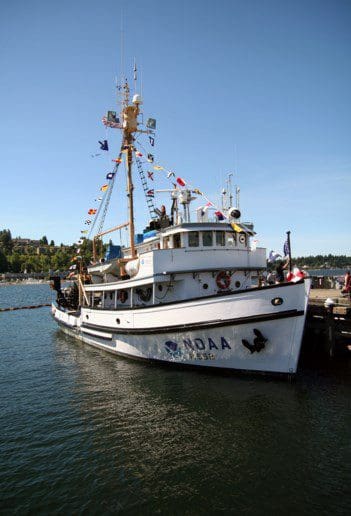
California-based Willard Marine has been awarded a contract by the National Oceanic Atmospheric Administration (NOAA) to produce a rigid hull inflatable boat for the Pacific Island Fisheries Science Center (PIFSC) to facilitate its fisheries and marine mammal research in the Pacific region.

Willard Marine said it will provide a slightly modified version of their SEA FORCE 730, a military-grade, aluminum, rigid hull inflatable boat (RHIB) that is designed with a deep-V hull.

The research RHIB designed for NOAA is constructed in accordance with ABYC standards and Subchapter S requirements, and is fitted with both lift fittings and a lift sling that are designed for hoisting 6,700-pounds of weight with a 6:1 weight ratio safety factor. Twin Honda 115hp outboard engines will propel the vessel throughout the Hawaiian islands, Guam, the Commonwealth of the Northern Marianas, Johnston atoll, US Pacific Remote Insular Areas and the Samoan archipelago as NOAA conducts various scientific sampling methods, including bottom fish collection, remote sensing survey, marine mammal population survey, and dive operations.

The collar will be closed-cell foam with a polyurethane sheathing that covers the foam. Additionally, Willard Marine will provide a complete davit for deploying and recovering scientific equipment. The davit, which will have a mount for attaching winches/pot pullers, will be removable from the mounting bracket when not in use. Eight removable SCUBA tank holders and an aluminum engine guard will be installed, and personnel recovery cutouts will be provided on both sides of the collar.

“Willard Marine has provided a variation of our SEA FORCE 730 to the U.S. Navy, Coast Guard and many other government agencies for a variety of missions because it’s a really tough and reliable boat,” explained Ulrich Gottschling, President and CEO of Willard Marine. “NOAA has procured many boats from us over the last 11 years because we continue to provide maximum quality for the optimum price,” Gottschling added. Vessel delivery is scheduled for the summer of 2016.”

BRTP, SCHOTTEL HYDRO Secure Private Equity Funding for SPV

0

Black Rock Tidal Power has set up a project company (Special Purpose Vehicle, SPV) which will take over its TRITON tidal energy platform once fully commissioned for CAD 15 million. The private equity investment into the project company amounts to CAD 10.5 million.

TRITON is a floating platform carrying a number of SCHOTTEL Instream Turbines that generate up to 2.5 MW from tidal currents. The device is planned to be installed in autumn 2016 at the BRTP berth at the Fundy Ocean Research Centre for Energy (FORCE) in Canada, the company informed.

Together with the berth at FORCE, BRTP has been awarded the developmental tidal feed-in tariff (FIT) and the respective power purchase agreement (PPA) with Nova Scotia Power. The electricity generated will be fed into the North American power supply system and the SPV will operate the device over the fifteen years duration of the FIT.

“The successful closing of the equity finance in our project sets the path for further TRITON projects in the Bay of Fundy and globally,” explains Sue Molloy, General Manager of BRTP. “This is good news for the tidal industry in Nova Scotia and an important step towards proving the commercial viability of our technology and of tidal energy in general. The Province of Nova Scotia has shown great commitment to the tidal industry by setting up FORCE and by establishing the developmental FIT.”

BRTP and SCHOTTEL HYDRO have successfully raised  CAD 10.5 million of private equity for the project company. The equity investment will be leveraged by an additional CAD 4.5 million commercial loan. The private equity includes investments from the Shareholders of the SCHOTTEL Group, the Singapore-based clean tech investor Envirotek and as lead investor Inerjys Ventures, a Canadian investment company that acts in clean energy.

“Inerjys is convinced that SCHOTTEL HYDRO and Black Rock Tidal Power offer the most cost-effective tidal energy technology at a growth stage and for future large-scale projects,” explains Stephan Ouaknine, Managing Partner at Inerjys, “Furthermore, Inerjys is partnering with SCHOTTEL HYDRO on a growth equity round. This hybrid investment strategy insures commercialization for the product company and efficiency for projects.“

“From the very beginning BRTP and SCHOTTEL HYDRO had the ambition to offer tidal energy technology that allows for commercial tidal energy projects already at an early stage of this industry,” says Niels A. Lange, Managing Director of SCHOTTEL HYDRO. “We are proud that we have raised 70% private equity investment for this project, which we consider to be the first project in the tidal industry at this scale financed under purely commercial terms.”

BRTP will start to market the second 2.5 MW project, soon, for which the FIT and PPA are granted, the company added.

Diver dies in waters off Port Gamble

A 25-year-old commercial diver was working on an underwater environmental study when he failed to surface Monday afternoon.

A 25-year-old commercial diver died off the coast of Port Gamble on Monday evening, according the Kitsap County Sheriff’s Office.

Sheriff’s spokesman Sgt. Ken Dickinson said a 911 call came in around 5:30 p.m. after two of three divers working on what was reported to be an underwater environmental study surfaced but were unable to find their co-worker.

“They went to look for him, but couldn’t find him and called 911,” Dickinson said.

The sheriff’s office responded by boat, as did the Coast Guard, he said. Search-and-rescue divers found the man body around 9 p.m. in 20 feet of water about 60 yards offshore, he said.

No further information about the victim or the company he was working for will be released until next of kin have been notified, Dickinson said.


Norway Oil Industry Standardizes Contracts In Bid To Cut Costs

0

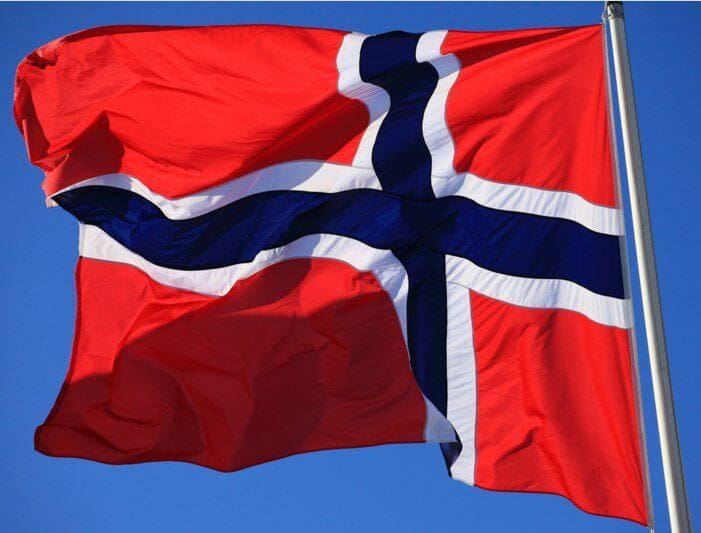
New standard practices in Norway for establishing contracts between oil firms and their suppliers will lower costs and increase competitiveness in a period of low crude prices, the head of the country’s oil and gas lobby said. Oil companies and their suppliers signed two deals on Tuesday to standardise contract practices in an attempt to drive down costs, which roughly doubled between 2005 and 2012.

The contract standards cover the development of new oil installations and the modification of existing ones. “These contracts contribute to lesser costs for each company winning contracts and for operators giving contracts,” Karl Eirik Schjoett-Pedersen, head of the Norwegian Oil and Gas Association, told Reuters.

Norway, the world’s seventh-largest oil exporter and third-largest gas exporter, was until recently considered an expensive but risk-free place to do business, with predictable regulations and working conditions.

But plunging crude prices have prompted a sharp decline in investments by oil firms on the Norwegian continental shelf this year. “Many say the challenges the industry faces are because of reduced oil prices. That is partially correct. The main reason is the very high growth in costs during the 2000s,” Schjoett-Pedersen said. 


Source

WATCH: Åsgard Subsea Compression Ribbon-Cutting Ceremony

0

The world’s first subsea gas compression system went on stream September 17 at the Statoil-operated Åsgard field in the Norwegian Sea.

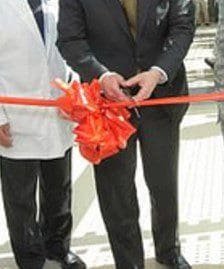
The video above shows the official opening and ribbon-cutting ceremony for the Aker Solutions-built Åsgard subsea gas compression plant.

Aker Solutions in December 2010 was awarded the contract by Statoil to deliver the system, which consists of modules for two identical sets of compressors, pumps, scrubbers and coolers fitted together in an 1,800-metric ton steel frame.

The Midgard and Mikkel gas reservoirs have been developed using subsea installations. The two gas compressors now installed on the seabed are located close to the wellheads.

Moving the gas compression from the platform to the wellhead substantially increases the recovery rate and life of the fields. Prior to gas compression, gas and liquids are separated out, and after pressure boosting recombined and sent through a pipeline some 40 kilometres to Åsgard B.

Recovery from the Midgard reservoir on Åsgard will increase from 67 percent to 87 percent, and from 59 percent to 84 percent from the Mikkel reservoir. Overall, 306 million barrels of oil equivalent will be added.

“Thanks to the new compressor solution we will achieve increased recovery rates both at Midgard and Mikkel, extending the reservoirs’ productive lives until 2032,” said Siri Espedal Kindem, senior vice president for Åsgard operations.

The project started in 2005, and the plan for development and operation (PDO) was approved in 2012.

An estimated eleven million man-hours have been spent from the start until completion. More than 40 new technologies have been developed and employed after prior testing and verification. Some of this work has taken place at Statoil’s Kårstø laboratory in Western Norway.

Overall, project cost were just above NOK 19 billion (USD 2.3 Bln).

Video: Statoil


Source

Security in Oil, Gas: The Threat from Within

0

Since the Second World War, one of the realities of the upstream oil and gas industry is that it often has to operate in dangerous parts of the world. Being a precious commodity that much of the modern world relies upon in order to function, access to oil itself is a driver of political turmoil, and can be blamed – at least in part – for numerous conflicts from the Suez Crisis in 1950s through the Gulf War in the 1990s to today.

Right now, one of the major threats to oil and gas assets, and to engineers and other frontline staff, based in the Middle East and Africa is from Islamist terrorism. No single event comes closer to exemplifying this threat than the January 2013 attack against expatriate and local energy company workers at the In Amenas gas processing facility in Algeria.

That incident became a four-day siege that resulted in the deaths of 39 foreign hostages and an Algerian security guard.

At the recent Offshore Europe conference in Aberdeen, the In Amenas atrocity was discussed in some detail by Adrian Fulcher, a British counter-terrorism specialist who served on Statoil ASA’s special investigation team that looked into the incident.

Taking part in a conference session on security of personnel and assets, Fulcher explained that the attack on In Amenas was extremely well planned and prepared and that it was carried out by people who had the ability to be flexible and think on their feet when dealing with contingencies.

The terrorists had navigated through the desert during the night to arrive at the break of day and then had complete control of a 10 square-kilometer (4 square-mile) area that encompassed the In Amenas gas facility. They separated out the foreign staff from the local employees, and they knew some of these expats workers and managers by name while they were able to identify others using documentation that they found at the facility. It was clear that they had had insider help.

“There was an impressive amount of intelligence, insider support and pre-planning. I think that’s … a characteristic of the threat profile that, more widely, the industry has to face. That the people who threaten us, whether they’re terrorists, whether they’re cyber criminals or whether they’re organized criminals, they increasingly do their intelligence homework first,” Fulcher said.

“They look at us very hard, they seek to understand how we operate and where our vulnerabilities are and they exploit those vulnerabilities against us. And how do they do that? Typically, with insider support.”

The implication is that oil and gas companies are going to have to spend a lot more time and effort vetting their employees – particularly those who work in politically-sensitive parts of the world.

The In Amenas attack was carried out by militants linked to Al Qaeda, but the rise of the Islamic State (or ISIS) – and its preference for grabbing land – has shown that Islamist sympathisers within the oil and gas industry can serve another, more practical, purpose, according to another speaker at the Offshore Europe security session: Aimen Ali Dean, who is an expert on jihadist movements and fundamentalist Islam.

“First of all, ISIS has demonstrated its obsession and desire to control energy resources under its hold and in new territories and regions. It is no coincidence they are in Iraq, Syria, Yemen and Libya. And therefore the issue of resources will always be there,” Dean, founder and managing director of Five Dimensions Consultants, said.

Only two days before Fulcher and Dean spoke at Offshore Europe, ISIS fighters seized the Jazal field – the last major oilfield that had been under Syrian government control. According to the U.S.-based think tank the Brookings Institution, ISIS now controls 60 percent of Syria’s oil production capacity (which could be as much as 200,000 barrels of oil per day) and Iraqi fields that have the capacity to produce as much as 80,000 barrels per day.

These oilfields provide a source of revenue for ISIS as it seeks to consolidate the territory that it currently holds. However, ISIS is reported to be producing far less oil than the fields are capable of, which means it need engineers and spare parts.

“ISIS seems to want to seek to recruit from within the industry, establish connections and gather intelligence,” Dean said.

“There have been several cases now of oil engineers being recruited from global companies into ISIS. There have been several cases where companies that are producing spare parts for oilfields and equipment for drilling have been contacted and offered generous compensation in return for cooperation in providing these parts and also technology. Why? Because between $200 million and $600 million per year are at stake. So, therefore the desire to recruit and the desire to obtain information … is quite strong.”

And the oil and gas industry needs to find a way of dealing with this insider threat, whether the threat is due to radicalization or due to the susceptibility towards cooperation with ISIS for financial gain.

“They won’t be contacting someone in Texas or Alaska. They will be contacting someone closer to home. But home now [for ISIS] is on several fronts. Not just Syria and Iraq but Yemen and Libya,” Dean said.

The threat that the upstream industry faces from Islamism in the Middle East and Africa is clearly a fluid one. While Statoil and BP plc have both investigated the In Amenas attack with the aim of learning important security lessons from it, the growth of ISIS, its acquisition of oilfields and its looking for help from within the industry to help bolster these assets raises new questions about what the sector can do to identify employees who might seek to help ISIS.

As Fulcher pointed out in his talk at Offshore Europe: “As an industry, we cannot avoid the kind of challenges that are going to come to us over the years ahead from ISIS or Al Qaeda.”


Source
Minehunter Task Group Surveys Seabed Off Bahraini Base

0

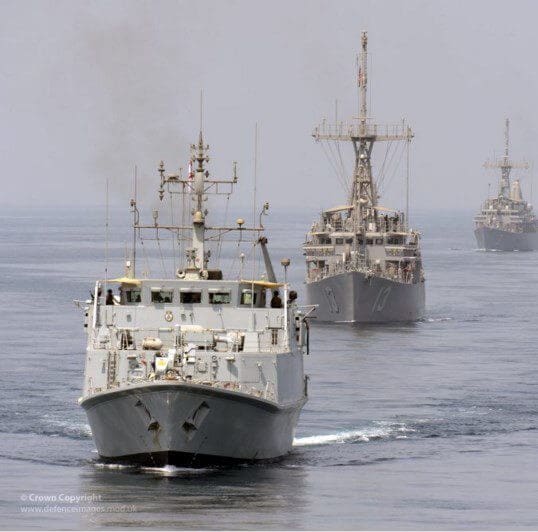
Royal Navy minehunters and their US counterparts have surveyed the seabed for mines more than 200 nautical miles away from their Bahraini base using a range of autonomous and unmanned systems.

The Task Group was made up of HMS Shoreham and Bangor, the USS Devestator and Gladiator as well as Royal Fleet Auxiliary Cardigan Bay which ensured the ships were supplied with fuel, water and stores while on patrol, Royal Navy wrote.

As well as using the specialist minehunting skills of the four ships, the Task Group also made use of small boats which were launched from RFA Cardigan Bay.

The Task Group’s commander, Commander Paul Ottewell of the Royal Navy, said: “Though our mine countermeasure vessels (MCMVs) and embarked expeditionary units are all experts in their own fields, we must be able to operate effectively together, so that we are collectively greater than the sum of our parts.

“We can then deliver a single, coherent and consistent message of reassurance to the International Shipping industry who use these important routes on a daily basis.”

The information brought back from the ships built up a very detailed picture of the seabed on the key shipping routes through a number of key strategic areas in the Gulf, Royal Navy informed.

This was achieved through a combination of sonar, autonomous surface and underwater vehicles, remotely-operated vehicles and mine clearance divers.

These were from the Royal Navy’s Fleet Diving Unit 3 (FDU3), usually based at Portsmouth, and a US Navy Expeditionary MCM Company and was the first time they had worked together on operations.

Commander Ottewell said: “As new generations of off-board systems become operational, we are increasingly able to find and destroy sea mines at deeper depths, more rapidly and with less risk to human life.

“Autonomous and semi-autonomous systems are rapidly coming of age, complementing the capability of our world-class MCMVs to produce an expeditionary MCM task group with substantial resilience and speed of advance through a mine field.”

FDU3’s Lieutenant James George, added “The Fleet Diving Unit is held at high readiness to deliver military diving capability around the world, be that identifying underwater objects or disposing of dangerous ordnance.

“This operation provided an ideal opportunity to fully integrate with our colleagues from the US Expeditionary MCM Company, exchanging best practice and forging long lasting relationships.”

Another capability that embarked in RFA Cardigan Bay was the US Navy’s experimental Mine Hunting Unit (MHU) with their Unmanned Surface Vehicle. This is fitted with a mine-hunting sonar to detect underwater objects, the Royal Navy said.

Lieutenant (Junior Grade) Andrew Wasz from the US Navy, said: “Though we are an experimental unit, we fully contributed to the efforts to ensure the areas remain safe for shipping.

“This technology is the future of MCM operations and we will take every opportunity to demonstrate its full capability.”

UK and US MCMVs are already fitted with the Seafox Mine Disposal System – a remotely operated vehicle that can identify underwater objects and render them safe if necessary.

The Task Group was commanded by US Commander Task Force 52 (CTF 52) in Bahrain and tactical control afloat was delivered by the UK’s Mine Warfare Battle Staff (MWBS) embarked on RFA Cardigan Bay.

The MWBS were tasked to refine, execute and evaluate MCM operations. Logistics Coordinator, Lieutenant Ben Crouch, said: “The difficulties involved in supporting four ships and embarked units, over a large geographical area, is a challenge. However, RFA Cardigan Bay provides the perfect platform to achieve this.”

He added: “This is my first experience of working on a Battle Staff where we have specialists from a range of backgrounds, including engineering, intelligence and meteorology, who are planning operations and assisting our ships. It has certainly been a busy but professionally rewarding operation.”

White House Says Canada Election Unlikely To Affect Keystone Timing

0

The White House said on Tuesday that the completion of the Canadian election was unlikely to affect the timing of a U.S. State Department decision on the Keystone XL crude oil pipeline.

President Barack Obama still expects to make a decision on the pipeline, designed to run from Canada to Texas, before leaving office in 15 months, White House spokesman Josh Earnest told reporters.


Source