Home Blog Page 139

Underwater Welder: Salary, Job Duties and Requirements

0

Learn about the education and preparation needed to become an underwater welder. Get a quick view of the requirements as well as details about schooling options, job duties and required certifications associated with this job to find out if it’s the career for you.


Essential Information

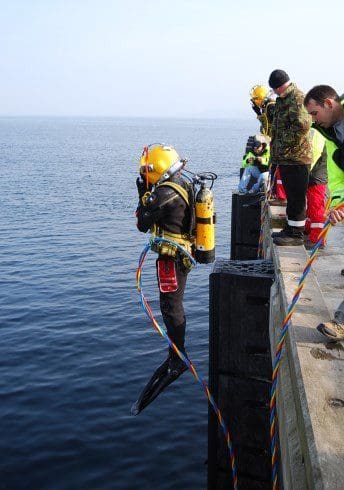
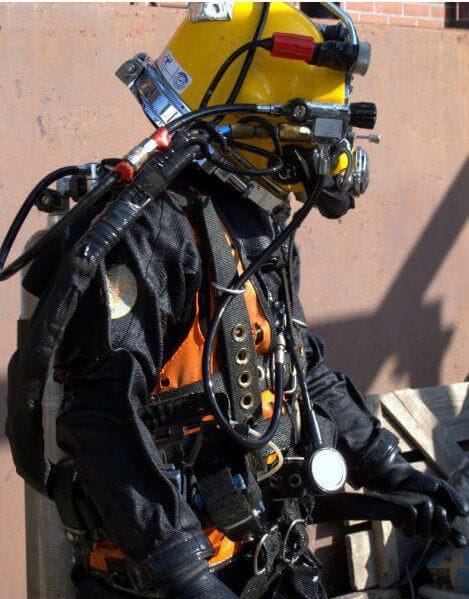
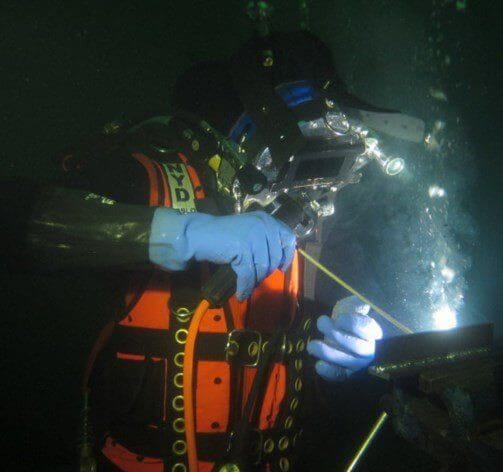
Underwater or offshore welders combine commercial diving qualifications with welding skills normally performed on dry land. Underwater welders must be able to handle bulky equipment specially designed for this job while working in a hazardous environment. There are two ways to become an underwater welder: complete a highly specialized program through the Commercial Diving Academy or independently be certified as both a commercial diver and a skilled welder.

Required Education Completion of the underwater welding specialist training program offered exclusively by the Commercial Diving Academy
Other Requirements Those who opt not to become an underwater welding specialist must hold both commercial dive certification and meet or surpass the AWS D3.6 standard in welding skills; excellent physical condition needed for this career
Projected Job Growth (2012-2022) 29.4% for commercial divers*
Median Salary (2013) $47,930 for commercial divers*

Source: *U.S. Bureau of Labor Statistics

Salaries for Divers

Underwater welders work primarily on a per project basis. Things that can alter a salary projection include hazard levels, length of project and dive methods employed. Dive grade and employer are also key factors. The U.S. Bureau of Labor Statistics does include welding as a task for commercial divers and reports that the median wage for commercial divers was $47,930 in May 2013 (www.bls.gov).

Job Duties

Underwater welders work with a variety of equipment types and procedures. A list of duties all welder-divers should be able to perform includes:

  • Underwater cutting
  • Underwater photography
  • Drafting
  • Inspection and non-destructive testing
  • Fitting and rigging

Some underwater divers assist the project manager in project planning. The welder must have good communication skills and interpersonal skills to work well with the rest of the team.

Job Requirements

An underwater welder must be commercial dive certified. There are many schools that offer dive certification, but it’s important to note that commercial dive certification is different, and substitutions cannot be made regardless of experience level. To qualify for this certification, a diver has to demonstrate skills in diver communication, diving physiology and emergency procedures, underwater inspections, hyperbaric chamber operations and the use of various commercial grade tools.

Welder-divers must possess welding skills ranked at AWS D3.6 standard. This encompasses such abilities and knowledge as weld set-up and preparation. Many educational facilities offer welding courses approved by the American Welding Society. In addition, an underwater welder will gain valuable knowledge by becoming an underwater welding specialist. The Commercial Diving Academy is the only school in the United States that offers internationally recognized training for this specialization.

There are no age limits for this occupation, but underwater welders must be in good physical condition. Many companies require that they pass physical exams. All underwater welders are required to keep their certifications current, which requires periodic examinations.


Source

Vroon: Keel Laid for VOS Start

0

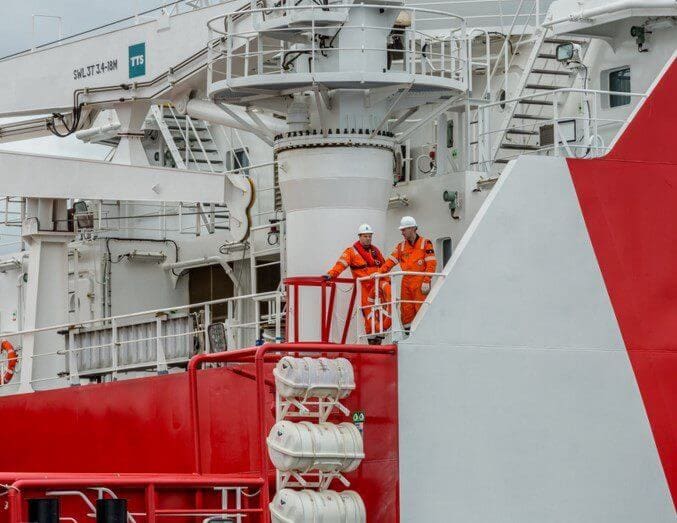
China’s Fujian Southeast Shipbuilding held a keel laying ceremony for Vroon’s vessel VOS Start last week.

VOS Start is a subsea support(SSV)/walk-to-work (W2W) vessel and the first in series of two, commissioned by Vroon to provide offshore people-transfer solutions. Its sister vessel, VOS Stone, is also under construction and both ships are scheduled for delivery in 2016.

The DP2 vessel is based on a Khiam Chuan Marine (KCM) design. Its 750-square meters clear deck space can be fitted with a W2W system, while at the same time leave ample space for a variety of extra services.

Optionally, the vessel can be fitted with a motion-controlled crane and workboats, supported by heave-compensated davits.

The vessel offers accommodation for a total of 87 persons.


Source

KrisEnergy Gets Green Light for Rossukon Production Area

0

KrisEnergy has received government approval of the Production Area Application (PAA) for an area containing the Rossukon oil discovery in the Gulf of Thailand.

The PAA was approved by the Department of Mineral Fuels (DMF), the government agency responsible for Thailand’s upstream petroleum industry, and covers an area of 87.74 sq. km.

The Rossukon series of discoveries are located in the G6/48 licence over the Karawake Basin to the north of the G10/48 licence, where the KrisEnergy-operated Wassana oil field started production in August. The Company drilled two exploration wells and two intentional sidetrack wells in the Rossukon area in the first half of 2015.

Each well encountered oil and gas, adding to volumes from the original Rossukon discovery made in 2009. The Rossukon PAA was submitted to the DMF in June 2015, the company informed.

Chris Gibson-Robinson, Director Exploration & Production, said: “The results of our exploration program earlier this year justified the submission of the PAA and we are extremely pleased with the outcome of our application. We have six licences in the Gulf of Thailand, four of which are now in production following the start-up of the Wassana and Nong Yao fields this year. The approval of the Rossukon PAA is a step closer to getting our fifth field into development and production in the nearterm and underpins our strategy to make the Gulf of Thailand a core area in the KrisEnergy portfolio.”

The Company’s current assets in the Gulf of Thailand include the non-operated producing B8/32, B9A and G11/48 (Nong Yao field) contract areas and the KrisEnergy-operated G10/48, which contains the Wassana field, and G6/48 licences. KrisEnergy is also the operator of Block A offshore Cambodia where it is developing the Apsara oil field.

KrisEnergy took over operatorship of G6/48 in May 2014. The Company holds a 30% working interest in the concession and is partnered by Northern Gulf Petroleum Pte Ltd with 40% and
Mubadala Petroleum with 30%.

Statistics Norway: Number of Active Rigs on Norwegian Shelf to Fall in 2016

0

The number of active rigs on the Norwegian Shelf is expected to decrease in 2016 due to low oil prices and operator processes to cut rig costs, according to a new survey by Statistics Norway.

Investments in oil and gas extraction and pipeline transport for 2016 are estimated at $19.7 billion, which is 9.3 percent lower than the corresponding estimate for 2015 given in the fourth quarter of 2014, and 5.6 percent lower than the estimate given in the previous quarter.

As a result of this decreased investment, there is expected to be a “sharp decline” in the number of exploration wells drilled in the region next year, according to Statistics Norway.

The investments in oil and gas extraction and pipeline transport for 2015 remain unchanged from the previous estimate of $22.3 billion.  


Source

Obama, Putin Agree on One Thing: Bombing Islamic State’s Oil

0

When Vladimir Putin met with Barack Obama in Turkey on Sunday to discuss the terrorist attacks in Paris, he brought along some photos.

The satellite images showed rows of trucks laden with Islamic State oil stretching into the Syrian horizon, a person familiar with matter said. Putin’s point was that U.S. bombing alone can’t eliminate the vast smuggling network that provides much of the extremist group’s funding.

Obama was already well into a stepped-up campaign against the group’s oil resources and that night U.S. aircraft destroyed 116 tankers hauling crude from seized fields. The raid, the largest of its kind since U.S. military action in Syria started last year, happened to coincide with a new phase of Russia’s assault on the same nexus. While Obama has publicly refused Putin’s offer to coordinate, their actions have started to align since the downing of a Russian airliner in Egypt and the carnage in France, indicating movement toward a more robust alliance against terrorism.

“After the events in Paris and over the skies of Sinai, the EU and the U.S. are showing greater willingness to support Russia’s idea of forming a common front to fight Islamic State,” Russian Deputy Foreign Minister Sergei Ryabkov said on Thursday.

In Putin’s meeting with Obama, the Russian president “stressed the need” to step up the fight against Islamic State’s oil business, said his spokesman, Dmitry Peskov, without providing more details.

A united front would be bad news not just for the jihadists, but for everyone they do business with. The U.S. and Russia are both widening their target lists to include the middlemen who help the group make money off illicit oil sales.

While the U.S. has struck refineries and other oil targets held by Islamic State in Syria and Iraq more than 260 times since last summer, only now is it starting to hit links in the chain operated mainly by civilians, according to U.K. research group Chatham House and Washington-based Foreign Reports Inc.

“This is a major escalation,” Foreign Reports Vice President Matthew Reed said. “The big shift is that middlemen are now in the cross hairs. Those are people who are in it for the money, they aren’t true believers and could be scared away from the trade.”

‘GALVANIZING’ ATTACKS

The U.S. is hoping the Paris bloodbath “will galvanize others to do even more” in the effort against terrorism, Defense Secretary Ash Carter said on Tuesday, according to the Pentagon.

Putin is doing just that. This week, Russian warplanes, backed by increased satellite capabilities, started to “free hunt” vehicles illegally transporting fuel in Islamic State areas. They destroyed around 500 trucks over several days, the Defense Ministry said in a statement, without saying exactly when the attacks occurred.

Russian Tu-22 long-range bombers carried out strikes on Thursday against oil infrastructure controlled by Islamic State in the provinces of Raqqa and Deir ez-Zor. The latter produces around two-thirds of the group’s oil revenue, according to the Pentagon. The planes destroyed three large refining complexes and a crude transport facility, Russia’s Defense Ministry said on its website.

While the ministry in Moscow declined to comment on whether the U.S. and Russia are cooperating on the ground, a Russian official said on condition of anonymity that some coordination has started at an operational level.

‘FUNDAMENTAL SHIFT’

The Pentagon on Wednesday said the U.S. military isn’t coordinating with the Russians in Syria and isn’t planning to, in part because some of its airstrikes have hit groups supported by the U.S. rather than Islamic State. On Thursday, Obama said Putin will have to make a “fundamental shift” in his allegiance to Syrian President Bashar al-Assad for any kind of joint action between the U.S. and Russia to work.

France, too, is preparing to escalate its assault on Islamic State, which has been concentrated on the group’s Syrian stronghold of Raqqa.

French President Francois Hollande said Wednesday that the aircraft carrier Charles de Gaulle had set off from the Mediterranean port of Toulon, boosting the number of jets available for strikes to 48 from 12. Hollande is due to meet his U.S. and Russian counterparts in Washington and Moscow next week to discuss coordinating actions.

The U.S. may have delayed attacking fuel convoys in the past because its initial priority was to destroy targets directly controlled by Islamic State and more central to the production process, according to Valerie Marcel, an associate fellow at Chatham House. It hit depots and makeshift refineries first, which forced the group to sell crude “directly at the wellhead” and ended most of its sales into Turkey’s lucrative black market, she said.

Targeting trucks is a “new element” of the war against the extremists and “a good strategy,” Marcel said. “Last year, they controlled the whole supply chain up to the border, but now the situation has changed dramatically.”

TERRORIST FUNDING

What’s less clear is the impact the new offensive is having on the terrorist group’s ability to raise funds, which is largely a guessing game amid a civil war that has claimed a quarter-million lives and sparked Europe’s worst refugee crisis since World War II.

Islamic State could be earning $500 million a year from its oil trade, according to officials at the U.S. Department of the Treasury – five times as much as U.S. intelligence officials estimated last year.

Its oil facilities withstood last year’s strikes better than thought, returning to action after just a couple of days, U.S. Army Colonel Steve Warren said on Nov. 13. Still, the picture is cloudy: Chatham House estimates the group is pumping 40,000 barrels and making $300,000 a day, while the Brookings Doha Center argues production is much lower, covering just a fraction of the group’s own needs rather than providing extra income.

Underscoring the difficulty in ending the trade, the crude the group sells is often loaded onto trucks and even donkeys and smuggled into Iraq and Kurdistan, according to a report by Christina Schori Liang, a fellow at the Geneva Centre for Security Policy. 

Beyond oil, the self-declared caliphate is believed by U.S. officials to have assets including $500 million to $1 billion that it seized from Iraqi bank branches last year, untold “hundreds of millions” of dollars that U.S. officials say are extorted and taxed out of populations under the group’s control, and tens of millions of dollars more earned from looted antiquities and ransoms paid to free kidnap victims.

‘LEVEL EVERYTHING’

The U.S. and its allies continue to face a difficult balancing act, attempting to pinpoint airstrikes that will cripple refineries and other facilities for a year or more but not wipe them out because that would remove a critical resource for Syria’s postwar future.

“The war will end,” State Department deputy spokesman Mark Toner said. “We don’t want to completely and utterly destroy these facilities to where they’re irreparable.”

Russia’s Islamic State position is much less circumspect.

The new campaign targets the interests of all who were benefiting from Islamic State’s oil trade, including Turkey, Gulf states and even Assad’s own officials, Frants Klintsevich, deputy head of the Defense Committee in Russia’s upper house of parliament, said in an interview on Thursday.

“We’ll level everything there,” Klintsevich said. “We’ll get them no matter where they hide around the globe,” he said about terrorists.


Source
Dril-Quip Director Dies

0

Dril-Quip’s member of board of directors L.H. Dick Robertson, age 81, passed away on November 18, 2015 following a recent illness.

Robertson served as the President and Chief Executive Officer of Dual Drilling Company, from 1984 to June 1996.

Prior to his employment with Dual Drilling Company, he was employed as President and Chief Executive Officer of Republic Drilling & Service, President of Progress Drilling & Marine, and Senior Vice President of Global Marine.

Furthermore, He served as President, Chief Executive Officer and Chairman of Atwood Oceanics.

He served as an Independent Director of Dril-Quip since December 2006.

Robertson holds a Bachelor of Science degree in Petroleum Engineering and a BBA in General Business from Texas A&M University.

Deep Sea Diving: What You Should Know About Commercial Diving

0
In today’s world, people are now tapping one of the most valuable natural resources on the planet today in the ocean: Oil. Although you will see offshore oil rigs equipped with huge cranes, helicopters, boats, and other state-of-the-art equipments, there will always be people who will always be needed in operations like this. These people are deep sea divers or most commonly referred to as commercial divers. In this industry, deep sea diving is very much needed. Deep sea divers function as underwater repairman, underwater welders, and also as part of search and recovery projects and salvage operations.
Commercial diving is a one of a kind job with extraordinary people. They risk their lives in order to get the job done. In fact, in deep sea diving or commercial diving, fatalities have been recorded as a result of the job themselves.However, thanks to today’s training for commercial diving, accidents and fatalities are in fact rare. Dangerous as this job may be, you will see that the divers here are well trained. They just dont know how to dive deep underwater, but they also know how to handle hazardous equipments and materials whenever they go deep underwater, such as explosives, cutting tools, and welding tools.

Also, they know how to deal with the dangers of diving deep underwater. For example, they are always cautious and attentive when it comes to detecting dangerous conditions, such as nitrogen narcosis and decompression sickness.

Another thing about commercial divers is that they are taught on how to deal with fatigue and other stressful situations.

You have to remember that aside from the already dangerous conditions they work in, they still do need to concentrate on the job they have to do underwater. For example, in offshore oil rigs, they will be required to weld pipelines underwater no matter what the conditions are. Even if the water is murky, they still need to work under these conditions.

Also, they will need to deal with underwater current which can be quite strong in some parts of the world.

However, dangerous as commercial diving may sound, the divers here are well-trained. They go to special schools to learn all about the aspects of commercial diving, and here they train rigorously. This is one of the main reasons why accidents nowadays are rare in commercial diving.

The great thing about commercial diving is the huge salary that divers here receive. In fact, you can earn as much as a hundred thousand dollars a year depending on your  experience, work attitude and the quality of your jobs.

Also, commercial divers only work 9 to 10 months in a year. This is because commercial divers are subjected to intense environments which can encourage the build up of nitrogen bubbles in the body. The three months are used to get the body to get rid of the nitrogen bubbles which can cause decompression sickness.

However, the most fulfilling part about this job is not the pay, but the adventure. In deep sea diving, you will have a chance to dive and get paid to do so, as well as travel the world. Also, the thrill and excitement here can never be experienced anywhere else in the world.

So, the next time you think about deep sea diving and you are considering a great and adventurous career in it, you might want to consider commercial diving.


Source

Fugro Scoops Total Subsea Gig

0

Fugro has won a five-year contract for the provision of underwater services to Total E&P UK (TEP UK).

Under the contract, which runs from July 2015 and includes extension options for a further two years, Fugro is providing a full range of ROV services to conduct inspection, repair and maintenance activities on TEP UK pipelines, subsea assets and jackets.

Prior to this contract award , in July 2015, Fugro undertook the Central Graben area ROV inspection campaign, utilising the ROV support vessel Atlantis Dweller and its two permanently mobilised ROV systems.

The work scope, completed ahead of schedule, included cathodic protection, flooded member detection and high pressure water jetting services.

Veterans not out of their league under the sea

After Matt Molina had finished his four years in the Air Force, he wasn’t quite sure what he wanted to do next.

He went back to school for a bit. Then got a steady job as a heating, ventilation and air conditioning specialist.

“It was a good job, but I was super bored,” the former aircraft electrician said.

Now, he’s found a direction that suits him. Molina is a student at a diver’s institute in Seattle, where he’s learning to be a commercial diver — and he’s not the only one to find that it’s a good fit. Former service members are so sought after by employers, the school is not only actively recruiting them but creating programs with military veterans in mind.

“Our industry is begging, as funny as that sounds, just begging for vets,” Diver’s Institute of Technology Director of Veterans Affairs Brad Grantz said.

The institute has seen demand grow steadily during the last three years for divers with military experience. Grantz’s position was created earlier this year to help meet it, and he isn’t alone in the industry.

“Veterans always make the best students and the best divers,” the Association of Commercial Diving Educators treasurer Don Barthelmess said.

Many of the people hiring divers and running the schools have served in the military themselves, according to Phil Newsum, the executive director of Diving Contractors International. Seventeen of the institute’s 38 staff members are veterans and 48 percent of its students are likewise former military members. In an area rich in military installations, the Seattle institute attracts veteran students who have served at nearby Joint Base Lewis-McChord, Wash., Naval Base Kitsap, Wash., and Naval Station Everett, Wash., among others.

Commercial diving has always had a strong military presence because many service members undergo directly related-diving training. But Barthelmess, also a professor of marine diving at Santa Barbara City College, Calif., isn’t just talking about them.

Even former service members who haven’t so much as snorkeled have a leg up.

Veterans know how to be in the right place at the right time with the right gear — even if that place is a dock at 2:30 a.m. They’re also not fazed by the idea of spending months on a job far from home, and they’re not easily put off by the thought of working alone, in complete darkness, hundreds of feet below the water’s surface.

“Veterans are used to working in exciting environments, and commercial diving is no exception,” Barthelmess said.

It’s not a profession attractive to everybody, but there are plenty of veterans capable of meeting the physical and mental challenges diving offers. Among the biggest problems Grantz faces as a recruiter is that few have even heard of the job.

Everybody is familiar with construction, but few consider inspecting water towers, or repairing and resurrecting sunken boats. Commercial divers are often called for these jobs, but not before they’re trained.

The rigorous training lasts seven months at DIT for a program that meets international certification standards. Students don’t touch the water until Week 5, after spending initial weeks in the classroom. From there, students refine their diving abilities and practice skills like welding in low-visibility environments.

Students also receive introductions to offshore and Hazardous Material, or HAZMAT, diving, where they will practice timed repairs, sometimes working in the middle of the water column — somewhere in between the surface and the floor.

“It’s like riding a bicycle the whole time you’re working,” DIT offshore and HAZMAT instructor Don Schwalback said.

About 10 percent of students drop out by graduation, according to DIT Executive Director John Paul Johnston. But former service members tend to stay and do well — and more importantly, get jobs.

“Literally dive companies will call, and the first thing is, ‘Do you have any vets?” Johnston said.

Veterans like it, too. Many of the former military students have found the work is mission-oriented, active and involves a lot of teamwork, much like their old work.

“It’s got the right amount of “militaryesque” discipline,” student diver said Jamie Shadduck, a Navy retiree.

Shadduck took a year off after retiring to decide what he wanted to do with the rest of his life. Like many others, he chose commercial diving because the work is engaging and he’s comfortable with the structure.

Though he had already adjusted to civilian life by the time he started diver’s training, Shadduck sees how it could help someone else ease back in.

That was true for Ben Kaminaga, a former Stryker-brigade sergeant from JBLM-based 3rd Brigade, 2nd Infantry Division, who left the Army April 13, and started the program two days later.

“They kind of understand how it is,” he said. “I didn’t feel like a stranger coming here.”

Staff members at the institute have worked to ease the transition from active duty and civilian life by creating a Student Veterans Association, complete with challenge coin for former military graduates.

Institute members also seek approval of a plan designed to credit former Army divers for their military training and award them civilian certification without having to duplicate any previous training they may have had.

Ultimately, many veterans entering commercial diving see the same appeal as Matt Molina.

“It brought me back to the military,” he said.


Source

US Oil Drillers Cut Rigs For 11th Week in the Last 12

0

U.S. energy firms cut oil rigs for an 11th week in the last 12 this week, data showed on Friday, a sign drillers were still waiting for higher prices before returning to the well pad en masse. Drillers removed 10 oil rigs in the week ended Nov. 20, bringing the total rig count down to 564, oil services company Baker Hughes Inc said in its closely followed report. That is about a third of the 1,574 oil rigs operating in same week a year ago. After cutting 103 oil rigs over the past two months, drillers added two rigs last week.

U.S. oil futures averaged $41 a barrel so far this week, down from $43 last week, as crude inventories rose for the eighth consecutive week and were inching closer to record highs. Crude oil futures on Friday fell below $40 for a third day in a row to the lowest level since August as the pressure of a persistent supply glut limited optimism for a price recovery.

The strength of the U.S. dollar, near seven-month highs, has a negative impact on crude prices, making oil and other commodities more expensive for holders of other currencies, analysts said. Energy traders noted the rate of weekly oil rig reductions since the start of September, about nine on average, was much lower than the 18 rigs cut on average since the number of rigs peaked at 1,609 in October 2014, due in part to expectations of slightly higher prices in the future. U.S. crude futures for next year were trading around $45 a barrel, the same as last week, according to the full year 2016 calendar strip on the New York Mercantile Exchange.

Higher prices encourage drillers to add rigs. The most recent time crude prices were much higher than now was in May and June, when U.S. futures averaged $60 a barrel. In response to those higher prices, drillers added 47 rigs over the summer. The rig count is one of several indicators traders look at to predict whether production will rise or fall in future months. Other factors include how fast energy firms complete previously drilled but unfinished wells and increases in well efficiency and productivity. U.S. oil production eased to 9.3 million barrels per day (bpd) in August from 9.4 million bpd in July, according to the latest U.S.

Energy Information Administration (EIA) 914 production report. On a weekly basis, U.S. oil output remained at 9.2 million bpd for a third week in a row after holding at 9.1 million bpd for eight consecutive weeks since the start of September, according to EIA’s weekly field production report. That, however, is still well below the 9.6 million bpd peak seen in April. 


Source