Home Blog Page 138

Evercore: Super Majors Ripe for Consolidation and Other Restructuring

0

Despite their relative safety during the downturn, large integrated oil companies must make some moves to get higher returns and more investor support, analysts at Evercore ISI said in a Nov. 13 webinar that covered a wealth of industry concerns.

Doug Terreson, senior managing director and head of energy research, said that during the last merger phase, which started in 1998, companies were focused on returns at the expense of growth. That lasted until 2008, when their capital spending per shareholder distributions increased and then returns declined.

“Both internal and external initiatives are available to the management teams of the super majors, which would enhance their profile with investors in the equity market,” he said.

He noted that ConocoPhillips in 2009 and early 2010 recognized this and began an internal “clear the decks” restructuring of selling off assets, which led to higher returns, high valuations and better performance in the stock market.

“The only hesitancy we have with this option is, this company was selling assets when oil prices were near $100 per barrel. Today, Brent is closer to $50 per barrel and returns aren’t going to be as strong this time around to get the bang for the buck that other companies received through restructuring in years past,” he said.

The other option for the majors and super majors is consolidation, he said. More cash flow is being devoted to paying off debt than the market has seen since 1999, making conditions right for consolidation in the exploration and production (E&P) space. However, management needs their investors’ support for such transactions, and that might be difficult for some to come by.

During the last five years, the average E&P paid itself about $40 million annually while annuals returns for shareholders compounded at 2 percent.

“We think if transactions end up being hostile, these companies are going to have a hard time garnering support from shareholders when considering what appears to be a pay and performance disconnect,” he said, adding that when considering significant underperformance by U.S. integrated oil and E&P entities, “We question the defense of management teams and business models that obviously have not served shareholders very well.”

Still, the approach would serve both shareholders and management well. With consolidation, debt is restructured with more favorable terms. Combined, these companies typically spend about two-thirds of what they would spend as separate entities, Torreson said. Consequently, they are able to enhance the value of their purchases, he said.

If the 12 largest E&Ps consolidated into six companies, it would consolidate two-thirds of the three largest shale basins in North America.

“With the growth in U.S. shale oil supply during the last few years and the U.S. contribution to global oil supply growth in the last several years … [consolidation] result in more measured spending. More measured future growth in non-OPEC supply would follow because capital and resources would be concentrated in fewer, more disciplined hands,” he explained.

WINNERS AND “OTHERS”

Senior managing director at Evercore, Stephen Richardson, said there will be a significant bifurcation between those companies that emerge stronger from the downturn and those that don’t. E&P companies will begin to climb out first, he said, and Evercore expects a rebalancing in 2016.

That bifurcation won’t necessarily be a bad thing, said James West, senior managing director of the oilfield services group.

“These conditions will ultimately cleanse the oil patch and will set the stage for a sustained upcycle, with large-cap diversifieds being the primary beneficiary of a gain in market share and pricing power,” he said. “Large public companies stand to benefit from shrinking environment as smaller, private companies go out of business. A third of the commodity providers of service in North America are basically going to go away in this down cycle.”

The fourth quarter is going to be “choppy,” West said. Down-sizing could become a theme of the quarter, a better cycle is in the offing.

Although it’s likely that North America will enter the 2016 with a reduced capital expenditures (CAPEX) budget of about 25 percent and international CAPEX is down 15 percent, West said his group expects improvement toward the end of the year when oil prices rise and the industry gets back to work.

Evercore expects the upcycle to begin in late 2016 and accelerate in 2017, but first, they expect the U.S. land rig count to decline another 18 percent, year over year, to average about 770 rigs before rising 25 percent in 2017, exiting the year about 1,100 rigs.

Internationally, though, the picture is less robust. During the last five years, there has been little production growth outside of OPEC and North America.

“Despite CAPEX close to $400 billion, [international] production went sideways,” West said. “Exploration success has been pretty disappointing around the world as well. Exploration is not getting better; it’s getting worse.”

Latin America is particularly struggling, with Petroleo Brasileiro S.A. (Petrobras) having cut spending by $6 billion. The company has said it will still maintain production totals. West said that’s probably an unattainable goal.

And as for new production, which will eventually be necessary to meet demand growth, West said it won’t be from international shale.

“Where is new production going to come from? It’s going to be the United States,” he said.



Source

Unique Group Expands to Saudi Arabia

0

Unique Group is making its first move into the Kingdom of Saudi Arabia with the opening of two new facilities in Riyadh and Dammam.

Ten skilled engineering roles will be created throughout 2016, some of which will be filled by local people, in line with the Kingdom’s aspirations to increase opportunities for its indigenous workforce, the company explained.

The teams will be led by sales manager Egon Oltmans, who brings a wealth of experience gained in similar roles with companies such as Nortek SeaDarQ and Nortek Oceanografische Instrumentation in the Netherlands, and Trio DataCom in Melbourne, Unique Group said.

The Riyadh office is already open, Dammam will follow in early 2016, and services provided will include those offered by Unique Group’s five divisions: Survey Equipment; Marine & Subsea; Buoyancy & Ballast; Diving Equipment; and On-site Engineering.

Sharad Kumar, group business development manager for Unique Group, said: “This expansion has been motivated by the need to deliver a streamlined service, available locally, to our customers. We already have a strong presence in UAE and a growing customer base in Saudi Arabia: now we can offer a faster response to deliver sales and rentals of hydrographic equipment, as well as on-site support.”

Sahil Gandhi, director of Unique Group, added: “Unique Group is in an exciting period of growth that has dramatically extended our global footprint, increased our access to emerging markets and given our customers access to a wider range of services.

“Establishing two facilities in the Kingdom of Saudi Arabia is a clear indication of our intentions: to strengthen our presence in the Middle East, to acquire new partners for our portfolio and to recruit the best talent.

“We have long, successful relationships with our customers because we offer a quality, streamlined service that operates globally.

“Opening new facilities enhances our service and it was with customers in mind that we selected our recent acquisitions, GSE Rentals and Oceanwide SAS. Our customers’ requirements are at the forefront of our business strategy.”

Unique Group is headquartered in Sharjah, UAE and also has presence in Oman and Qatar.

Venezuela Sees Crude in Mid-$20s If OPEC Doesn’t Take Action

0

Oil prices may drop to as low as the mid- $20s a barrel unless OPEC takes action to stabilize the market, Venezuelan Oil Minister Eulogio Del Pino said.

Venezuela is urging the Organization of Petroleum Exporting Countries to adopt an “equilibrium price” that covers the cost of new investment in production capacity, Del Pino told reporters Sunday in Tehran. Saudi Arabia and Qatar are considering his country’s proposal for an equilibrium price at $88 a barrel, he said.

OPEC ministers plan to meet on Dec. 4 to assess the producer group’s output policy amid a global supply glut that has pushed down crude prices by 45 percent in the last 12 months. OPEC supplies about 40 percent of the world’s production and has exceeded its official output ceiling of 30 million barrels a day for 17 months as it defends its share of the market.

“We cannot allow that the market continue controlling the price,” Del Pino said. “The principles of OPEC were to act on the price of the crude oil, and we need to go back to the principles of OPEC.”

INFORMAL MEETING

Oil slumped Monday amid a broader commodity rout as the dollar gained, making commodities priced in the greenback more expensive. Brent for January settlement fell as much as 62 cents, or 1.4 percent, to $44.04 a barrel on the London-based ICE Futures Europe exchange. The West Texas Intermediate contract for the same month, the U.S. marker grade, lost as much as 2.2 percent to $40.96 a barrel.

OPEC ministers will meet informally on Dec. 3 in Vienna, a day before the group’s formal session, he said.

Venezuelan President Nicolas Maduro is scheduled to meet Russian President Vladimir Putin in Tehran on Monday to work together on oil prices, he said on state television last week. Russia, which isn’t a member of OPEC, is facing competition in Europe after Saudi Arabia reduced pricing for buyers in northwest Europe and started selling in established Russian markets such as Poland.

Venezuela lobbied Russia last year as it sought to coordinate action with non-OPEC producers to halt the collapse in oil prices. Global supply and demand is best balanced by the market, Russian Energy Minister Alexander Novak said Saturday in Tehran.


Source

Oil Deal of the Year: Mexico Set for $6B Hedging Windfall

0

Mexico is set to get a record payout of at least $6 billion from its oil hedges this year, according to data compiled by Bloomberg.

The Latin American country locks in oil sales as a shield against price declines through a series of financial deals with banks including Goldman Sachs Group Inc., JPMorgan Chase & Co. and Citigroup Inc. For 2015, Mexico guaranteed sales at almost $30 a barrel higher than average prices over the past year.

The 2015 payment, due next month, is set to surpass the record from 2009, when the Mexican government said it received $5.1 billion after prices plunged with the global financial crisis. The country’s crude has fallen by almost half over the hedging period so far this year. Crude sales historically cover about a third of the government budget.

“The windfall is huge,” said Amrita Sen, chief oil analyst at Energy Aspects Ltd., a London-based consulting company. “This gives Mexico breathing space.”

The hedge, which runs from Dec. 1 to Nov. 30, covered 228 million barrels at $76.40 each for the Mexican oil basket, according to government documents and statements. With less than two weeks to the end of the program, the basket has averaged $46.61 a barrel over the period. 

The difference would result in a payment of around $6.8 billion, not including fees. The final figure could vary from the Bloomberg estimate as some details of the hedge aren’t public and oil prices will change over the next two weeks. The Mexican oil basket fell on Nov. 18 to $33.28 a barrel — its lowest since December 2008.

Mexico’s Finance Ministry didn’t respond to calls and e-mails seeking comment on the hedges and Deputy Finance Minister Fernando Aportela declined to provide an estimate Friday of how much money the Latin American nation would get from the program. The government will receive the proceeds in the first half of December, he told reporters in Mexico City.

The payout would dwarf the profitability of the biggest commodities trading houses and oil hedge funds. Glencore Plc, the world’s largest commodity trader, told investors it expects earnings before interest and taxes of as much as $2.6 billion in 2015 from its trading unit.

The Mexican government paid $773 million last year to lock in prices, the government said last year. The annual Mexican hedge, which is closely watched by the oil market and often moves prices, is probably the largest undertaken by a national government, the chief economist for the country’s Finance Ministry said in 2012.

While in 2009 the price of the Mexican oil basket, which serves as a benchmark for the hedge, recovered through the year, this time it has weakened as time went on and therefore would trigger a larger payout.

‘GOOD MOVE’

“2015 could have been a much worse year for the government if they hadn’t hedged it,” said Joydeep Mukherji, managing director at Standard & Poor’s in New York. “This was a very good move from the risk management perspective to lock in a higher price than they would have gotten just on a spot basis.”

Mexico used Citigroup, Goldman Sachs, JPMorgan, Morgan Stanley, BNP Paribas SA, Barclays Plc and HSBC Holdings Plc to implement its 2015 hedge, the central bank said in June following a public-information request by Bloomberg. The banks typically also hedge themselves in the futures market.

The windfall will be a boost for Luis Videgaray, Mexico’s finance minister. This year, Mexico completed its hedge for 2016 in August rather than in November as usual, in an apparent effort to lock in higher prices.

Few other commodity-rich countries have followed suit with similar hedging programs. Ecuador locked in oil sales in 1993 and, after losses triggered a political storm, nation never tried it again. Colombia, Algeria and even Texas have experimented with locking in prices. More recently, oil importers Morocco and Jamaica have hedged against rising energy prices, while Ghana, the world’s second-largest exporter of cocoa, hedges the price of beans.


Source

Russia’s Gazprom Neft to Quadruple Exports from Prirazlomnoye, Novoport

0

Gazprom Neft, the oil arm of Russia’s top natural gas producer Gazprom, said on Tuesday it would quadruple oil exports from its Prirazlomnoye and Novoport fields in 2015 and 2016.

Gazprom Neft said exports from the fields would increase to four million tonnes. Prirazlomnoye is Russia’s first offshore Arctic oil field. 


Source

University of Maine Secures Funding for Ocean Engineering Laboratory

0

During a laboratory dedication at the University of Maine, the Harold Alfond Foundation announced a $3.9 million grant to the University of Maine to match $9.98 million already raised, formally establishing the Harold Alfond W2 Ocean Engineering Laboratory and Advanced Manufacturing Laboratory at the Advanced Structures and Composites Center on campus.

“We are investing in people and infrastructure that will support ocean engineering, and advanced manufacturing education and research, and grow Maine jobs,” said Gregory Powell, chairman of the Harold Alfond Foundation.

The Ocean Engineering Laboratory will prototype coastal and offshore structures, including ships, aquaculture facilities, oil and gas structures, and ocean energy devices under extreme wave, wind and current environments.

“I am delighted that after years of hard work, the University of Maine is establishing world-class research capabilities in ocean engineering and advanced composites manufacturing to help Maine and the nation improve our industrial competitiveness in boatbuilding, renewable energy and aquaculture, and to help protect our coastal cities from major storms,” said U.S. Sen. Susan Collins.“Maine has a long and impressive history in both boatbuilding and composites manufacturing. The important investment in this laboratory at UMaine builds on our state’s tradition of excellence in ocean engineering. Throughout my service in the Senate, I have been a steadfast supporter of the Composites Center, and do thank the Alfond Foundation, the National Science Foundation, the U.S. Department of Commerce, the Maine Technology Institute and Maine voters for their participation in making this $13.8 million research facility a reality in Maine.”

“The University of Maine has long been a pioneer in ocean research and engineering. With the state-of-the-art Alfond Ocean Engineering and Advanced Manufacturing Laboratories, the students and faculty at UMaine will be able to build on this impressive legacy and help grow Maine’s marine economy,” said U.S. Sen. Angus King. “I commend the Alfond Foundation for its dedication to providing a brighter future for Maine, and for its continued commitment to giving our students the opportunities they need to grow, learn and thrive.”‎

The total construction, equipping and start-up of the new laboratories over the first three years will cost more than $13.8 million. Of that, the center had raised more than $9.98 million through four grant competitions, including the U.S. Economic Development Administration, National Science Foundation, National Institute of Standards and Technology, and Maine Technology Institute, as well as a Maine voter-approved bond, supported by the Governor and Maine Legislature in June 2015.

The Alfond Foundation naming gift of $3.9 million will help complete the equipping of the facility, hire engineers for the start-up in 2015–16, and fund graduate and undergraduate students over three years to help start-up the facility.

“These will be the only labs of their kind in Maine with world-class capabilities to educate students and conduct cutting-edge research and development,” said professor Habib Dagher, executive director of the UMaine Composites Center. “The R&D will support the growth of the ocean economies and shipbuilding sectors in Maine and the nation, as well as the growth of digital and additive manufacturing of thermoplastic composite materials.”

“Two integrated world-class research laboratories will be established in Maine through this unique partnership with the Alfond Foundation,” said UMaine President Susan Hunter. “This advancement in one of UMaine’s Signature Areas of Excellence creates unparalleled opportunities for students and researchers, and supports marine-related economic development in Maine.”

“There is great value for Maine, its business community and students with this state-of-the-art facility at the University of Maine,” said Senator Amy Volk, Senate chair of the Labor, Research, Commerce and Economic Development Committee. “UMaine plugs its students into real-world research and engagement initiatives, including internships, co-ops and fieldwork throughout Maine — and beyond — in partnership with businesses and industries statewide, facilitating technology transfer, patenting, licensing and commercialization activities. We are encouraged by this public and private partnership to help Maine companies pursue R&D, as it represents strategic growth and economic development activity.”

“This type of facility in our state is critical for Maine industries and students, providing unmatched hands-on experience and a local resource. It also continues to put Maine on the map for our innovation and leadership in the ocean economy,” added Representative Erin Herbig, House chair of the Labor, Research, Commerce and Economic Development Committee.

“The University of Maine will name its new facilities the Harold Alfond Ocean Engineering and Advanced Manufacturing Laboratories to acknowledge the continued support by the Harold Alfond Foundation of UMaine research and students,” said Carol Kim, UMaine vice president for research and dean of the graduate school.

Statoil CEO: Oil, Gas Will Remain ‘Critically Important’ Through to 2040

0

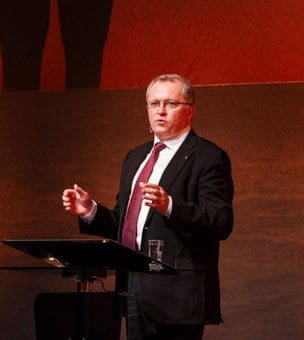
Oil and gas will remain “critically important” energy resources through to 2040, Statoil ASA CEO Eldar Saetre said Monday at the oil major’s annual autumn conference in Oslo.

In a statement released by Statoil, Saetre acknowledge that the oil and gas industry is currently facing “a tough reality” as global upstream investments are estimated to fall by 20 percent in 2015, but he insisted that oil and gas will continue to play an important role in the future energy mix.

“We know that energy demand is growing. We also know that renewable energy will have to meet most – if not all – of this increased demand. However, oil and gas will remain critically important energy resources. Even in a two-degree world we need oil and gas roughly at today’s levels in 2040,” Saetre said, referring to the two-degree limit that has become the targeted increase in global average temperature agreed by climate change policy formers around the world at Cancun in 2010.

Statoil said that in advance of the COP21 climate summit in Paris, Saetre emphasized the action needed from policy-makers to set the course through effective policies and from the business doing most of the job in order to solve the global climate challenges; to meet the increased demand for energy and at the same time reduce emissions.

So far the commitments before COP21 in Paris are not sufficient for the world to reach a two-degree target.

“But there are weak signals that give cause for optimism. On the political side there is stronger willingness and commitment from some of the big players, including US and China. On the business side I see a growing recognition that the time has come to act and engage,” Saetre said.

Saetre noted that energy demand is growing and emissions must be reduced, which should lead to large shifts in energy use and production. At the same time lower oil and gas prices are causing a rebalancing of supply and demand, putting an increasing premium on being a low-cost producer.

“Combined, this dynamic will create a turning point for the industry. The companies and countries that show they can successfully tackle these challenges will be the new winners. Statoil’s response is to capture the opportunities and actively shape the future of energy,” Saetre said. 

Based on this, the Statoil CEO has set three clear priorities for the company going forward.

“First, we need to be competitive at all times and create a company that can operate profitably even in today’s commodity environment. Second, Statoil will set an example for how the oil and gas industry must transform. Our industry was unsustainable at 100 dollar oil. That’s why we need to embrace simplification and standardization, but also collaborate and share solutions to solve joint problems,” Saetre said.

“And thirdly, I want Statoil to be an energy provider for a low-carbon future. Oil and gas will remain a critically important part of this future. We want to be the world’s most carbon-efficient producer of oil and gas and we will increasingly use our competence in new areas.”


Source

Minimum Commercial Diving Standards Required in Canada

0
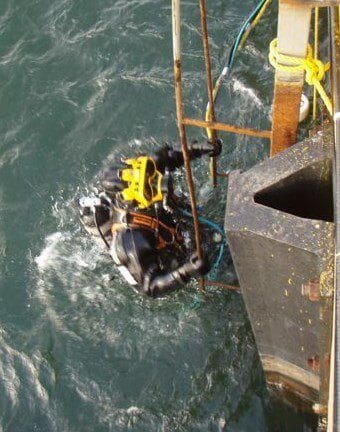
Commercial Diving is one of the most potentially dangerous work activities. Diving work is regularly undertaken throughout Canada.

“In Canada, in a work force of only a few thousand divers, there have been more than 50 occupational diving fatalities since 1975. This is about twenty times the rate in construction, one of the most hazardous land based industries ….. On average, several hundred accidents occur in industry for every fatality or disabling injury. In diving the ratio is about five to one. This is not to say that diving operations cannot be carried out safely, only that, in contrast to other work activities, there is almost no margin for error in diving.”

The following C.S.A. guide has been prepared to help Clients identify the minimum standards acceptable by the CADC. It is not complete, but offers the Client a check list of observable points, quoted directly from the standard, to assist in choosing an acceptable Diving Contractor who knows and adheres to acceptable safe work practices. For complete information consult with the relevant regulatory authority in your area.

1. Who does this standard apply to?
“The C.S.A. Standard Z275.2 applies to occupational diving operations conducted in connection with all types of work and employment,…”

2. What qualifications are required by Diving Personnel?

Diving Medical
“A diver shall not be permitted to dive unless a signed statement issued by a licenced medical doctor competent in hyperbaric medicine is presented, stating that the diver has received a comprehensive examination during the preceding twelve months…”

Medical Alert Tag
“A medical alert tag … shall be worn by each diver for at least a 24 hour period after completing each dive.”

Skills Training
“Competence of Diving Personnel shall be acceptable to the Regulatory Authority…”
This is easily identified by the Federal Government Certification that includes internationally recognized Diving Certificates for various diving positions including Diver and Diving Supervisor. Other certifications will be acceptable if they are evaluated and approved by the CADC certification program.

Safety Training
“Each diver and diver’s tender shall be certified in cardiopulmonary resuscitation and basic first aid and trained in the treatment of near-drowning victims…”

3. What is the minimum crew size for Diving?

SCUBA Diving
“It is generally recommended that free-swimming SCUBA diving not be used for commercial diving operations….”

“When diving in a tethered mode a minimum of three workers shall be present at each dive site, one of whom shall be a diver, one a standby diver, and one a diver’s tender. One of the two workers at the surface shall be designated the diving supervisor.”

“When diving in a free swimming mode a minimum of four workers shall be present at each dive site, two of whom shall be divers, one a standby diver, and one a diver’s tender. One of the two workers at the surface shall be designated the diving supervisor.”

“The standby diver shall not dive or be required to dive except in the event of an emergency.”

Surface Supply Diving
“For each diving operation where planned depth does not exceed 40m, a minimum crew of three shall be present in the following capacities:

(a) Two shall be divers, one of whom shall be a stand by diver.
(b) One crew member shall be a diver’s tender…
(c) Either the diver’s tender or the standby diver shall be designated as the diving supervisor.”

“When the depth exceeds 40m, a minimum crew of four shall be present in the following capacities:
(a) Two shall be divers, one of whom shall be a stand by diver.
(b) One shall be the diving supervisor, who shall not enter the water.
(c) One crew member shall be the diver’s tender…”

“…for depths greater than 55m….. a minimum crew of five shall be present … It shall consist of the following personnel:
(a) one diving supervisor
(b) two divers; and
(c) two diver’s tenders.”
“A standby diver shall be present on all deep diving operations” Continued next page

4. General Dive Procedures
“A general plan of the diving operations shall be discussed in detail and accepted by the diving supervisor, the divers, and the onsite representatives of the employer and/or owner.”

Supervision
“Each diving operation shall be conducted under a competent diving supervisor…”

Standby Diver
“A dressed-in standby diver shall be present at all times…”

Approach to Intakes
“The diver shall not approach any intake until the flow through it is stopped or controlled by positive means. Provisions shall be made so that the flow cannot be reestablished until the diver leaves the water or until the diving supervisor has declared the diver clear of the hazardous location. When the flow cannot be stopped, the safety of a diver approaching the intake shall be assessed by the determination of flow patterns using direct measurement, calculation, or other means acceptable to the regulatory authority.”

Hazardous Mechanisms
“It shall be the responsibility of the diving supervisor to ensure that, before a diver approaches a location that may be made hazardous by operation of mechanisms, such mechanisms are
(a) secured against inadvertent movement before the diver enters the water;
(b) locked out according to the regulatory authority; and
(c) locked out in a manner satisfactory to the diver and diving supervisor.”

Medical Standby
The employer shall verify that the diving contractor
(a) has arranged for a physician to be available during diving operations and for 24 hours afterwards to provide medical assistance in the event of an emergency; and
(b) has ensured that an adequate means of communication will exist on a 24-hour-a-day basis between the diving station or the craft from which the dive is being carried out and the physician.”

Source


LGS Secures Subsea Cables Deal with U.S. Navy

0

LGS Innovations (LGS) has won an indefinite delivery/indefinite quantity (IDIQ) contract with a ceiling of $9.5 million to supply submarine telecommunication cables to the U.S. Navy’s Naval Facilities Engineering and Expeditionary Warfare Center (NAVFAC EXWC).

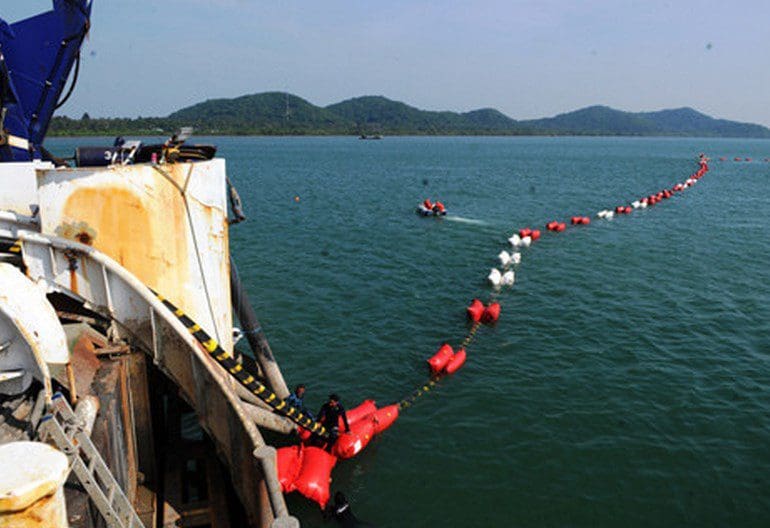
Under the terms of the contract, LGS Innovations has subcontracted Alcatel-Lucent Submarine Networks (ASN) to design, manufacture, and supply approximately 650 miles of subsea cable, with an expected operational lifetime of at least 20 years.

LGS is the exclusive reseller of Alcatel-Lucent products and services to the U.S. federal government.

“Maritime networking and communications is one of our core solution areas,” said Kevin Kelly, CEO of LGS Innovations. “We are proud to have established ourselves as a long-standing solution provider for the Navy. We look forward to providing continued high-quality solutions to yet another command within the United States Navy.”

According to LGS, the work is expected to be wrapped up by July 2016.


Source

OPEC Seen Holding the Line as $40 Oil Looms Over Vienna Meeting

0

It’ll take more than $40 crude to make OPEC change its mind, analysts said before the group’s Dec. 4 meeting in Vienna.

In the year since the Organization of Petroleum Exporting Countries chose to defend its market share, and let prices sink, a 44 percent plunge in crude has slashed members’ revenues by almost half a trillion dollars. Undeterred, the group will press on with its strategy to batter rival producers when ministers meet next week, according to 30 analysts and traders surveyed by Bloomberg.

Saudi Arabia, OPEC’s biggest member, appears determined to see through its plan to eliminate a supply glut by squeezing out competitors like U.S. shale drillers, even as the resulting price collapse spurs dissent from Venezuela, Algeria and Iran. The kingdom’s tactic is “having the intended effect” as non-OPEC supply heads for its steepest retreat since the fall of the Soviet Union, according to the International Energy Agency.

“There’s no reason to expect any change of heart,” said Antoine Halff, a senior fellow at the Center on Global Energy Policy at Columbia University. “The strategy is working out, it’s just not solving the problem overnight. The market is rebalancing, and there’s pressure on shale oil production, but it will take time.”

EQUILIBRIUM PRICE

For some OPEC members, opposed to the kingdom’s plan since they unveiled it last November, the cost has been too high.

Venezuela, facing a 10 percent economic contraction this year that would be the steepest in the world, has repeatedly called for a summit between OPEC and other producers to end the crisis. Oil prices may drop to as low as the mid-$20s a barrel unless OPEC takes action to stabilize the market, Venezuelan Oil Minister Eulogio Del Pino said on Sunday, advocating the group adopt an “equilibrium price” of $88 that would cover the cost of new investment in production capacity.

Yet even as prices languish below levels most members need to balance their budgets, the initiative failed to win the backing of the group’s dominant Gulf-based producers.

While Saudi Arabia isn’t immune to the crisis, which has forced it to burn through currency reserves and tap bond markets to plug a 20 percent budget deficit, the kingdom still has enough financial firepower to see the strategy through.

CHIEF ARCHITECT

“Saudi Arabia is the chief architect of OPEC’s new policy, and despite calls by other members to reconsider, we expect them to remain steadfast,” said Harry Tchilinguirian, head of commodity markets strategy at BNP Paribas SA in London. Their “experiment in letting prices bring adjustments to the world’s oil balance has yet to run its course.”

One change ministers could agree is an increase in the group’s output target as Indonesia rejoins after a seven-year hiatus that was triggered by the Asian country’s wilting oil production. The ceiling may be raised to 31 million barrels a day, from the current 30 million, according to two OPEC officials who asked not to be identified.

Raising the limit would only be a formality to incorporate the returning member, without any impact on actual production, according to Miswin Mahesh, an analyst at Barclays Plc in London. OPEC has rarely observed the target since it was set in 2011, and has strayed ever further as Saudi Arabia and Iraq raise output to cement their market share.

IRANIAN PLANS

There may be more to discuss regarding Iran’s ambitions as it aims to revive oil exports once sanctions are removed following a nuclear accord earlier this year. Iranian Oil Minister Bijan Namdar Zanganeh has said the country will restore production regardless of the impact on prices. At OPEC’s last meeting in June, Zanganeh suggested other members should reduce their output to make way for Iran’s return.

As the nuclear agreement isn’t complete, and OPEC typically only confronts problems when necessary, Iran’s return may not come up for discussion on Dec. 4, said Mike Wittner, head of oil market research at Societe Generale SA in New York. Even when Iranian barrels are flowing again, Saudi Arabia will be in no mood to make way for its political adversary, he said.

“Assuming Iran has sanctions relief, and they’re in the process of sustainably increasing their exports and production, I still don’t think there’s going to be a reaction from Saudi Arabia — other than perhaps increasing their own production,” Wittner said.


Source