Home Blog Page 136

Sustainable Gas: The Key to a Lower Carbon Future?

0

Towards the end of September, the London-based Sustainable Gas Institute released its first white paper, which details the institute’s findings after conducting a review of all the available global data on both carbon dioxide and methane emissions from the natural gas supply chain.

Natural gas has long been touted as a source of energy that can play an important role in the reduction of total carbon emissions. This is because it is generally regarded as a far more efficient source of hydrocarbon energy when compared with oil and especially coal.

At GE Oil & Gas’s Annual Meeting earlier this year, no less a figure than the Administrator of the U.S. Environmental Protection Agency, Gina McCarthy, shared a platform with the CEOs of Statoil ASA and Petróleos Mexicanos (Pemex), to argue that replacing oil and coal with natural gas would help shift the world to a low-carbon energy future.

More than a year earlier, GE had argued in a report produced by in-house economists that an “Age of Gas” was upon us as had Royal Dutch Shell plc’s Scenario Planning unit a few months earlier.

Proponents of increased exploitation of natural gas resources believe that environmentalists are shooting themselves in the foot by opposing all hydrocarbon-based sources of energy. Cuadrilla Resources CEO Francis Egan said during a speech in London in February 2014 that environmentalists in Europe were making the “perfect the enemy of the good” by opposing new sources of natural gas, leading – ironically – to prolonged and even expanded use of dirty coal-fired power stations. Speaking at a conference in Norway in August of last year, Martin Bachmann, a director of German oil and gas firm Wintershall Holding GmbH described Germany’s “Energiewende” (Energy Transition) policy as a “nightmare”. He argued that ignoring the role natural gas can play in favor of wind turbines and other unreliable renewable energy technologies has led to the country to increase the amount of coal it burns.

But from a holistic point of view, how much carbon does our use of natural gas release into the atmosphere? The Sustainable Gas Institute, founded by BG Group plc and based at Imperial College London, has been tasked with finding out.

As the institute’s white paper points out, natural gas combustion generates approximately half as much carbon dioxide as coal but the gas itself is mainly composed of methane – which is regarded as a strong “greenhouse gas”. And one of the issues with natural gas production and its use is that methane is released at several stages along the supply chain.

So the Sustainable Gas Institute wanted to find out the answer to the big question of whether methane emissions in the natural gas supply chain are large enough to undermine its lower carbon credentials. In order to achieve this the institute analyzed more than 250 studies and reports, covering natural gas from both conventional wells and unconventional wells at every stage in the supply chain, as well as examining the liquefied natural gas (LNG) process.

The white paper’s key findings lead to the conclusion that more research is required.

For a start, the authors of the paper point out that the range of estimated emissions across the natural gas supply chain “is vast”. Combined carbon dioxide and methane emissions vary between 14 and 302 gCO2eq/kWh (grams of carbon dioxide equivalent per kilowatt-hour of electricity generated – the unit used to quantify greenhouse gases).

The Sustainable Gas Institute’s analysis found there are exceptionally high emissions from particular supply chain stages or facilities. However, on average, the estimates lie towards the lower end of combined CO2 and methane emissions.

Another finding is that so-called “super emitters” exist all the way through the supply chain, which the Sustainable Gas Institute’s researchers believe could be the result of ineffective process equipment as well as poor operational and maintenance strategies.

Answering questions put to him by Rigzone, Dr. Paul Balcombe, research associate at the Sustainable Gas Institute,  explained: “Evidence of super emitters have been found across every supply chain stage and every region, although most detection studies have focused on the United States. It is important to note that super emitters are not just a static list of facilities that we can locate and mitigate against, but the super emitting facilities are likely to change year-on-year as some emissions are identified and eliminated whilst others appear. Evidently, detecting and eliminating the super emitters would represent a big win, but the challenge is creating effective facility-level or national emission detection frameworks.”

After wading through the 250 studies and reports, the researchers also found that there were a wide variety of techniques used to monitor emissions. This means that supply chain estimates vary greatly in the literature available. Meanwhile, they also found that there is a significant lack of data, particularly for regions other than the United States.

“In general, reporting of methane and carbon dioxide emissions is very varied across different regions and regulations,” Balcombe said.

“Whilst carbon dioxide emissions are reasonably well understood, there is certainly a push to measure and report methane emissions, driven by the United States and is now being furthered internationally by the IPIECA [International Petroleum Industry Environmental Conservation Association] and OGCI [Oil and Gas Climate Initiative] groups of oil and gas companies. However, measurement of emissions must be of an appropriate standard and data should be validated.”

While it is clear from the Sustainable Gas Institute’s white paper that much more needs to be done in order to understand the full extent to carbon emissions in the natural gas supply chain, Balcombe argues that governments around the world could do more to help.

“Governments from the major gas producing nations should stipulate and validate detailed annual industry emissions measurements, from which the data should be anonymized and made publically available,” he said.

This is important, Balcombe told us, because natural gas is likely to play a major role in future energy systems as the world decarbonizes, particularly on two fronts: replacing coal-fired power stations; and supporting renewables that supply energy intermittently.

“Hence, will need to continue to ensure that we deliver gas to end users with minimum environmental impact.

“However it is also clear that, whilst greenhouse gas emissions from gas are generally lower than for coal for electricity generation, gas emissions must be reduced significantly if gas is to continue to play a major role in energy systems past 2030. To ensure that we meet our carbon budget, recent studies suggest that we cannot burn 80 percent of our known reserves of fossil fuels.

“If we want to continue to meet our power demand, adding carbon capture and storage (CCS) to gas electricity generation may be paramount.”

Balcombe added that the Sustainable Gas Institute’s next white paper will assess the evidence on whether CCS has a significant role to play in supporting the generation of electricity using natural gas in order to minimize carbon emissions from the process.


Source

WATCH: Seatronics ROV Triggers PAN Disrupter Subsea

0

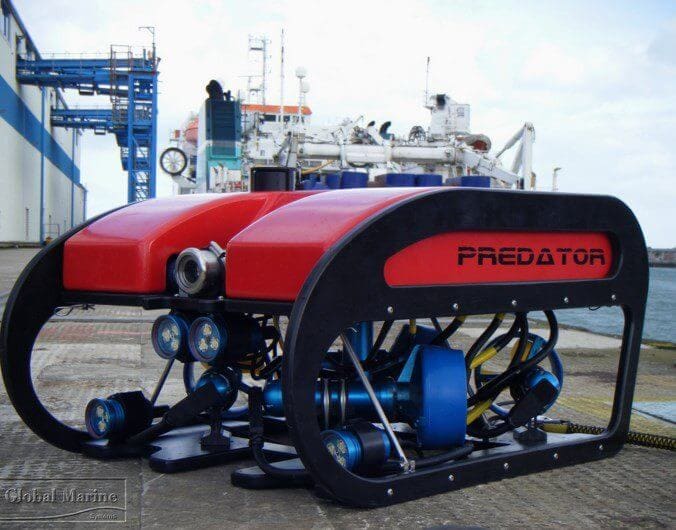
Seatronics, an Acteon company specializing in marine equipment, has triggered a Percussion Actuated Non-electric (P.A.N.) disrupter subsea, with its Predator ROV, while maintaining station keeping during a live fire mission.

Seatronics established the Predator ROV Elite System as a Bomb Squad Capable Improvised Explosive Device (IED) ROV, specifically designed to perform demonstrations in conjunction with Great Eastern Group (GEG) for the US Maritime Bomb Squads.

A demonstration of the unit was conducted in April 2015 in response to requirements outlined by the nation’s bomb squad community and the Port of Los Angeles / Long Beach Port Dive Operations Group (PDOG).

Initial demonstrations resulted in an invitation for Seatronics to demonstrate the Predator ROV Elite System at the Underwater Post Blast Investigators Course in Bluffton, South Carolina, USA, hosted by the FBI Counter-Improvised Explosive Device Unit (C-IEDU), along with the South Carolina Law Enforcement Division’s (SLED) Bomb Squad.


Source

SMD Jobs Hit By Sanctions Against Russia

0

Wallsend-based manufacturer of subsea vehicle systems, Soil Machine Dynamics (SMD), will cut 70 to 80 jobs across its business, the company said Wednesday.

The thirty-day consultation period and necessary paperwork will be submitted to the Department of Business and Skills once the Consultation Committee Group has been established.

The news comes as SMD’s largest order in history for two suites of cable laying and burial equipment, has been suspended due to the rejection of an export license as a result of current sanctions in place for Russia.

This is a decision SMD said it will appeal, and the outcome will have a significant impact on the final redundancy numbers. SMD has continued to retain capacity in anticipation of this order but will be unable to continue to do this should the appeal fail.

Despite successfully diversifying the business SMD is suffering extremely challenging market conditions in areas in which the company is operating. The decline in demand from the oil and gas market, driven by the prolonged reduction in the oil price, has caused many projects to be shelved until at least late 2016. There has also been a significant reduction in UK based contractors within the offshore renewable market with subsequent implications for the UK supply chain.

Andrew Hodgson, CEO of SMD, said: “We are very disappointed to be in this situation given the inevitable impact on our colleagues and partners in our supply chain. A number of our key markets are subject to challenges for a variety of largely unrelated issues and we need to react to these challenges in order to sustain the business for the future. Our new owner, CRRC, have been incredibly supportive in both retaining capability this year and sanctioning further investments into next year. We hope to demonstrate that the UK continues to be the centre of our operations into the future”.

Aker Solutions Nets BP Gig in Norway

0

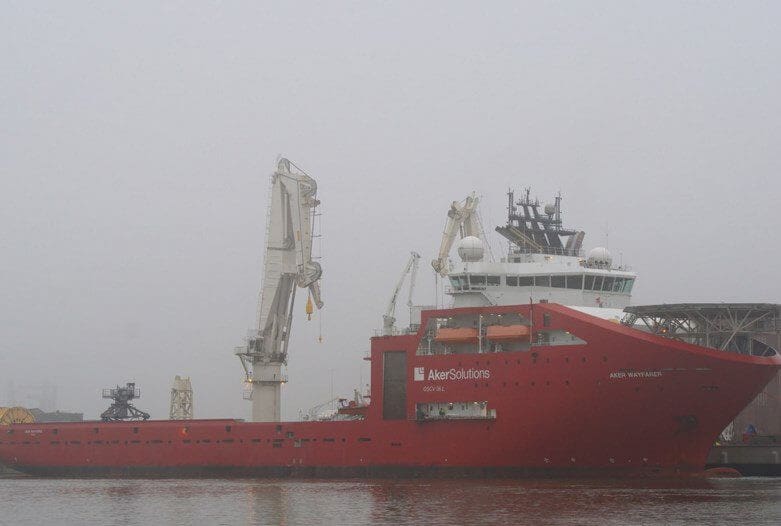
Aker Solutions won a framework agreement to provide maintenance and modifications services at BP-operated oil and gas fields offshore Norway.

The contract has a fixed period of five years valued at as much as NOK 3.2 billion. It also contains options to extend the agreement by as many as four years. The accord starts on December 1, 2015 on expiration of an existing agreement for similar services, Aker Solutions informed.

“This contract was won in stiff international and national competition and will help secure jobs on the west coast of Norway as well as provide crucial support for our development of operations further north,” said Per Harald Kongelf, head of Aker Solutions in Norway. “We’re very pleased to continue our strong partnership with BP on the Norwegian shelf.”

The agreement is for work on the North Sea fields Ula, Tambar, Hod and Valhall as well as the Skarv deposit in the Norwegian Sea. The work will be managed and executed by Aker Solutions’ maintenance, modifications and operations units in Stavanger and Sandnessjøen and at the company’s fabrication yard in Egersund.

“Aker Solutions is a very experienced and capable supplier that has over many years had large and demanding deliveries to BP both in development projects and in the production phase,” said Eldar Larsen, vice president of operations for BP in Norway. “The company has shown great flexibility and willingness to develop and use local businesses, which is especially important for activity in Sandnessjøen.”

Aker Solutions has worked with BP in Norway for more than twenty years and signed the first long-term framework agreement contract of this type with the company in 1999.

“We look forward to continuing the constructive relationship we’ve developed over the years with BP as we work together to find the most cost-effective solutions for these fields,” said Knut Sandvik, head of Aker Solutions’ maintenance, modifications and operations business.

Can a Rebreather Be an Asset in Commercial Diving?

0

What is a rebreather? A rebreather is a type of breathing apparatus used by divers differentiating from others in the market through its ability to recycle the gases you exhale, to be re-used in a continuous flow cycle. If you are a professional diver or a commercial diver then you have no doubt heard of these systems but most likely never used one. Whereas commercial divers usually use a surface supplied diving system in order to work, rebreathers are more often used by technical divers for the freedom of movement and smaller penalties in the way of decompression needed.

The mode of action of a rebreather is based on some basic and simple scientific principles. The rebreather enables you to inhale the air you breathed out instead of releasing it in the form of air bubbles. The rebreather primarily removes the carbon dioxide content of the exhaled air using a small volume of the alkali, sodium hydroxide in the scrubber.

The carbon dioxide is eliminated in the form of solid calcium carbonate. The oxygen you used up is replaced using the stocked small canisters of pure oxygen to inject fresh oxygen in the air when the breathing cycle is started over again. A rebreather also maintains the oxygen content at the optimum through oxygen sensors included in the breathing set. A negative feedback mechanism controls the rate of oxygen-delivery.

A rebreather has multiple benefits over the other breathing apparatus available on the market, making it an asset in some circumstances. A rebreather offers an improved gas efficiency. While conventional breathing sets waste oxygen since your exhaled air has an oxygen content of 16%, a rebreather recycles the oxygen to be used again. The rebreather is lighter than other breathing apparatus available commercially. This is explained by the fact that a rebreather only carries pure oxygen leaving behind the 78% nitrogen content of atmospheric air.

With a rebreather, you can expect a lot less decompression sickness because nitrogen in the breathing system is kept at a minimum threshold. Divers can afford to stay in the water longer than with the conventional scuba gear. Rebreathers produce few or no bubbles at all and therefore cause minimum disturbance to aquatic life. The diver moves stealthily to catch the underwater life unawares.

Over the years, rebreather diving has killed a fair number of people, some of whom were believed to be competent divers, owing to complications arising when the owners do not get acquainted with their diving gear well enough before venturing out. The number of diving fatalities involving rebreathers is on the rise since 1998 increasing from 1 to 5% in the United States. Common diving disorders when using a rebreather includes deep water blackout caused by hypoxia when the oxygen partial pressure of the re-breathed air gets too low to sustain life, oxygen toxicity caused by a partial pressure of oxygen too high, reaching hyperoxic levels. Disorientation, severe headacheand hyperventilation owing to an excessively high content of carbon dioxidein the recycled air. This is usually caused by a failure in the scrubber system. For these reasons, you will find a rebreather diver training course is even more intensely orientated around safety than a standard commercial diving or scuba diving course.

A rebreather is undoubted a fine piece of technology considered as an indispensable asset in many professional diving fields. There are pros and cons but it’s up to you as a rebreather diver to take your responsibilities and dive safe all the time. A professional rebreather diving course would be a good way to start.

Ben Dixon is an HSE registered Commercial Diver and the owner of Commercial Diving Magazine – an online community for scuba diving and commercial diving fans. If you want to learn about anything from commercial diving to how to become a commercial diver or types of commercial diving jobs you’ll find the information you need and the friends to talk about it with.

Visit Commercial Diving Magazine and join in today!


Source

Seismic Shoots Could Harm Sea Turtles?

0

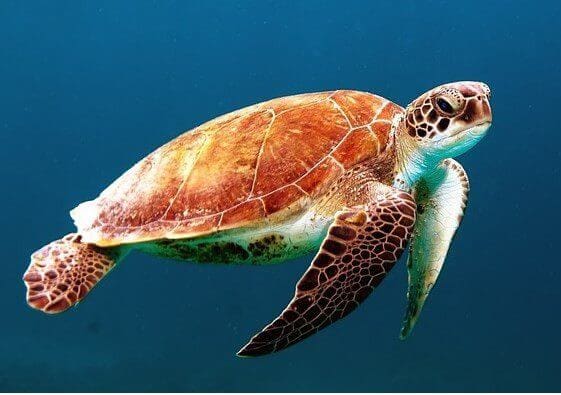
Scientists from the University of Exeter are warning of the risks that seismic surveys may pose to sea turtles.

Seismic surveys use airguns to produce sound waves that penetrate the sea floor to map oil and gas reserves.

The review found that compared to marine mammals and fish, turtles are largely ignored in terms of research attention and are often omitted from policy guidelines designed to mitigate the environmental risks of seismic surveys, University of Exeter wrote.

Possible ramifications for turtles include behavioural changes and exclusion from critical habitats as well as potential auditory damage, as turtle hearing ranges overlap with airgun frequencies. In addition, turtles are known to become entangled in gear towed behind the survey vessel, which can lead to drowning.

Lead author Sarah Nelms from the Centre for Ecology and Conservation at the University of Exeter’s Penryn Campus in Cornwall said: “By talking to oil and gas companies, seismic operators and on-board Marine Mammal Observers, as well as academics and conservationists, we had a great opportunity to gather a broad spectrum of opinions, not just one side of the story. This allowed us to access information that was not available in the published literature.”

The researchers also examined policy guidelines for the mitigation of risk to marine life in seismic surveys and assessed peer-reviewed literature on the topic.

“Our study reveals the potential for seismic surveys to cause behavioural changes and physical harm to turtles and we are calling for more research to urgently fill the crucial knowledge gaps that were highlighted during our review,” said Nelms.

During a survey, specialised ships simultaneously fire multiple airguns while towing multiple hydrophone streamers, which can cover an area up to 700m wide and 12km long, to capture the returning sound waves. Researchers involved in the study received reports of turtles becoming entangled in the trailing tail buoys and developed a turtle guard which has been voluntarily installed by some operators. Further research could help make such preventative measures mandatory in the future, University of Exeter wrote.

Senior author Professor Brendan Godley, also from the University of Exeter’s Centre for Ecology and Conservation, said: “Seismic surveys are occurring in the waters of at least 50 countries in which marine turtles are present and they are becoming increasingly widespread. Given the conservation status of turtles, we feel that it is important and timely to assess the level of threat posed by this global activity and highlight knowledge gaps to direct future research efforts.”

“There is a great deal that could be done proactively to help improve the status quo. We are standing by to work with seismic companies and others in the oil and gas sector to this end.”

Cheap Coal Threatens LNG’s Toehold in Fast Expanding Philippines

0

The Philippines is set to import liquefied natural gas (LNG) for the first time next year as it bids to replace fast-fading local gas supplies, but cheap coal is blowing off course Manila’s vow to lift the use of cleaner fuels.

With 100 million people and one of the world’s fastest growing economies, the country aims to double its power generation capacity by 2030, hoping to put an end to daily blackouts that crippled its economy in the 1990s.

But despite government support for gas, a rash of approvals for coal-fired plants is already set to push coal’s share of power generation up sharply to over 50 percent by that time, while gas’ share may fade slightly to 15 percent.

A Philippines lawmaker conceded it is too early to say when legislators will call time on new coal plants.

“It presents a great challenge, especially for us in Congress,” said Reynaldo Umali, who heads the committee on energy at the House of Representatives.

This type of dilemma is echoed throughout Asia, where more than 500 coal-fired plants are on the drawing board, spurred by coal’s low cost and availability, while LNG needs billions of dollars for infrastructure to receive and store imported gas.

“Many countries in Asia will remain reliant on coal for power generation over the coming decade,” said Georgina Hayden, senior energy and infrastructure analyst at BMI Research.

GAS FIELD DECLINE

The Philippines wants to roughly double the share of natural gas in its power generation mix to up to a third by 2030, evenly balanced with coal and renewables.

Adding impetus to its plan is the expected depletion by 2024 of the Malampaya gas field, which accounts for all of the country’s gas supplies. Despite efforts to find reserves elsewhere, buying LNG overseas is the immediate option.

Australia-listed Energy World Corp Ltd expects to switch on the Philippines’ first power plant fired by imported LNG some time next year, after delays to the original December 2014 start-up.

The power plant is part of an $800 million LNG hub the company is building in Quezon province in the main Luzon island, the Philippines’ first such facility. It plans to ship gas from its Sengkang LNG field in Indonesia or buy from the spot market.

Others are also looking to LNG.

Philippine power distributor Manila Electric Co, also known as Meralco, is in talks with Osaka Gas Co Ltd to build gas facilities worth about $2 billion and power firm First Gen Corp may start building a $1 billion LNG terminal next year to sustain its Malampaya-based gas-fired power plants.

The operator of Malampaya, a unit of Royal Dutch Shell Plc , has also been looking to set up a floating regasification facility to sell LNG locally, company officials have said.

CHEAP POWER

But the Philippines accepts that rejecting cheap coal is not an option as its economy develops, with more than 40 new power plants in the pipeline, including projects still seeking financing.

“The Philippine electricity market is very competitive, so to be able to make sure that we can sell the power capacity to be generated by our power plants, it has to be cheap,” said Lito Lantin, senior vice president at Meralco Power Gen Corp, which plans to build three coal-fired plants over five years.

Congressman Umali said he is keen on legislation aimed at giving more incentives, such as tax exemptions, to investors in LNG infrastructure to make the fuel competitive with coal.

President Benigno Aquino, who is due to step down next June, has passed the baton of boosting gas use to his successor, arguing last week that the government was hampered by a lack of infrastructure.

“It limits our ability … it won’t happen under my watch,” he told the Asia Pacific Economic Cooperation CEO summit.


Source

First Subsea Connector for Fukushima Floating Wind Farm Phase 3

0

First Subsea has been awarded a contract to supply a cable connector for the third phase of the Fukushima Floating Offshore Wind Farm Demonstration, in Japan.

In this latest phase of the project, the connector will be used to connect 22kV cable to a 7MW wind turbine.

So far First Subsea has provided all the cable connectors for both 22kV and 66 kV cables on the Fukushima project.

In Phase 1, two First Subsea cable connectors were used to connect 22kV cable to a 2MW wind turbine and a floating substation, and a third cable connector for a 66kV cable connection to the substation.

In Phase 2, cable connectors were used for two 22kV cables from the substation to subsea cable joints close to the eventual positioning of the wind turbines in Phases 3 and 4.

In Phase 3, the First Subsea cable connector will complete the connection of the subsea cable joint to the 7MW floating wind turbine, the company noted.

The First Subsea cable connector has a self-activating, ball and taper mechanism allowing both diverless and ROV-less deployment offshore. The male connectors are guided into receptacles on the wind turbine and substation and, once engaged, cannot be released until the load has been removed, First Subsea explained.

The project is sponsored by the Ministry of Economy, Trade and Industry.

Introducing the New OPEC Member That Likes Lower Oil Prices

0

After defending the interests of oil-exporting nations for five decades, OPEC has made a surprising choice with its newest member: a country that consumes about twice as much crude as it pumps.

Indonesia will rejoin the Organization of Petroleum Exporting Countries as its 13th nation next month, almost seven years after suspending its membership. The country says that as OPEC’s only Asian constituent it will provide a vital link to the region where demand is growing fastest. Still, saddled with an oil-import bill of about $13 billion last year, Indonesia makes an unlikely addition to the exporters’ club.

“If you’re accepting net-oil importers into the organization, it speaks volumes about the marginalization of OPEC,” said Seth Kleinman, head of energy strategy at Citigroup Inc. Indonesia is “never going to cut” supply, he said.

Official explanations that paint Indonesia as a conduit between producers and consumers don’t fully illuminate a move that’s fundamentally at odds with OPEC’s mission: why allow a country that will benefit from lower prices into a group set up to underpin prices? 

Citigroup says it’s another sign OPEC has abandoned its role in defending prices after last year choosing to maximize its market share in the face of a global glut. OPEC hasn’t announced any specific market measures since 2008.

ODD DECISION

Indonesia contends its return to the group will be mutually beneficial. As a country that both consumes and produces, it can provide OPEC with a bridge between the two sides of the oil market, Energy Minister Sudirman Said said in June. 

“It’s strange,” said Jamie Webster, senior director at consultants IHS Inc. in Washington. “Nothing has dramatically changed since they left some years ago — it’s not like they’ve found some Gawar-like field and now suddenly want to be on top of things,” he said, referring to the biggest deposit in Saudi Arabia.

Indonesia believes the move will both ensure access to crude supplies — it’s already in talks to buy Iranian crude once international sanctions are lifted — and attract investment to revive its energy sector, such as a project to build a refinery with Saudi Arabia.

“There’s prestige in being part of the organization again,” said Harry Tchilinguirian, head of commodity markets strategy at BNP Paribas SA.

SHIFTING RANKS

Brent crude added 12 cents to $46.24 a barrel on the London-based ICE Futures Europe exchange at 12:56 p.m. Singapore time. The global benchmark has lost more than 40 percent over the past year.

Indonesia is projected to produce 850,000 barrels a day this year, according to a Nov. 13 report from the International Energy Agency. That’s about 789,000 less than it consumed last year. Only Libya, Ecuador and Qatar produce less among OPEC’s member states. 

In October 2014, Indonesia gave up on a target of restoring output to 1 million barrels a day. Crude output has dropped more than 50 percent since the mid-1990s as shifting regulations and complicated permits deter investments in new fields.

It’s not unprecedented for OPEC’s line-up to shift over time. Its ranks last swelled in 2007 when Ecuador was re-admitted after departing in 1992. Gabon left in 1995, though hasn’t announced any plans for a comeback.

One impact of Indonesia’s return could be a change in the group’s collective production target, which has held steady for the past four years at 30 million barrels a day. Officials are considering raising the limit to 31 million to incorporate Indonesia’s output, according to two delegates who spoke confidentially.

NEUTRAL PARTY

That still wouldn’t mean any change in the group’s actual output: OPEC has flouted the current limit in all but four months since its introduction, according to data compiled by Bloomberg. Even a raised cap at 31 million barrels would be almost 800,000 a day less than its 12 members pumped in October, IEA data show.

A last benefit could be a resolution to years of disagreement on appointing a new secretary-general. OPEC has been extending the term of Libya’s Abdalla El-Badri — originally due to stand down in 2012 — as countries block proposed candidates from Saudi Arabia, Iran and Iraq. Indonesia, which has filled the position of secretary-general on four different occasions since 1961, could serve as a neutral alternative, above political rivalries in the Middle East.


Source

8 JOBS A COMMERCIAL DIVING CAREER MIGHT LEAD YOU TO

0

Offshore diving: The Gulf and Beyond

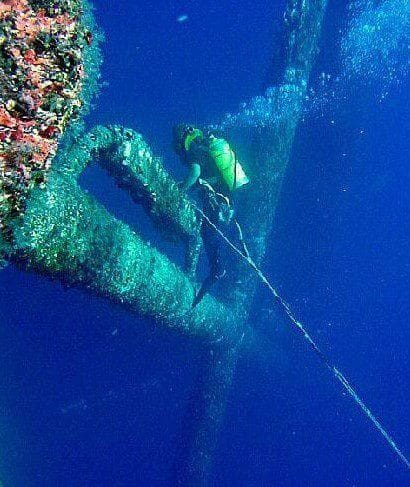
In 2013, 66% of the US’ liquid fuels (crude oil, natural gas, biofuel) originated from oil rig sites not too far off the coast of the Gulf of Mexico. The rugged divers and tenders, who work the underwater and topside shifts inspecting and maintaining these massive structures in the ocean, operate on full schedules and tightly knit teams with a strong work ethic and sense of brotherhood. And the Gulf of Mexico is not the only place to work offshore — offshore diving can take you around the world.

Inland diving: the best of both worlds?


Inland diving can bring together the best of both worlds — land and water, travel and home time. Inland divers can keep their diving restricted to their city or state and stay nearer to their loved ones more of the time, or take jobs around the country and explore this beautiful land. Bridges, piers, dams, water tanks — all of these structures, and many more, require building, maintenance and sometimes cleaning.

Salvage Divers:  In recovery mode


Even if the jobs don’t all involve recovering ancient artifacts, but instead a newly-discovered shipwreck, salvage diving is fascinating. For instance you might be Parbuckling the tragic wreck of Costa Concordia (see more photos here) . In 2014  it required 111 divers working around the clock for months, swimming through rooms upon eerie rooms full of floating furniture and people’s things. The divers worked on teams to build a platform under the boat and to raise it, so it could be towed to a port. Salvage divers cut, weld, demolish and figure their way underwater around sites, and can work for scientific organizations, the Navy, the police force, or private companies to recover whole vessels, evidence, human remains, and sometimes a clearer picture of history.

Saturation diving: Taking it to a whole new level


Saturation divers live under the sea in pressurized chambers with a small handful of other people. For weeks at a time, the crew works rolling shifts, two on, two off, or one on, one off. The logic is this: Living in a pressurized space means that the divers require less time to decompress from a deep dive so these teams venture out into the dark deep seas equipped with lights and tools to work in the lonely ocean. Only even-keeled people need apply; close communal living is not for everyone, but for those who love it, a community of Sat divers exists under the sea – some of them stay in touch and end up on the same jobs once in a while.

Nuclear Divers: Maintaining nuclear power plants


Nuclear divers get suited up and dive in nuclear reactors: inspecting, cleaning and maintaining them. Attached to their dive suits are a number of dosimeters which measure radioactive exposure. These are constantly measured and assessed, and safety practices are so stringent that if even one malfunctions, the dive is called off. If you like warmth, extra dough and thrive on a calm but risky job, this one might be for you.

ROV Tech: An undersea pilot


Like to tinker? Play with electronics? Enjoy video games? An ROV Technician flies around under the sea with a hydraulically-propelled robot that he or she controls from a remote location. These remotely operated vehicles are attached to the controlling vessel by a cable that connects the pilot to the vehicle and to its built-in cameras, lights and mechanical tools. ROVs perform mechanical repairs and operations to massive structures offshore, and are used for scientific exploration, television shoots and military endeavours.

Roughing it in Remote Alaska


Like the cold? Love a rough, hearty, MacGuyver-style job? Divers in Alaska are so remote much of their work is figuring out how to do something on the fly, with what’s on hand. Dive sites can be miles outside of civilization in the brutal cold and without good transport, but the scenery, the slow pace and the invigorating sense of life make it all worth it.

Scientific diver


If you’ve got a leaning towards a science like archaeology, oceanography, geology or biology, you may enjoy working with researchers in the academic and private sectors, exploring, studying and analyzing the deep unknowns of our amazing, vast oceans and the life they host. Scientific dives can take you all over the world and to far-flung spots in the ocean, to see things that most people will never dream of seeing. You’ll see all this not just as a commercial diver but with the insight of generating new knowledge and a sense of adventure.

There are even more avenues down which commercial diving can take you, and DIT’s staff are with you throughout your career to support you and help you find the best fit for you skills, lifestyle and experience.

Written for DIT by Londi Gamedze